Why this watch matters
The Longines HydroConquest arrives at $2,200 to $2,400 USD at a moment when the watches it competes with have either drifted upmarket or become genuinely difficult to buy without a relationship with a sales associate.
That matters because the specification list here is not modest. The HydroConquest carries a COSC-certified (Contrôle Officiel Suisse des Chronomètres, the Swiss independent body that certifies movement accuracy to within plus or minus 4 seconds per day) automatic movement, a ceramic bezel, 300m (984ft) of water resistance, and on-the-fly bracelet micro-adjustment. The 39mm (1.54in) case measures 48.10mm (1.89in) lug-to-lug and 11.70mm (0.46in) thick. The 42mm (1.65in) variant runs approximately 51mm (2.0in) lug-to-lug. Both share the same L888 movement with a 72-hour power reserve, which means three full days off the wrist before it stops.
Five years ago, that combination at this price did not exist in this form.
Longines sits within the Swatch Group, positioned in the tier directly below Omega by design. That positioning is the reason the price is where it is, and it is also the reason the watch is available at an authorised dealer (AD) without a waitlist, a purchase history requirement, or the expectation that you will buy a bracelet you do not want first. You walk in, try it on, and either buy it or you do not.
For a first serious watch purchase, the HydroConquest answers the three questions that actually matter: is the movement reliable, will the watch survive real use, and does it wear well across contexts? The answers are yes, yes, and yes. The bracelet is the one area where the watch does not fully match its price-tier rivals, and that is worth knowing before you commit.
Owner sentiment
The dominant reaction from owners is straightforward satisfaction, with two specific frustrations that come up consistently enough to take seriously.
On the positive side, the spec-to-price ratio is the thing people keep returning to. One owner who describes themselves as a Rolex and Tudor buyer ran through the list directly: ceramic bezel with tactile clicks, lacquer dial, 39mm sizing with a 49mm lug-to-lug, 70-plus hour power reserve, and COSC accuracy. Their conclusion: “I honestly can’t think of one issue with these watches.” That kind of endorsement from someone already spending at a higher tier carries weight.
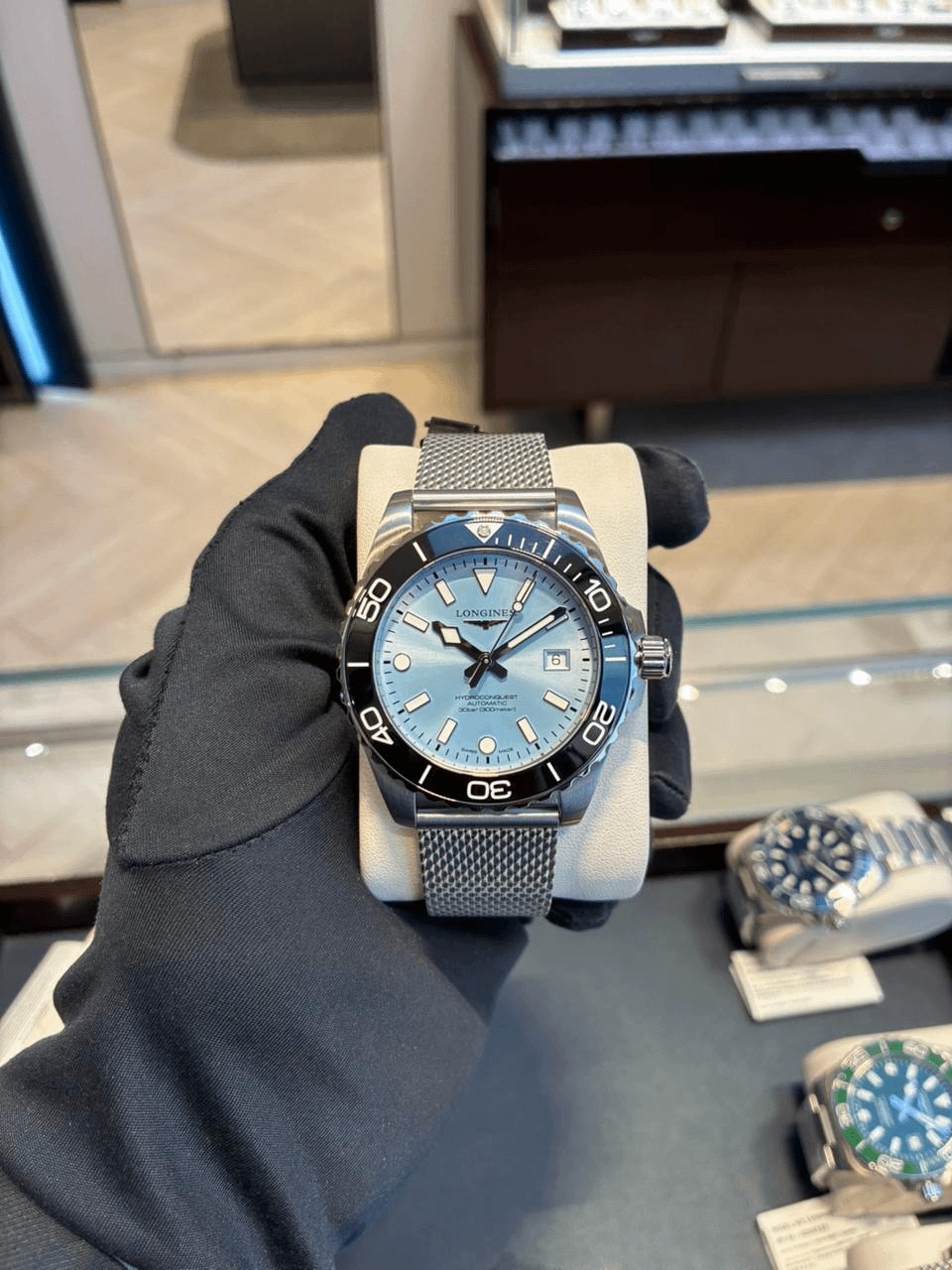
The colour options have generated genuine enthusiasm, not just polite approval. The blue dial in particular prompted one observer to write that Longines was “quietly making the best blue diver on the market.” The ice blue colourway drew comparisons to the best current Omega divers. One person admitted: “My least favourite part of this launch is that I really don’t need one but god damn are these some good looking dive watches.” That is not a complaint.
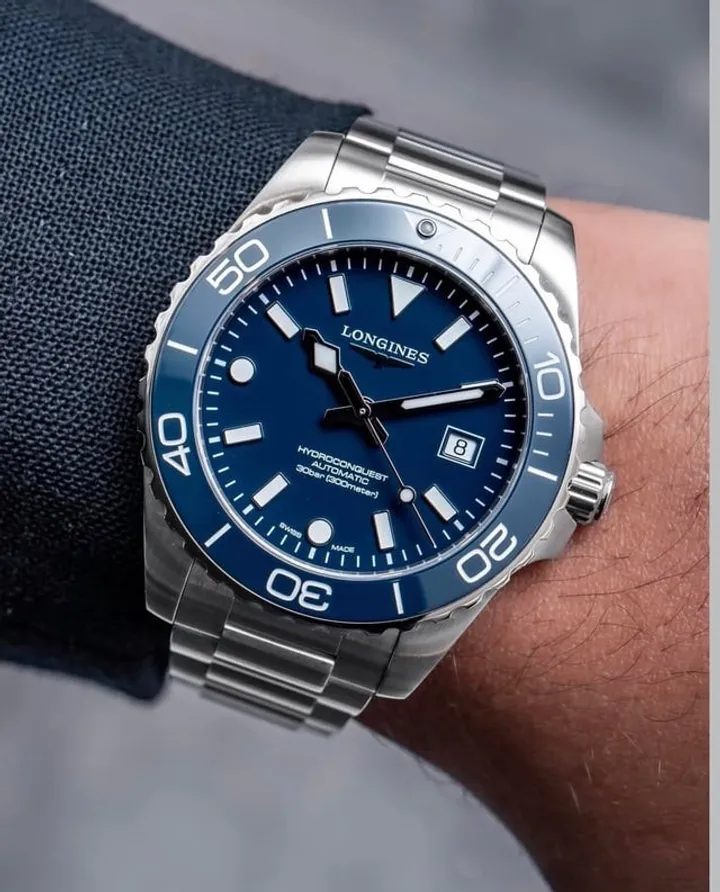
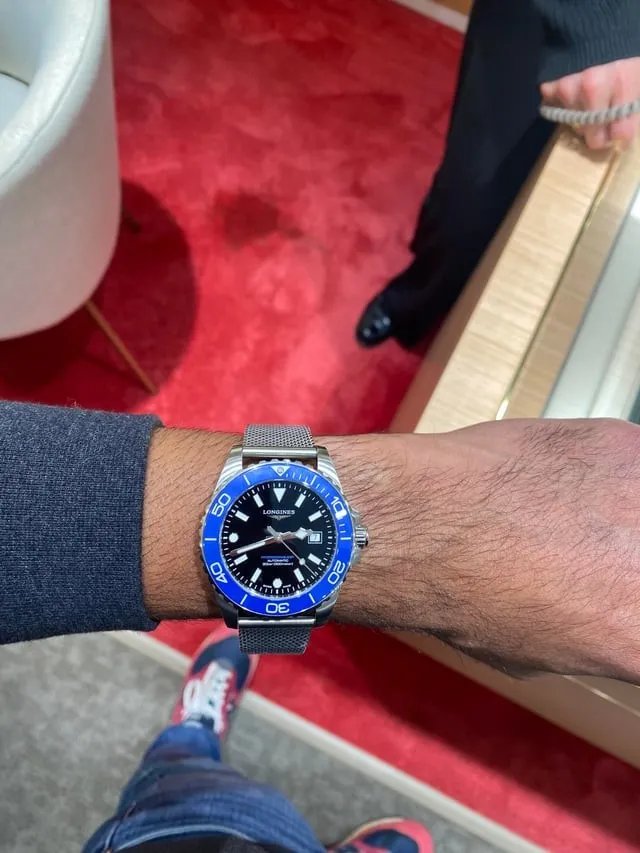 The blue dial colourway drew comparisons to the best current Omega divers from owners who had worn both. Credit: u/cmet98
The 39mm sizing works across a wider range of wrists than the number suggests. Owners with wrists from 16.5cm (6.5in) to 17.5cm (6.9in) report it wears closer to a 40mm in practice. “It wears bigger but feels so light on the wrist,” wrote one new owner. Another tried it at an AD with a 17.5cm (6.9in) wrist and noted the lug-to-lug span means it does not feel small despite the diameter. The micro-adjustment mechanism draws consistent praise for daily comfort.
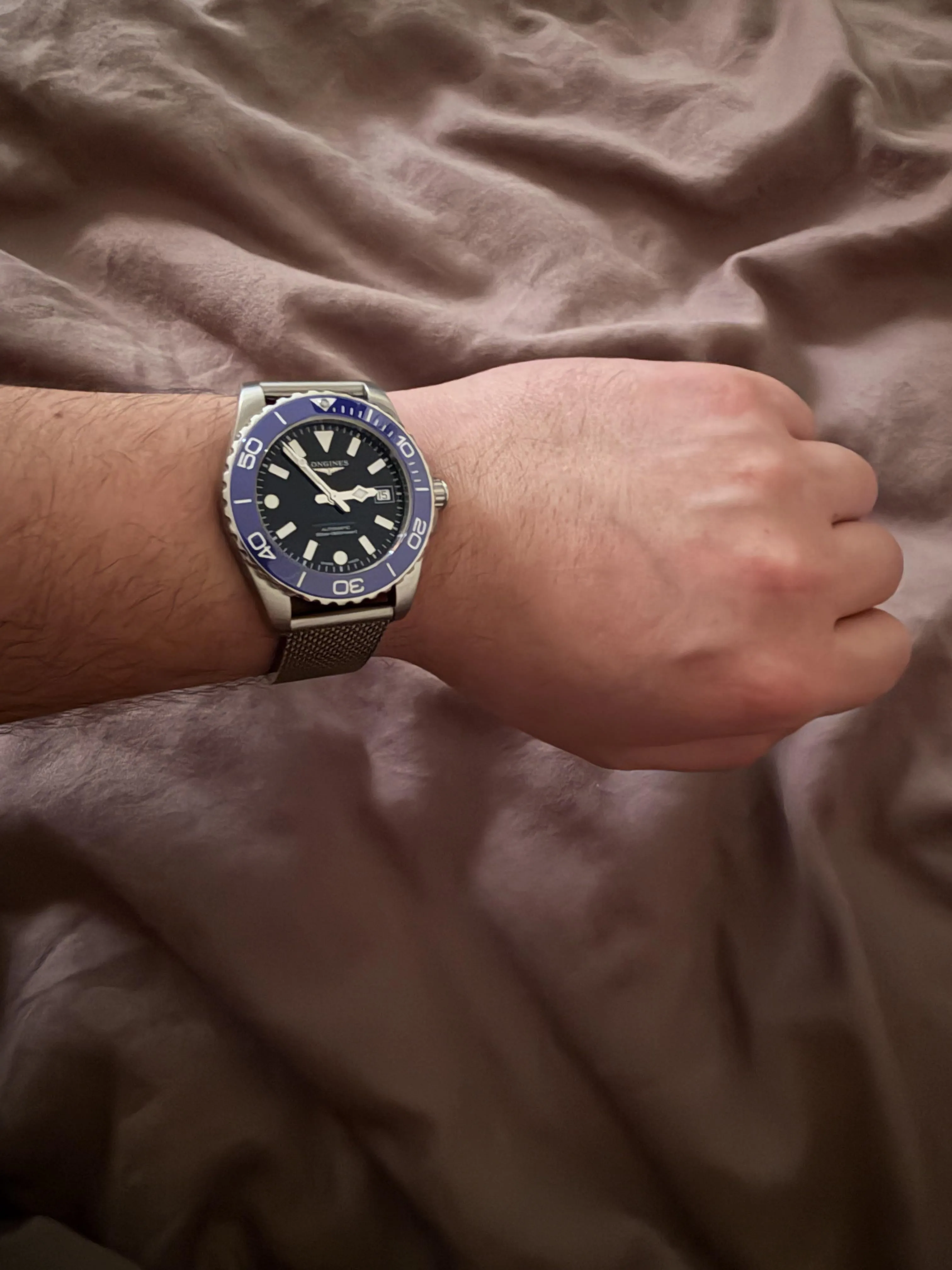 On most wrists the 39mm reads larger than its diameter suggests, helped by the slim 11.70mm case height. Credit: u/Signal-Piccolo-906
The competitive pressure the watch puts on Tudor and Omega is a recurring theme. One owner was seriously considering selling their Omega Seamaster Professional 300 (SMP300) to fund the switch and keep the price difference. Another asked plainly: “Who would want to buy an Aquaracer over this at double the cost?”
Now the frustrations, and they are real.
The bracelet on the standard models is the most consistent complaint. An owner with a year of daily wear on the previous 41mm version was candid: “The bracelet sucks. The links are sometimes pinchy depending on the position.” A separate owner who loves the 39mm still acknowledged: “The bracelet feels subpar compared to other watches in that price bracket. The one on the HydroConquest GMT is much nicer.” The GMT variant’s bracelet is notably better, but owners report that ADs have confirmed it does not fit the standard HydroConquest case. A NATO strap is the practical workaround several owners have landed on.
The second frustration is a product decision rather than a quality issue. Several of the most visually striking colourways, including the black dial with blue bezel combination, are available only on the Milanese (mesh-style) bracelet, not the oyster-style bracelet. The reaction to this is pointed: “It’s hilarious how watch companies are experts at almost giving you exactly what you want. That black dial blue bezel would have been perfect on a bracelet and would move units, but they nerfed it.” Multiple buyers have said they would have purchased immediately if the colourway were available on the oyster bracelet.
The date window placement also divides opinion. There is no no-date option in the current lineup, and the 3 o’clock date position draws criticism from buyers who prefer a cleaner dial. One commenter put it bluntly: “They really dropped the ball bringing a million colour variants but not a single no-date option.” A counterpoint exists, with one owner calling the no-date preference “an internet cult” that gets “parroted on every watch blog.” Both positions are represented in the owner community, and neither is wrong.
One last note: the watch’s resemblance to the Rolex Submariner is close enough that at least one owner reported being asked twice in a single day whether it was a Rolex. That may or may not matter to you, but it is worth knowing.
Expert perspective
The L888 movement is the technical centrepiece of the HydroConquest, and it earns its attention. COSC certification means the movement has been independently tested to run within plus or minus 4 seconds per day across multiple positions and temperatures. The 72-hour power reserve is a practical benefit: three days off the wrist without the watch stopping, which matters if you rotate between watches or simply forget to wear it over a weekend. One owner tracked accuracy over six weeks of near-constant wear and recorded a gain of approximately 8 seconds across that period, which is well within COSC tolerance and consistent with a well-regulated movement.
A first-time Longines owner who went in expecting to find flaws came away with this: “The build quality is excellent and the finishing looks flawless to the naked eye. The L888 movement is the reason this watch earns serious consideration.”
The ceramic bezel is a genuine upgrade over aluminium alternatives at this price. Ceramic resists scratching from everyday contact in a way that aluminium does not, and the tactile click feedback on the HydroConquest’s unidirectional bezel (which rotates only counter-clockwise, a safety feature on dive watches so that elapsed time can only be read as longer, never shorter, if the bezel is accidentally moved) is consistently described as satisfying. Reviewers who tried the previous generation note the improvement directly.
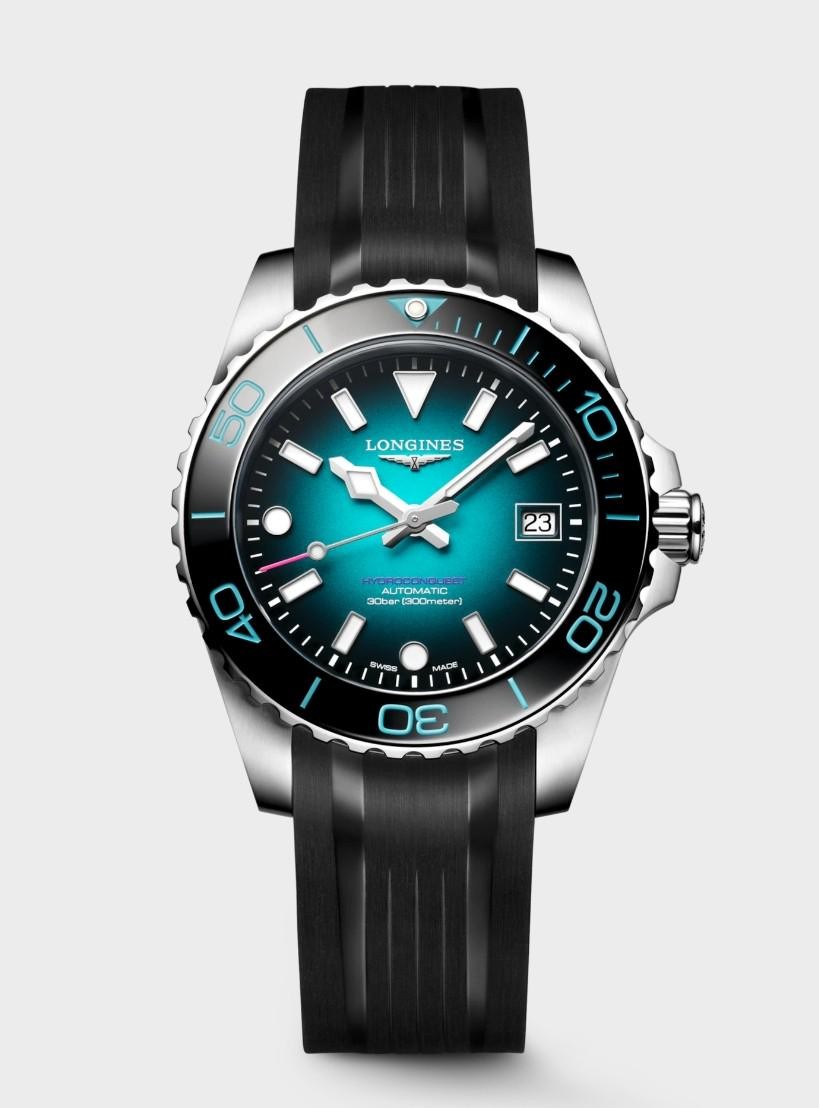
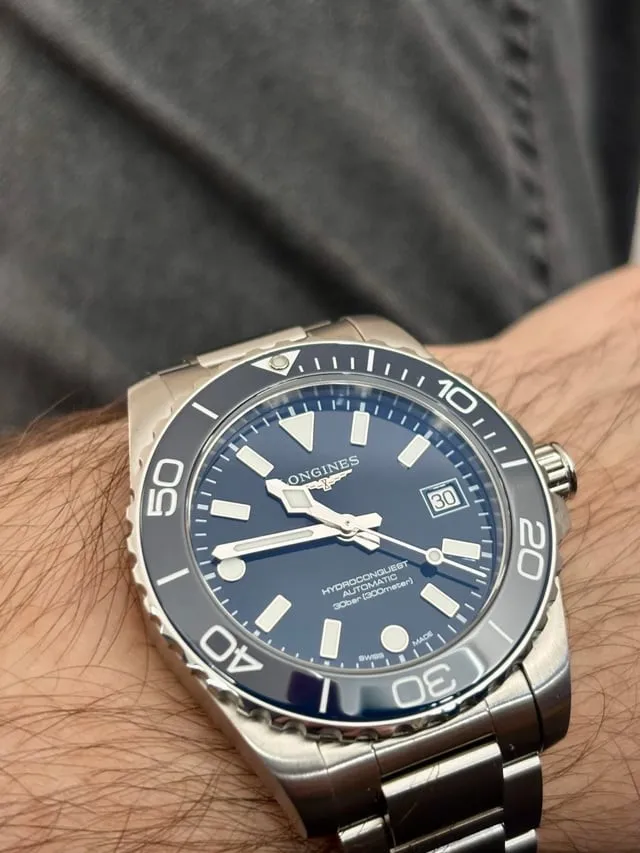 The ceramic bezel resists everyday scratching that would mark an aluminium insert, and the click action is consistently described as more satisfying than the previous generation. Credit: u/Educational_Flow_582
The on-the-fly bracelet micro-adjustment is a practical daily-wear feature that is easy to undervalue until you have worn a watch without it. Wrists change size across the day, particularly in heat or after exercise. The ability to move the clasp by one or two positions without tools is a comfort feature that owners notice.
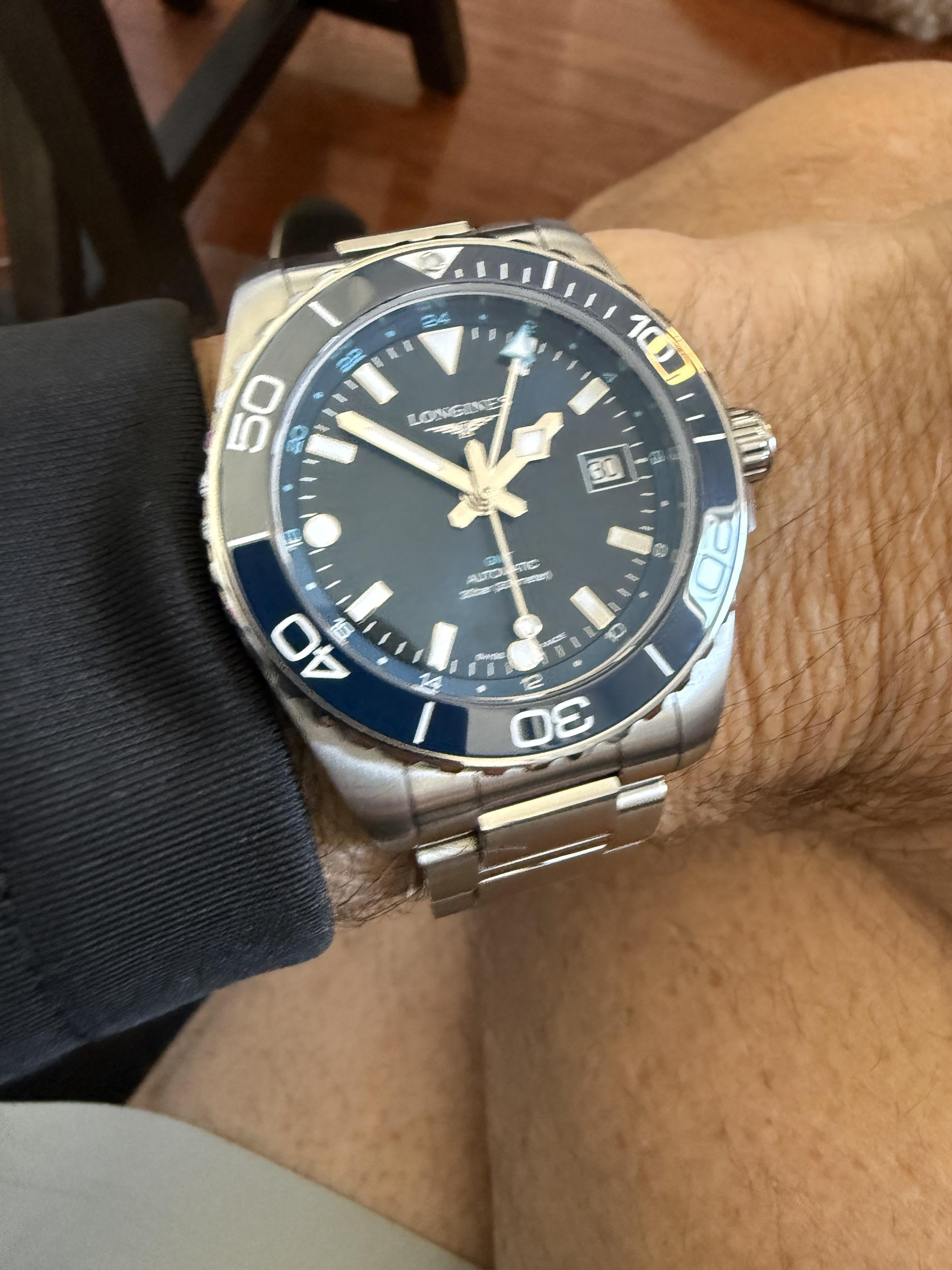
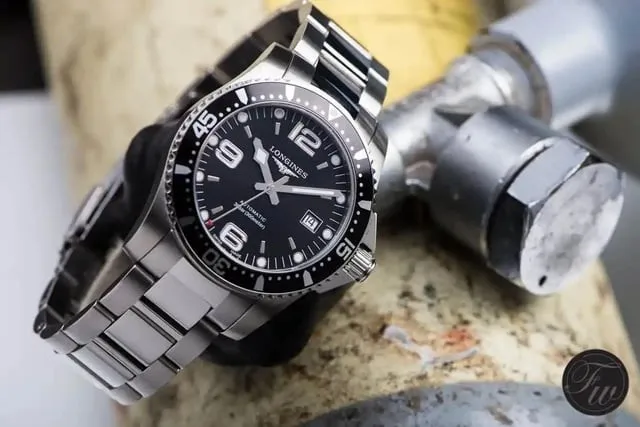 The micro-adjustment clasp lets you shift fit by one or two positions without tools, a small detail that matters across a full day of wear. Credit: u/HugeRub6958
On service: Longines recommends servicing automatic movements approximately every 5 to 7 years. Independent watchmakers typically quote $200 to $500 USD for a full service on a movement of this type, while Longines authorised service centres quote higher, often $400 to $800 USD or more depending on parts required. These are community-reported ranges, not a fixed schedule. Get a written estimate before authorising any work.
The bracelet is where the expert assessment diverges from the enthusiasm. The oyster-style bracelet on the standard models is functional, but it trails what Tudor and Omega offer at comparable prices. One hands-on assessment was direct: “The mesh bracelet looks aftermarket. They could have put end links on it to make it look so much better.” The bracelet on the GMT variant is meaningfully better, but it does not fit the standard case. This is not a dealbreaker, but it is the component most likely to prompt an aftermarket strap purchase.
The design question deserves a straight answer. The new HydroConquest borrows its case shape from the Rolex Submariner silhouette and its mesh bracelet aesthetic from the Omega Seamaster. Some observers have also noted Tudor Pelagos-style hands. One measured critic framed the broader issue well: “Companies like Longines shine when they reach back into their old references and pull something out with personality and imagination. The problem is most of the market has no personality and even less imagination. It’s why so many divers just look like Submariners.” A counter-argument exists: one commenter traced the design lineage to the existing HydroConquest GMT, which was itself based on the older Longines Admiral Diver, making the Submariner comparison less direct than it appears. Both readings are defensible. What is not defensible is pretending the resemblance is not there.
AD availability at launch was patchy, particularly for the 39mm in popular colourways. The 39mm sold out quickly at several dealers after release. This appears to be a normal launch-window supply issue rather than the structural allocation scarcity that surrounds Rolex and, increasingly, Tudor. The power dynamic at a Longines AD is straightforward: the watch is priced, stocked, and sold without the expectation of a prior purchase relationship. If your local AD does not have the colourway you want, calling ahead or checking with a second dealer is the practical step, not building a purchase history.
Common comparisons
Longines HydroConquest vs. Tudor Black Bay
The Tudor Black Bay is the comparison that comes up most often, and the HydroConquest’s 2026 update has sharpened the question considerably. The Black Bay starts at approximately $3,325 USD for the 41mm (1.61in) steel model on a bracelet, rising to $3,575 USD and above depending on configuration. The HydroConquest starts at $2,200 USD. For that $1,100 to $1,375 difference, the HydroConquest offers a ceramic bezel (the Black Bay uses aluminium), 300m (984ft) water resistance versus 200m (656ft) on most Black Bay variants, and on-the-fly bracelet micro-adjustment. The Black Bay counters with a bracelet that most hands-on assessments rate as better quality, a more distinctive visual identity, and the Tudor name, which carries more secondary market weight than Longines. One owner’s verdict: “Given the look and price point, these pretty much just made the Black Bay irrelevant. Tudor is going to have to step it up a notch.” That is a strong claim, but the specification gap at the price gap is real.
Longines HydroConquest vs. Omega Seamaster Diver 300M
The Omega Seamaster Diver 300M (SMP300) starts at approximately $5,500 USD for the steel and ceramic version on a bracelet. The HydroConquest at $2,200 USD is less than half the price. The Seamaster carries Omega’s co-axial escapement, a more established secondary market, and a brand profile that the HydroConquest cannot match. But the functional specification overlap is significant: both offer ceramic bezels, 300m (984ft) water resistance, and automatic movements with COSC-level accuracy. One owner was actively considering selling their SMP300 to buy the HydroConquest and keep the price difference. Another noted: “The Omega Seamaster 300 is outstandingly mid. And unnecessarily massive. The new HC at least gives a similar vibe for far less money.” If the Omega name and resale floor matter to you, the Seamaster justifies its premium. If they do not, the HydroConquest closes the functional gap more than the price gap suggests.
Longines HydroConquest vs. TAG Heuer Aquaracer
The TAG Heuer Aquaracer Professional 300 starts at approximately $2,000 to $2,500 USD depending on configuration, putting it in direct price competition with the HydroConquest. The Aquaracer offers 300m (984ft) water resistance and a ceramic bezel on higher-spec variants, but its movement does not carry COSC certification across the range, and the power reserve on most variants is shorter than the HydroConquest’s 72 hours. Community sentiment on the comparison is pointed: “Who would want to buy an Aquaracer over this at double the cost?” is an overstatement on the price, but the underlying question about specification value is fair. The Aquaracer has a more established track record and broader AD availability, but the HydroConquest’s movement credentials are stronger at the overlap price points.
A note on the pre-owned and grey market
If you are considering a pre-owned HydroConquest, the risks split into three distinct categories. Platform risk is the risk that the marketplace itself does not authenticate or stand behind what it sells. Seller risk is the risk that an individual seller misrepresents condition, service history, or completeness. Authentication risk is the risk that the watch itself has been modified, repaired with non-original parts, or is not what it appears to be. These are not the same risk, and collapsing them into a single “be careful” warning is not useful. On a platform like Chrono24 with buyer protection, platform risk is lower but seller risk and authentication risk remain. On a private sale, all three are present. For a watch at this price point, buying from an AD removes all three risks and typically costs the same as or less than grey market, given that discounts off MSRP are already available at launch.
Overall take
The 2026 HydroConquest is a straightforward proposition at $2,200 to $2,400 USD. You get a COSC-certified automatic movement (the L888, rated to plus or minus 4 seconds per day), a ceramic bezel, 300m (984ft) water resistance, on-the-fly bracelet micro-adjustment, and a 72-hour power reserve (3 days). Those are specifications that, five years ago, would have cost you considerably more. Longines is part of the Swatch Group and sits in the tier below Omega by design, which is exactly why the price is where it is.
The honest weaknesses are two.
First, the bracelet. The oyster-style bracelet on the standard models is functional but trails what Tudor and Omega offer at comparable prices. If the bracelet matters to you, try it in person before buying, or budget for a rubber or NATO strap alternative. The GMT variant’s bracelet is better, but it does not fit the standard case.
Second, the design. The new HydroConquest borrows its case shape from the Rolex Submariner and its mesh bracelet aesthetic from the Omega Seamaster. That is not a secret, and it is not necessarily a problem, but if you want a watch with a distinct visual identity, the HydroConquest is not that watch. The previous generation had more personality. This one has better specifications.
On service: Longines recommends a service interval of approximately every 5 to 7 years for automatic movements. Independent watchmakers typically quote $200 to $500 USD for a full service on a movement of this type, while Longines authorised service centres quote higher, often $400 to $800 USD or more depending on parts needed. These figures are based on community-reported ranges. Get a written estimate before authorising any work.
On resale: the HydroConquest holds value modestly on the secondary market, but it does not appreciate. Discounts off the $2,200 to $2,400 USD retail price are already available at launch, which compresses the resale floor further. Buy it because you want to wear it, not because you expect to sell it at a profit. The evidence does not support that outcome.
What the evidence does support is this: at $2,200 USD, the HydroConquest 39mm (1.54in) is one of the most complete first dive watches available without a waitlist, a purchase history, or a grey-market premium. The bracelet is the compromise. Everything else is not.