Straight Talk: Why ‘Buy the Best You Can Afford’ Is Bad Advice for a First Watch
Key takeaways
- The advice was written for collectors, not first buyers: “Buy the best you can afford” assumes stable taste and formed preferences, neither of which a first-time buyer has yet.
- Ceiling Anchoring turns your budget into a floor: The maxim quietly replaces “what am I comfortable spending?” with “what is the maximum I can justify?”, and that shift has a real financial cost.
- The learning curve is real and expensive: A significant share of first watches are sold within 18–24 months as taste develops; the higher you spend, the larger the depreciation loss when that happens.
- Price and quality don’t move in lockstep at this tier: A $2,800 Grand Seiko SBGR261 offers more labour-intensive dial finishing than a $5,500 Rolex Oyster Perpetual, “best” depends entirely on which qualities you’re optimising for.
- The right budget is the ownership confidence number: Spend the amount where losing the watch would disappoint but not destabilise you, not the ceiling you can technically justify.
Open r/Watches or r/WatchHorology and ask what watch to buy first. Within an hour, the top-voted reply will say some version of the same thing: buy the best you can afford.
It sounds like permission. For most first buyers, it is the wrong advice.
This piece argues against it directly. Not because the people giving it are wrong in every context, but because the advice was written for experienced collectors and applied, uncritically, to people who are nothing like experienced collectors.
That mismatch has a real cost.
Sometimes hundreds of dollars in unnecessary depreciation. Sometimes a watch that creates financial anxiety every time you look at it.
There are three specific ways the advice fails first buyers. Each is distinct. Each applies differently depending on your situation. We’ll name them plainly: Ceiling Anchoring, Learning-Curve Blindness, and Price-Quality Conflation. By the end, you’ll have a replacement framework that actually fits a first purchase.
Where the Advice Comes From, and Why It Feels Right
The maxim lives in watch forums, YouTube comment sections, and AD showrooms. On Reddit, it is not a minority view, it is the consensus. Threads on r/Watches and r/WatchHorology return it as the top-voted answer so reliably that it functions as community doctrine.
The people giving it are usually genuine enthusiasts. They have owned five or six watches. They traded up from a $500 piece to a $2,000 piece and then to a $5,000 piece, and they remember the regret of each step they skipped. From that vantage point, the advice makes sense: if you already know what you want, stretching your budget to get it often is the right call. You avoid the intermediate purchases. You land where you were heading anyway.
That logic is sound, for them.
The advice also flatters the giver. It positions them as someone who has moved past budget anxiety, and it sounds like permission to spend freely. It is hard to argue with in the moment because arguing against it sounds like defending settling for less.
Here is the problem. The advice assumes your taste is formed, your preferences are stable, and the only variable is budget.
For a collector on their sixth watch, those assumptions are reasonable. For someone buying their first serious watch, every one of them is wrong.
The advice was written for collectors. You are not a collector yet.
Applying it to a first purchase optimises for the wrong variable entirely.
Failure Mode 1: Ceiling Anchoring
Ceiling Anchoring is what happens when “what can I afford?” gets quietly replaced by “what is the maximum I can justify spending?” Those are two different questions. The advice collapses them into one.
Here is how it plays out. Say you have $3,000 available and you are comfortable spending it. You go to a forum and ask for advice. The top reply tells you to buy the best you can afford. Suddenly $3,000 feels like a floor, not a ceiling. You start looking at $4,500 options. You find the Rolex Oyster Perpetual 36 (ref. 126000) on Chrono24, available pre-owned for approximately $5,500. It is a beautiful watch. The forum loves it. You stretch.
What you walked past on the way there: a Tudor Black Bay 58 (ref. M79030N) on Chrono24 at approximately $2,400 pre-owned, or a Grand Seiko SBGR261 on Chrono24 at approximately $2,800 pre-owned. Both are serious watches with genuine craft behind them. Neither required a financial stretch.
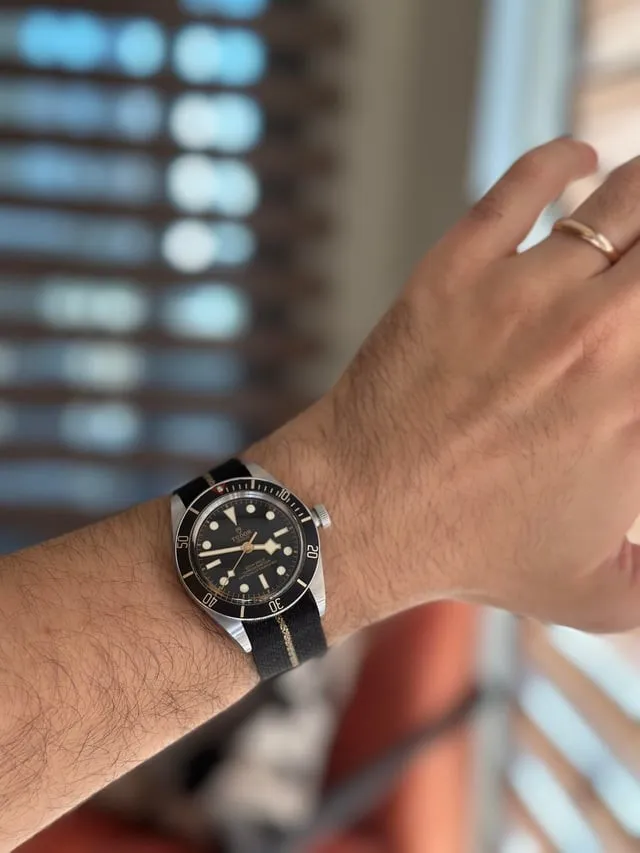 The Black Bay 58 at roughly $2,400 pre-owned is the watch ceiling anchoring asks you to walk past. It is not a consolation prize. Credit: u/CanayGicvan
Ceiling anchoring does not just affect your bank account. It affects how you feel wearing the watch.
A purchase that required a stretch creates a specific low-level anxiety. You are more careful with it than you want to be. You think about it when an unexpected bill arrives. The watch becomes associated with financial tension rather than the satisfaction the purchase was supposed to deliver.
The question the advice skips entirely: what do you actually want the watch to do? If the answer is “wear it daily, not worry about it, and enjoy it,” then the $5,500 stretch may be working against you. Fit matters more than ceiling. The advice never asks.
Failure Mode 2: Learning-Curve Blindness
Learning-Curve Blindness is the failure mode most likely to cost you real money, and the one most consistently ignored in forum advice.
WatchUSeek forum threads on first-watch ownership experiences show a consistent pattern: a significant share of first watches are sold or traded within 18 to 24 months. Not because the watch was bad, because the owner’s taste developed through ownership, and the watch no longer matched who they had become as a buyer.
This is normal. It is nearly universal among people who go on to own more than one serious watch. The first watch teaches you things you could not have known before you owned it. You discover you prefer a 36mm case to a 40mm. You find out you hate bracelets and love straps. You realise you bought a dress watch and actually wanted a tool watch. None of this is knowable in advance. It is only knowable through wearing.
The financial consequence depends entirely on what you spent.
Take the Omega Seamaster Aqua Terra at $5,400 retail. It is a well-made watch. Buy it new and sell it 18 months later, and you are looking at a pre-owned resale price of approximately $3,200–$3,800, depending on condition and box and papers. That is a loss of $1,600–$2,200 on a watch you owned for a year and a half.
Compare that to buying a Tudor Black Bay 58 pre-owned at $2,400 on Chrono24. The pre-owned market for that reference is stable enough that your loss at 18 months is considerably smaller. The loss differential between these two scenarios is the real cost of the “best you can afford” advice.
The variables a first buyer does not yet know, case size preference, bracelet versus strap, dress versus sport, how a watch feels at 38mm versus 41mm, are not abstract preferences. They are physical realities that only reveal themselves through ownership. If resale matters to you, the learning-curve reality argues strongly for a conservatively priced first watch. Not because you are settling, but because you are buying yourself the freedom to learn without a $2,000 tuition fee.
Failure Mode 3: Price-Quality Conflation
Price-Quality Conflation is the assumption that “best” means “most expensive.” In most consumer categories, price and quality correlate reasonably well. In the $1,500–$6,000 watch tier, they do not, at least not in any simple, linear way.
The clearest example: the Grand Seiko SBGR261 on Chrono24, available pre-owned at approximately $2,800, versus the Rolex Oyster Perpetual 36 at approximately $5,500 pre-owned.
Grand Seiko’s Shizukuishi dial finishing is, at equivalent price points, more labour-intensive than what Rolex produces. Fratello Watches’ hands-on comparisons of Grand Seiko dial finishing versus Swiss alternatives make this case in detail. The textures, the light-play, the applied indices, these come from a finishing tradition that Rolex does not attempt to match at this tier. That is not a hot take. It is a craft comparison anyone who has held both watches can verify.
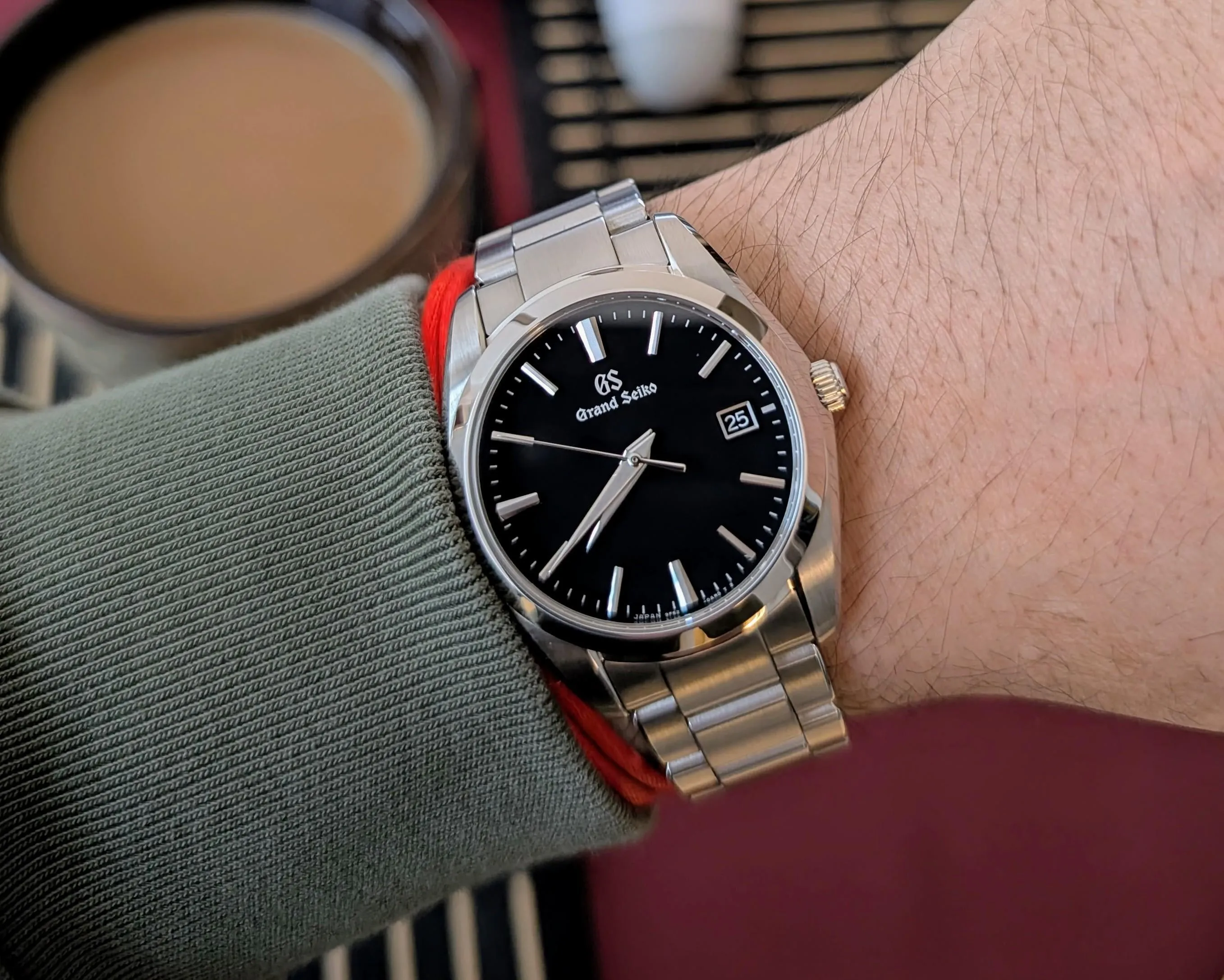 Grand Seiko dial finishing at $2,800 pre-owned. The texture and applied indices are more labour-intensive than what you get from Swiss alternatives at twice the price. Credit: u/Dr_Randaddy
On movement accuracy, the picture is more nuanced. The Grand Seiko 9S65 calibre is rated to +5/−3 seconds per day, per WatchTime’s independent specification data. The Rolex Calibre 3230, which powers the Oyster Perpetual 36 (ref. 126000), is rated to −2/+2 seconds per day. Rolex’s Superlative Chronometer standard, which exceeds COSC. The Rolex is more accurate. But the gap is smaller than the price gap suggests, and for daily wear, neither figure is practically meaningful.
The Omega picture is worth naming directly. The Seamaster 300M at $5,000 new is a well-made watch with a solid movement and genuine tool-watch credentials. But the movement finishing at that price point is not meaningfully better than what Tudor offers at $3,500. Omega’s marketing budget is substantial, and its retail pricing reflects that. You are paying for more than the movement when you buy it new.
Where price does buy genuine quality: Rolex’s in-house bracelet engineering is a real differentiator. The Glidelock clasp and Oysterlock safety catch on a Submariner are better-engineered than anything Tudor offers at equivalent price points. If bracelet quality and micro-adjustment matter to you, the Rolex premium is buying something real. The point is not that Rolex is overpriced. The point is that “best” is not a single axis, it depends on which qualities you are optimising for, and the advice never asks you that question.
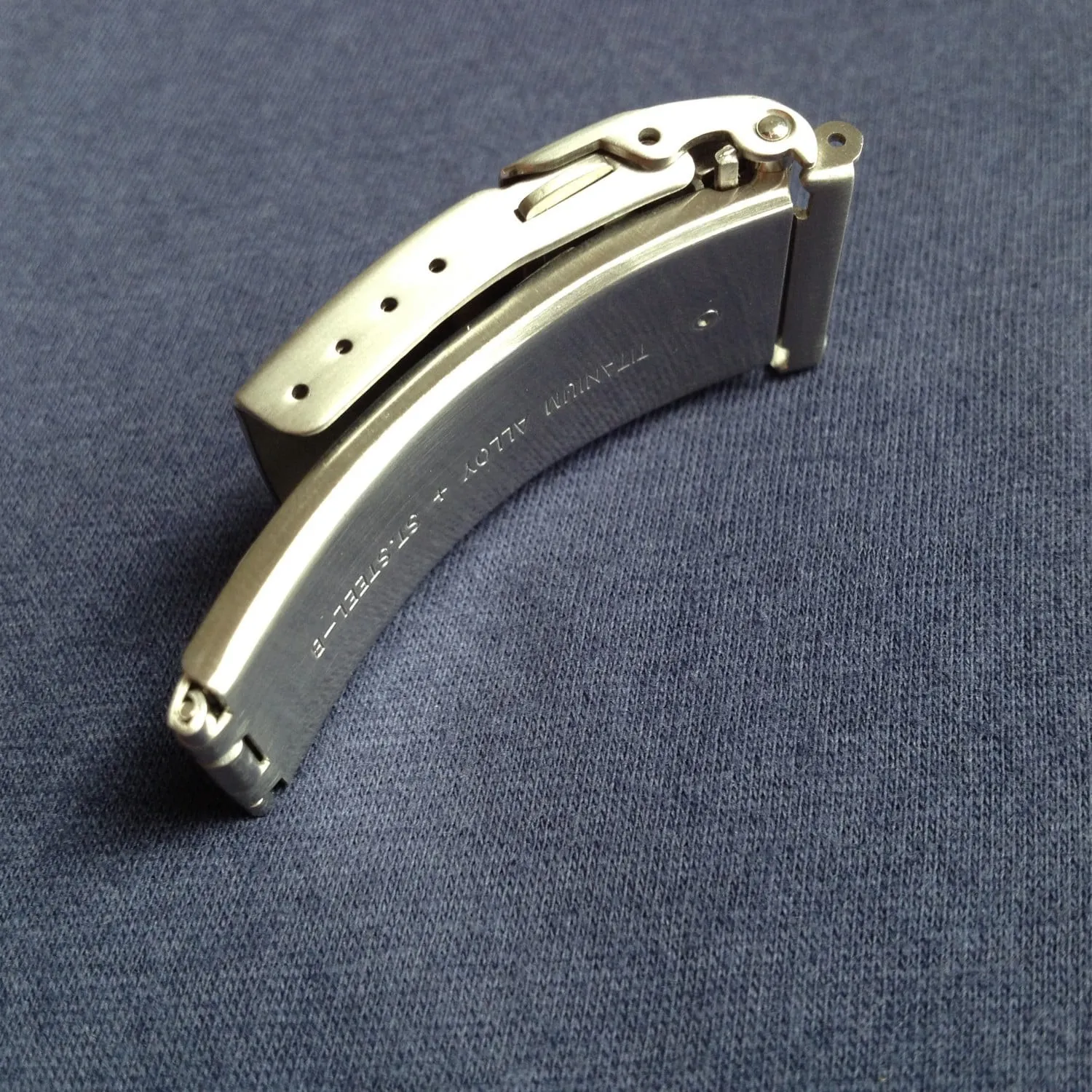 Bracelet engineering is one place where a higher price buys something you can actually see and feel. The article’s point is that it is one axis, not all of them. Credit: u/WinterWillow77
The Alternative Framework: Budget for Ownership Confidence, Not Maximum Spend
Here is the framework that replaces the maxim.
The ownership confidence test: the right budget is the one where, if the watch were stolen tomorrow, you would be disappointed but not financially destabilised. That is the number. Not the maximum you can justify. Not the ceiling. The number that leaves you financially comfortable and emotionally free to enjoy the watch.
Run it against your actual situation. If losing the watch would create real financial hardship, the budget is too high. If losing it would be a minor inconvenience, you may have room to spend more. The test is honest in a way the maxim is not.
The 10-year total cost of ownership: the sticker price is not the full number. Add one or two services, insurance, and the strap you will almost certainly replace within six months.
On service costs: Rolex recommends service every 10 years; Omega recommends every 5–8 years. Rolex service centres charge $800–$1,200 for a full service; independent watchmakers typically charge $400–$800, based on owner-reported pricing in WatchUSeek service cost threads. Insurance for a $3,000 watch runs approximately $100–$200 per year through a specialist insurer. A quality aftermarket strap costs $50–$300.
For a $3,000 watch, the 10-year total cost of ownership is closer to $4,500–$5,000. That is still a reasonable thing to spend, but you should know what you are agreeing to before you stretch to $5,500.
💡 Before you decide whether to stretch your budget, run your intended purchase price through the Total Cost of Ownership Calculator. Enter the watch price, your expected service interval, and your insurance estimate. The 10-year number, including one or two services at $400–$800 each, insurance at roughly $100–$200 per year, and strap replacement, is what makes the ceiling-anchoring failure mode concrete. It takes about 90 seconds and changes the conversation from “can I afford this?” to “what am I actually agreeing to?”
The first-watch shortlist principle: buy a watch you would be happy to own for five years even if your taste changes. This rules out purely aspirational references and rules in watches with broad, durable appeal. It is a different filter than “best you can afford,” and it produces different answers.
Three references that pass the ownership confidence test, at three budget tiers:
-
~$1,800–$2,400 pre-owned: Tudor Black Bay 58 (ref. M79030N). A 39mm case, in-house movement, genuine tool-watch heritage. The honest trade-off: Tudor’s AD network is thinner than Rolex’s, and the bracelet engineering is not at Rolex’s level. Neither matters much for a first watch. Available on Chrono24 with box and papers at approximately $2,400; shop carefully and you can find clean examples closer to $1,800 without papers.
-
~$2,800 pre-owned: Grand Seiko SBGR261. Exceptional dial finishing, solid 9S65 movement, a watch that will surprise anyone who has only seen it in photos. The honest trade-off: Grand Seiko’s AD network in North America and Europe is limited, and the brand carries less immediate recognition than Swiss alternatives. If the name on the dial matters to you socially, that is worth knowing. Available on Chrono24 at approximately $2,800 pre-owned.
-
~$4,000–$5,500 pre-owned: Rolex Oyster Perpetual 36 (ref. 126000). The case for this watch is strongest if you want broad resale liquidity, a proven movement, and a name that requires no explanation. The honest trade-off: at this price point, you are paying for the Rolex name as much as the watch. The dial finishing and movement quality are excellent, but not $2,700 better than the Grand Seiko. Available on Chrono24 at approximately $5,500 pre-owned, with significant price variation by dial colour.
How to Use the Total Cost of Ownership Calculator
The TCO calculator takes your intended purchase price and outputs the real 10-year cost: purchase price, service costs at your chosen interval, annual insurance, and strap replacement. It does not tell you what to buy. It tells you what you are actually agreeing to.
A $5,500 watch and a $2,800 watch do not just differ by $2,700 at the point of purchase. They differ by more over ten years, once you account for service costs and insurance premiums that track the replacement cost. The calculator makes that difference visible before you commit.
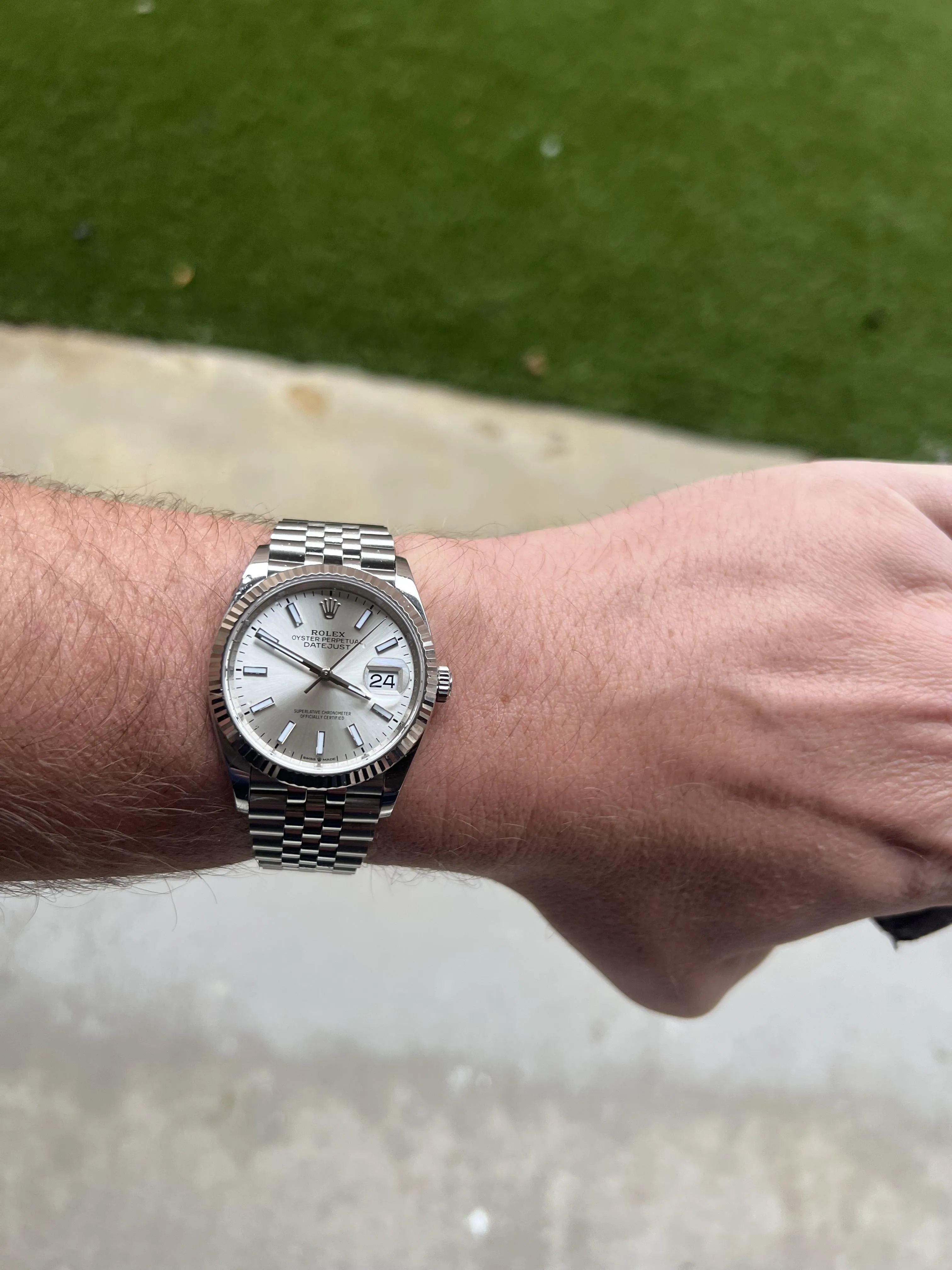 A $5,500 watch is not a $5,500 decision. Add two services, five years of insurance, and a strap, and the 10-year number is closer to $7,500. Credit: u/dubsinouche
“Buy the best you can afford” is real advice. The people giving it are not trying to mislead you. But it is advice for your second or third watch. When you know what you want. When your taste is formed. When you understand which trade-offs matter to you. For a first watch, the right question is not “what is the most I can spend?” It is “what watch fits my situation, my wrist, and my financial reality well enough that I will still be glad I bought it in five years?”
Those are different questions. They produce different answers. The second one is the one worth asking.