The Seven Most Common First-Watch Mistakes (and How to Avoid Each One)
Key takeaways
- Authentication risk is the costliest and least reversible: Buying a frankenwatch or unverifiable pre-owned piece can cost $1,000–$2,000 with no clean exit, a $50–$150 pre-purchase inspection is cheap insurance.
- “It holds its value” is brand-level folklore, not watch-level fact: Only a handful of waitlisted Rolex references trade at or above retail; most watches, including the Datejust 41, lose 15–25% the moment you buy new.
- The sticker price is not the real cost: A $3,000 watch costs $3,750–$4,550 over ten years once servicing, insurance, and straps are included, know what you’re agreeing to before you agree to it.
- “Buy the best you can afford” is advice for collectors, not first buyers: Spending 70–80% of your ceiling leaves room to course-correct when your preferences, which are learned, not innate, turn out to be different from what you expected.
- Case diameter is the wrong fit metric: Lug-to-lug distance determines how a watch actually sits on your wrist; two 40mm watches can wear completely differently, and you cannot judge this from a spec sheet.
Spending $3,000 or more on a watch for the first time is not like buying a laptop.
You can’t return it in 30 days if it doesn’t feel right.
The resale market exists, but selling a watch you just bought costs you real money. And the advice you’ll find online, on Reddit, on YouTube, from the sales associate at an authorised dealer, is shaped by incentives that have nothing to do with your situation.
This piece is a debrief. Not a brand ranking. A structured account of the mistakes first buyers make most often, ordered by how much they cost and how hard they are to undo.
Some mistakes here will cost you $200 and a bruised ego. Others will cost you $2,000 and six months of regret. You should know which is which before you spend the money.
The structure is deliberate: irreversible mistakes first, fixable ones last. Read the whole thing before you buy anything.
Why first-watch mistakes are different from other expensive mistakes
Most expensive purchases have a trial period built in. You drive a car before you buy it. You sleep on a mattress for 100 nights and return it if it’s wrong.
Watches don’t work that way.
The pre-owned market is liquid enough that you can usually sell a watch you don’t want. But selling a $3,000 watch typically returns $2,000–$2,400. That’s a $600–$1,000 lesson, minimum, and that’s the reversible scenario.
The irreversible scenario is buying a watch that can’t be authenticated, or one assembled from mismatched parts, or one you paid a 40% premium on because you didn’t know the retail price. Those mistakes don’t have a clean exit.
The emotional context matters too. Most first serious watch purchases are tied to something, a promotion, a significant birthday, a personal milestone. That emotional weight is real. It also creates pressure to spend more than you planned, to buy faster than you should, and to accept reassurances you’d otherwise question. This piece names those pressures directly, because they’re part of the mistake pattern.
Here’s the severity gradient across the seven mistakes below:
- Irreversible or near-irreversible (Mistakes 1–3): mistakes that cost $1,000–$2,000+ with no clean recovery
- Expensive but survivable (Mistakes 4–5): mistakes that cost $500–$1,000 and require selling and rebuying
- Common and fixable (Mistakes 6–7): mistakes that cost $200–$600 and are correctable with patience
Start at the top.
Mistake 1: Buying a watch you can’t authenticate (and the $2,000 lesson that follows)
Severity: Irreversible
The source of this mistake is specific: private Facebook watch groups and eBay listings with professional photography. The photos look legitimate. The seller sounds knowledgeable. The price is slightly below market, which feels like a deal rather than a warning sign.
What you may be buying is a frankenwatch. A frankenwatch is not a fake. It’s a watch assembled from parts of multiple genuine examples, a real Rolex case with a replacement dial, or a genuine movement in a case that doesn’t match the original reference. The parts are real. The watch, as a coherent object with provenance, is not.
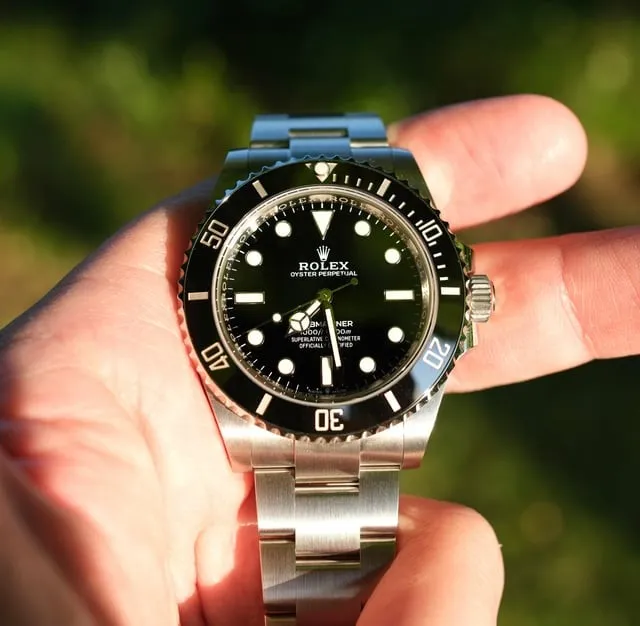 The Submariner is the most-faked and most-frankenwatched reference in the pre-owned market. A dial-level photo is worth studying before you buy one. Credit: u/Drrhizome
Frankenwatches matter for two reasons. First, they’re worth significantly less than an unmolested example, sometimes 40–60% less. Second, they can be difficult or impossible to service through official channels, because the parts don’t match the manufacturer’s records.
There are three distinct risks in pre-owned buying, and collapsing them into a single “be careful” warning is unhelpful.
Platform risk. eBay offers buyer protection, but the claims process is slow and the outcome is uncertain. Chrono24’s buyer protection programme covers purchases against non-delivery and significant misrepresentation, check their policy page for coverage caps before you buy. Chrono24’s Trusted Seller programme adds a second layer: dealers who have passed Chrono24’s vetting carry a different risk profile than private sellers.
Seller risk. A zero-feedback private seller is a different proposition from an established dealer with 2,000 completed transactions and a documented return policy. Check feedback volume, recency, and the ratio of watch sales to other categories. A seller who moves 500 watches a year has a business to protect. A private seller does not.
Authentication risk. This is the hardest to manage without expertise. Movement swaps, dial replacements, and case polishing that removes hallmarks are not visible in listing photos. The National Association of Watch and Clock Collectors (NAWCC) maintains a network of certified watchmakers who offer pre-purchase authentication for roughly $50–$150. On a $3,000 purchase, that’s cheap insurance, and it converts authentication risk from a vague anxiety into a manageable step.
If you’re buying pre-owned from a private seller, budget for authentication before you commit. If the seller won’t allow a third-party inspection, that’s your answer.
Mistake 2: Treating “it holds its value” as a buying reason
Severity: Irreversible (financially)
This advice comes from two places, and both have incentives worth understanding.
AD sales staff frame the purchase as financially responsible because it makes a $9,000 watch feel like a rational decision rather than an indulgence. That framing serves the sale. It is not financial advice.
Watch forums repeat the “holds its value” claim because the people most active on forums bought Rolex Submariners in 2015 and watched them appreciate. They are reporting their own experience as universal. It is not universal.
The specific Rolex references with demonstrated resale strength are the Submariner ref. 124060, the GMT-Master II ref. 126710BLNR, and the Daytona ref. 116500LN. Chrono24 pre-owned listings show these trading at or above retail in many conditions. That’s real. It’s also irrelevant to most first buyers, because all three are waitlisted at authorised dealers. You almost certainly cannot buy them at retail, which means you’d be buying pre-owned at a premium, and that changes the resale calculus entirely.
Now look at the rest of the catalogue. The Rolex Datejust 41 ref. 126300 retails at approximately $9,150. Pre-owned examples in good to very good condition trade at a 15–25% discount to retail on Chrono24, roughly $6,800–$7,800. That’s a $1,350–$2,350 loss the moment you walk out of the AD.
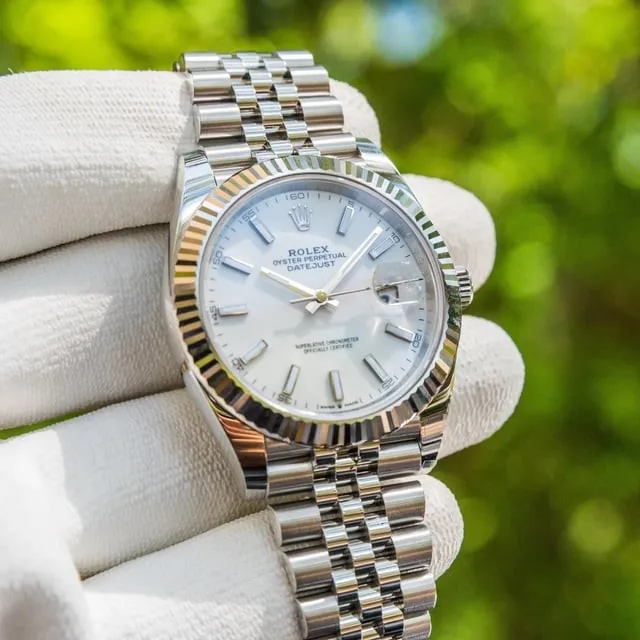 The Datejust 41 is a well-made watch. It is not the Submariner, and its resale curve reflects that. Expect to absorb a 15 to 25 percent loss if you buy new. Credit: u/No-Result6622
The Datejust is a well-made watch. It does not hold its value the way a Submariner does. These are different watches with different market dynamics, and the “Rolex holds its value” claim treats them as the same.
If resale genuinely matters to you, the smarter move is buying pre-owned. Someone else has already absorbed the depreciation curve. You’re buying at the bottom of it, not the top.
Do not buy a watch primarily because someone told you it’s a good investment. If a specific reference has demonstrated resale strength, the data will show it. Ask for the data. For the full resale picture by reference, the investment myth piece has the data.
Mistake 3: Ignoring the total cost of ownership
Severity: Expensive but survivable (if caught early)
The sticker price is the number everyone focuses on. It’s not the number that matters.
What matters is what the watch costs you over ten years: purchase price, servicing, insurance, and the strap or bracelet you’ll replace. Here’s what those numbers actually look like.
Servicing. Rolex recommends service every 10 years. Rolex service centres charge $800–$1,200 for a full service. Independent watchmakers charge $400–$800 for the same work. WatchUSeek owner-reported service threads suggest the real-world interval is often 7–10 years, depending on how much the watch is worn and whether it’s exposed to water or shocks. Budget for one service in a 10-year window, possibly two.
For Omega: Omega recommends service every 5–8 years. Omega service centres charge $500–$900. Independent watchmakers charge $300–$600. The shorter recommended interval means you’re more likely to need two services in a decade.
Insurance. Specialist watch insurance, providers like Hodinkee Insurance or Jewelers Mutual, runs approximately $1–$2 per $100 of value annually. On a $3,000 watch, that’s $30–$60 per year, or $300–$600 over ten years. Your homeowner’s or renter’s policy may cover watches, but check the sub-limit for jewellery and valuables. Many policies cap at $1,000–$1,500 without a scheduled rider.
Straps and bracelets. You will replace the strap. Almost everyone does within the first six months. A quality aftermarket leather strap runs $50–$150. An OEM bracelet replacement costs $300–$600.
Add it up for a $3,000 watch: purchase price, one service at $400–$800, ten years of insurance at $300–$600, one strap at $50–$150. The total is $3,750–$4,550, call it $4,200–$5,000 with a buffer for the unexpected.
That’s still a reasonable thing to spend. But you should know what you’re agreeing to before you agree to it.
💡 Run the numbers for your actual budget. The First Watch Budget & Total Cost of Ownership Calculator breaks down every cost line, servicing, insurance, straps, depreciation, for any purchase price between $500 and $6,000. The $4,200–$5,000 figure above is the average; your number depends on the brand, the movement type, and how you plan to wear it. Plug in your shortlist and see what you’re actually committing to.
Mistake 4: Following the “buy the best you can afford” rule
Severity: Expensive but survivable
This is the default Reddit answer to every first-watch question. It comes from collectors who already own multiple watches and are optimising for long-term satisfaction. For them, it’s reasonable advice. For a first buyer, it optimises for exactly the wrong variable.
Here’s the specific failure mode. You stretch to $6,000 for a Rolex Submariner because forum consensus says it’s the right move. Six months later, you discover you actually prefer a slim dress watch to a 47mm-lug-to-lug sports watch. You now own a $6,000 watch that doesn’t fit your life, and selling it returns roughly $4,800–$5,400. That’s a $600–$1,200 lesson on top of the emotional cost of getting it wrong.
The milestone purchase context makes this worse. A promotion or significant birthday creates real pressure to spend more than you planned. The occasion feels important, which makes a more expensive watch feel appropriate. That pressure is understandable. It’s also a trap. The occasion doesn’t change what watch fits your wrist, your wardrobe, or your actual preferences. And those preferences may not be fully formed yet, because you haven’t owned a serious watch before.
The better framework: spend 70–80% of your maximum budget on your first watch. If your ceiling is $4,000, buy in the $2,800–$3,200 range. The remaining budget is your “I learned what I actually want” reserve. If the first watch turns out to be exactly right, put that money toward a second watch in two years. If it turns out to be wrong, you have room to course-correct without a painful loss.
This isn’t pessimism about your ability to choose well. It’s an honest acknowledgement that watch preferences are learned, not innate. The first watch teaches you things the research cannot.
Mistake 5: Buying a watch you’ve never worn (the sizing problem)
Severity: Expensive but survivable
Case diameter is the number everyone quotes. It’s not the number that matters for fit.
Lug-to-lug distance, the measurement from the tip of one lug to the tip of the opposite lug, determines how a watch sits on your wrist. Two watches with identical 40mm case diameters can wear completely differently depending on their lug-to-lug measurement.
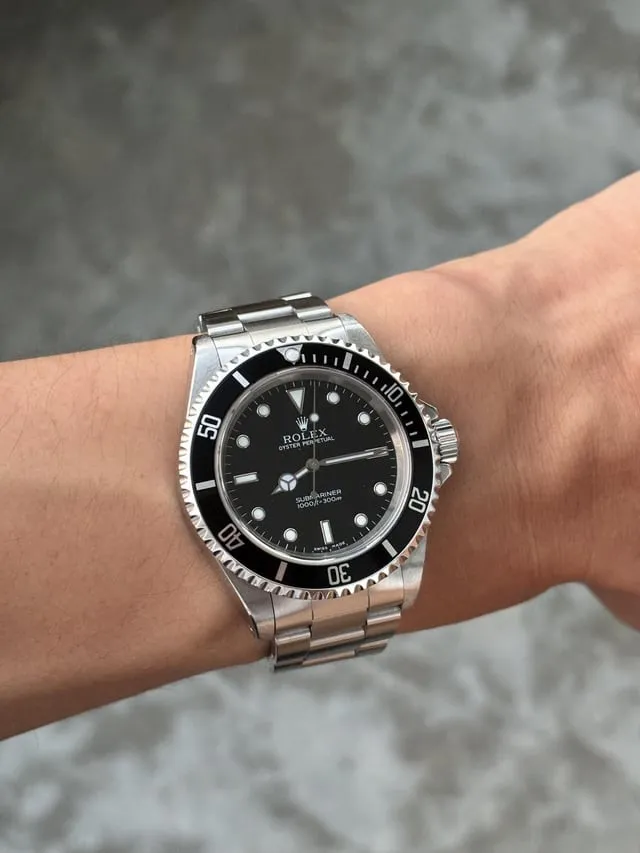 The Submariner’s 47mm lug-to-lug is the number that matters, not the 41mm case diameter. On a smaller wrist, the lugs will overhang. You need to try it on to know. Credit: u/CandiedDoo
Specific numbers: the Rolex Submariner 41mm has a lug-to-lug distance of 47mm. The Omega Seamaster 300M 41mm has a lug-to-lug of 46.5mm. The Grand Seiko SBGR261 has a lug-to-lug of 43.5mm at a 40mm case diameter. On a 6.5-inch wrist, the difference between 43.5mm and 47mm is visible and tactile. The Submariner will overhang the wrist. The Grand Seiko will sit within it.
You cannot reliably judge this from photos or spec sheets. You have to try the watch on.
If you’re buying new, use the AD visit for this purpose even if you plan to buy elsewhere. Ask to try on every reference on your shortlist. Wear each one for at least five minutes. Check it against a shirt cuff. Photograph it on your wrist. The staff will not mind, this is a normal part of the buying process, and any AD worth visiting will accommodate it.
If you’re buying pre-owned and can’t try the watch on first, find the lug-to-lug measurement and compare it to a watch you already own and know fits well. Measure your current watch’s lug-to-lug with a ruler. That comparison is more useful than any spec sheet.
The cost of getting sizing wrong: selling a $3,000 watch pre-owned typically returns $2,000–$2,400. That’s a $600–$1,000 lesson. It’s survivable. It’s also entirely avoidable.
Mistake 6: Refusing to consider pre-owned
Severity: Common and fixable (but costs you money to maintain)
The anxiety about pre-owned watches has two main sources. The first is YouTube fake-watch content, which is genuinely useful for understanding authentication risks but creates a distorted picture of how common those risks are on reputable platforms. The second is AD sales staff, who have an obvious incentive to steer buyers toward new inventory.
The actual depreciation curve looks like this: a Rolex Datejust 41 loses approximately 15–25% of its retail value in the first two years of ownership. Chrono24 pre-owned listings for ref. 126300 confirm this range for examples in good to very good condition. Buying pre-owned means someone else absorbed that loss. You’re buying at the bottom of the curve, not the top.
The three risk types from Mistake 1 apply here too, and they’re worth separating again.
Platform risk is materially reduced on Chrono24 by the buyer protection programme and the Trusted Seller designation. A Trusted Seller has passed Chrono24’s vetting process and carries a different risk profile than a private seller on eBay or Facebook Marketplace.
Seller risk is manageable with basic due diligence: feedback volume, transaction history, return policy, and whether the seller provides photos of the movement and caseback alongside the dial.
Authentication risk requires active management, either through a pre-purchase inspection by an NAWCC-certified watchmaker ($50–$150) or by buying from a dealer who provides a written authenticity guarantee.
There’s a specific pre-owned advantage worth naming: references that are waitlisted new, the Rolex Submariner, the GMT-Master II, are available pre-owned on Chrono24 without the AD relationship requirement. You’ll pay a premium over retail in some cases. But you won’t spend 18 months building a purchase history at an AD hoping to be offered an allocation.
For a first buyer with a $3,000–$4,500 budget, pre-owned often means a better-finished watch than buying new at the same price point. That’s not a compromise. It’s the smarter move for most people in this situation.
Mistake 7: Buying for the brand name rather than the watch
Severity: Common and fixable
This is the most reversible mistake on the list. It’s also the most common and the most emotionally loaded, because the brand name is doing real work that’s hard to quantify.
The Rolex name carries social legibility that Grand Seiko does not. If you wear a Rolex Submariner, most people in a professional context will recognise it as a serious watch. If you wear a Grand Seiko SBGR261, most people will not know what it is. That recognition gap is a legitimate factor in your decision. It should be a conscious choice, not a default.
Here’s the concrete comparison. The Grand Seiko SBGR261 retails at approximately $3,500. The Rolex Oyster Perpetual 36 retails at approximately $6,150, with pre-owned examples on Chrono24 trading at $5,000–$5,500.
At equivalent price points, the Grand Seiko’s dial finishing (the Zaratsu-polished surfaces, the textured dials produced at the Shinshu atelier) is more refined than what Rolex produces at the same tier. That’s not a hot take. It’s a craft comparison that anyone who has held both watches can verify. Hodinkee’s coverage of Grand Seiko’s dial-making process documents this in detail if you want the technical specifics.
The Rolex carries more social recognition and stronger resale liquidity. The Grand Seiko delivers more watch per dollar in finishing and movement accuracy. Neither answer is wrong. But you should be making the choice deliberately.
Omega sits in a different position. The Omega Seamaster 300M with METAS Master Chronometer certification meets a genuine technical standard: -0/+5 seconds per day accuracy and 15,000 gauss magnetic resistance. That’s a real specification with real engineering behind it. Omega’s trade-off is that its marketing spend is high relative to its movement investment compared to Grand Seiko, you’re paying for brand infrastructure as well as the watch. Name that trade-off to yourself before you buy.
The question to ask about any watch on your shortlist: “Would I still want this watch if the name on the dial were different?” If yes, it’s the right watch. If no, be honest about what you’re actually buying. That’s not a reason not to buy it, social legibility is a real value. But it should be a conscious purchase, not an unconsidered one.
The pattern behind all seven mistakes
Every mistake on this list shares the same root cause. Each one optimises for the watch rather than for the experience of owning it as a first buyer.
Buying an unauthenticated watch optimises for the deal. Buying for resale value optimises for the financial narrative. Ignoring total cost of ownership optimises for the sticker price. Spending your maximum budget optimises for the watch you think you want before you know what you actually want. Skipping the try-on optimises for convenience. Refusing pre-owned optimises for the new-watch experience. Buying for the brand name optimises for external recognition.
None of these are irrational impulses. They’re all understandable. They’re also all ways of making the decision about the watch rather than about you.
Before you buy, answer two questions honestly:
- Have I worn this exact reference on my wrist for at least 10 minutes?
- Do I know what this watch will cost me over 10 years, purchase price, servicing, insurance, and straps?
If the answer to either question is no, you’re not ready to buy. That’s not a criticism. It’s a checklist. Both questions have answers you can get before you spend the money.
For the total cost calculation, the TCO guide walks through every cost line in detail. For pre-owned buying, the pre-owned buying guide covers the three risk types and the platform-by-platform comparison. For navigating the AD experience, the AD navigation guide covers the power dynamic honestly. For the investment myth in full, the investment myth piece has the resale data by reference.
One honest closing note: most first-watch mistakes are survivable. The resale market is real, the community is large, and a $600 lesson on a $3,000 watch is not a catastrophe. The goal of this piece is not to make you afraid to buy. It’s to help you avoid the $2,000 lessons. The ones that come from buying a watch you can’t authenticate, or spending your entire budget on a reference you’ll want to sell in six months.
The framework is simple. Know what you’re buying. Know what it will cost you. Try it on first. Everything else is preference, and preference is something you’re allowed to develop over time.