Why this watch matters
The Tissot PRX sits at $375–$825 depending on variant and retailer. At that price, you are getting a Swiss-made movement, a sapphire crystal, 100 metres of water resistance, and an integrated bracelet on a stainless steel case. A decade ago, that specification list would have cost you considerably more. Today it is available off the shelf, without a waitlist, without an AD relationship, and without the power dynamic that comes with trying to buy something that is genuinely scarce.
That accessibility is part of why the PRX generates such strong opinions online. Watch media has covered it relentlessly, and the backlash to that coverage is now almost as loud as the original praise. Neither reaction is particularly useful to you as a first-time buyer.
What is useful is this: the PRX is a legitimate reference point for understanding what the Swiss-made category actually delivers at this price tier. If you are trying to calibrate whether a $3,000 or $5,000 watch is worth the step up, spending time with a PRX first gives you a concrete baseline. The finishing reflects the price, which is to say it is good but not exceptional. The movement is capable but has a specific service economics problem worth understanding before you buy. The design has a real lineage, drawing from the 1970s Tissot Seastar and sharing visual DNA with the Rolex Oysterquartz, so it is not purely derivative even if it reads that way at a glance.
The PRX is also a watch that people buy to mark things. Birthdays, first jobs, a child’s arrival. The price point makes that feel meaningful without being financially reckless, and the design is restrained enough to wear for years without it dating badly. That context is worth acknowledging, though it is not a reason to buy a watch that does not otherwise suit you.
Owner sentiment
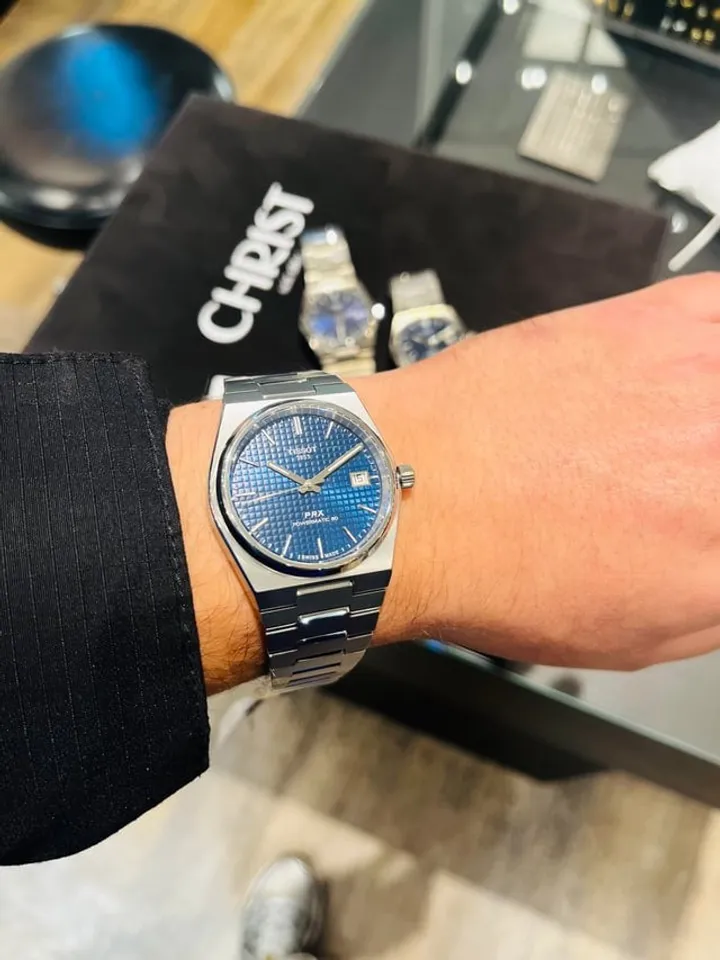
The bracelet is the most consistently praised feature of the PRX, and the praise holds across wrist sizes, dial preferences, and variants. One owner describes the light play on the integrated bracelet as “unreal” and says the watch produced an “ah ha” moment on first try-on after ignoring the hype for a year. Another simply writes: “Niiiiiiiice. Sooooo smooth. That bracelet.” The consistency of this reaction is notable because bracelet quality is one of the areas where watches at this price most often disappoint.
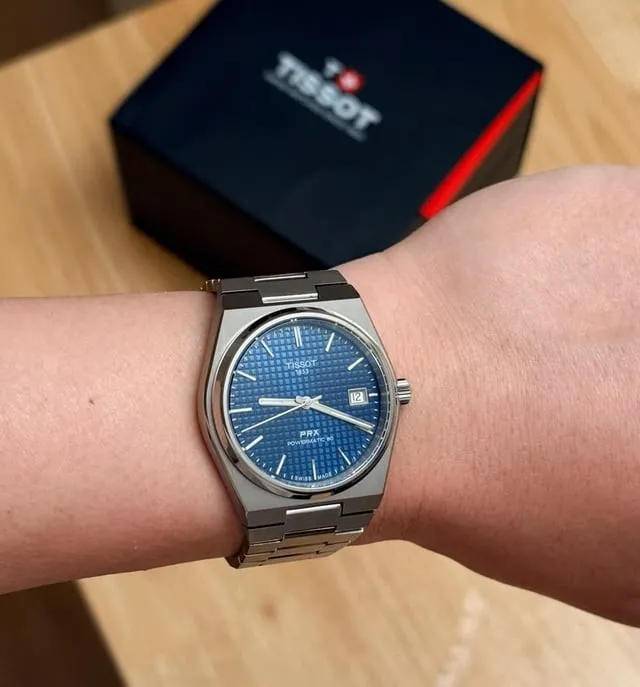 The bracelet’s alternating brushed and polished links are the feature owners cite most consistently, across every dial colour and case size. Credit: u/Gagaliya
Wearability follows closely. Owners report the PRX staying on the wrist for extended periods, slipping under a shirt sleeve without fuss, and working as a daily rotation piece without demanding attention. One owner of the 35mm automatic says it “is constantly in rotation” after more than a year. The OEM rubber strap, available for around 50 euros, comes up repeatedly as an upgrade for extended wear, with one owner reporting the watch has lived on the rubber strap for seven of the twelve months they have owned it.
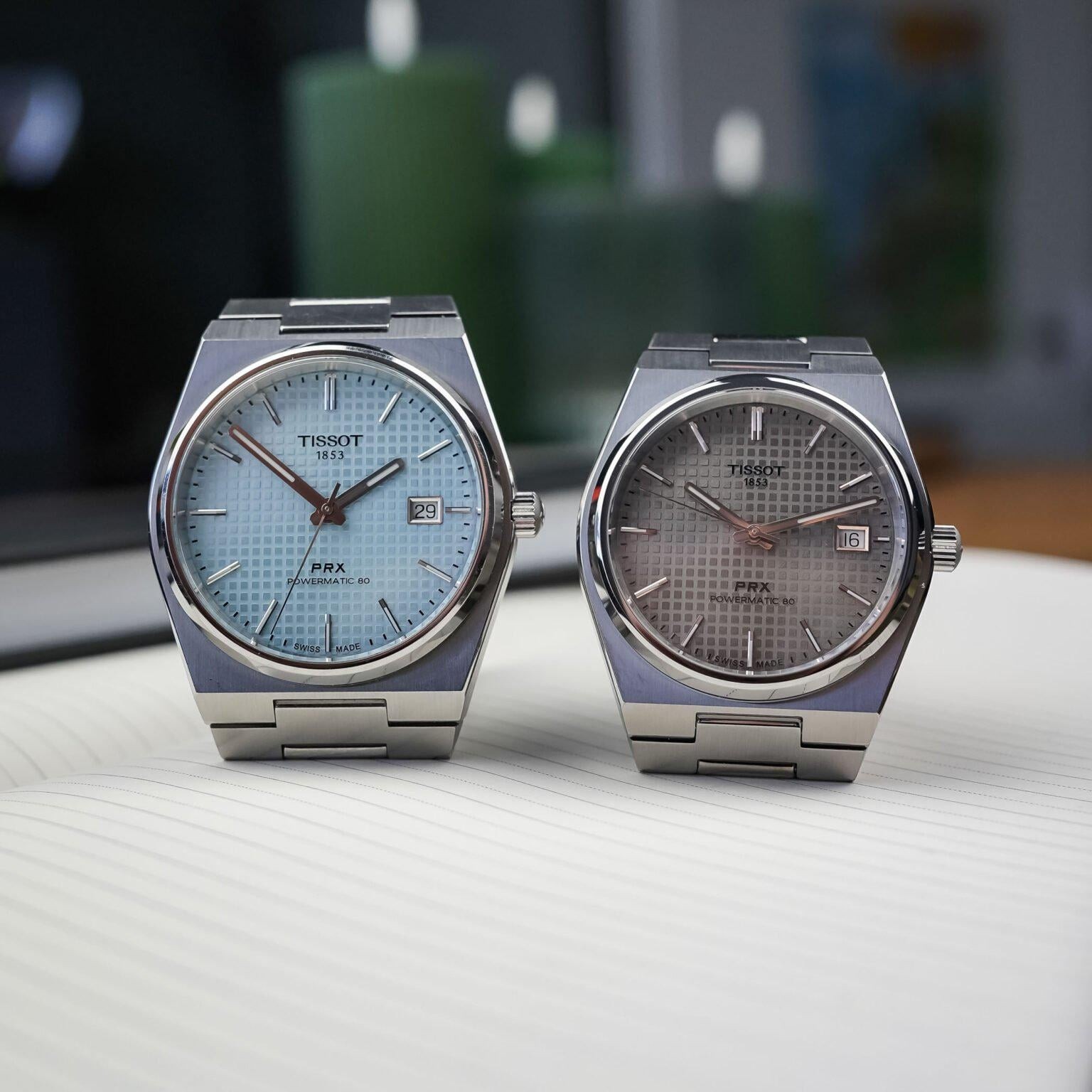
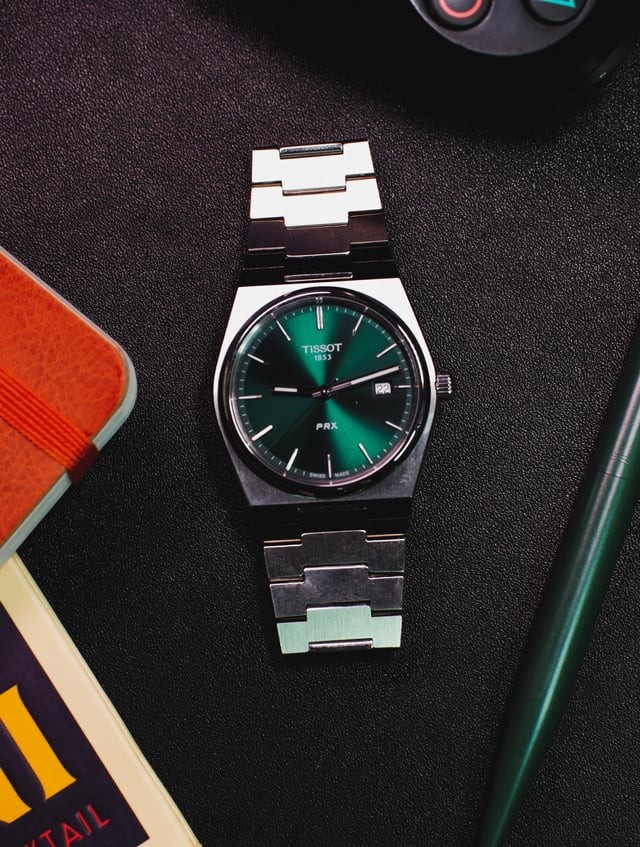
Dial colour matters more than most reviews acknowledge. The blue and ice-blue variants draw the strongest positive reactions. “I’ve gotten more compliments on my ice blue than any watch I’ve owned,” writes one owner. Another describes the blue sunburst as sometimes reading like a dark purple in certain light, which they consider a feature. The teal colourway is where opinions split. Multiple owners describe it as looking “plasticky” in person, and this is not a fringe view. One buyer who found the blue “absolutely gorgeous” specifically notes they could see how the teal would read as cheap. If you are considering teal, see it in person first.
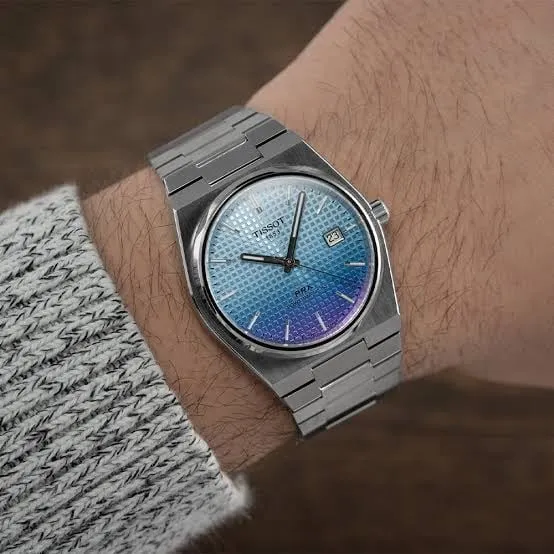 The blue sunburst can read as dark purple under certain light. Owners consistently rate it above the teal, which some find plasticky in person. Credit: u/Andrei_The_Legend
The dislikes are real and worth naming directly. A portion of buyers find the dials underwhelming in person across all variants, not just teal. One owner writes that Seiko’s dials at a similar or lower price point had set expectations the PRX could not meet. The case geometry draws some criticism too, with the flat brushed surface and shiny bezel described by one reviewer as giving the watch a “toyish” appearance. These are not fringe complaints from contrarians. They come from people who looked at the watch carefully and found it wanting.
The small crown is a recurring ergonomic note, particularly from owners who also wear Seiko or Longines references. “Over time I’ve found the crown to be too small. I have more difficulty adjusting my PRX than my Seikos or Longines,” writes one owner. It is not a dealbreaker for most, but it is worth knowing before you buy.
Size fit is the decision most buyers report getting wrong. The 40mm’s lug-to-lug is 51.5mm, which wears larger than the case diameter implies. One buyer with a 6.3-inch wrist chose the 35mm specifically because of this, and explicitly recommends trying both in person before buying. Another buyer with the same wrist size came to the opposite conclusion after trying both on. A third chose the 35mm for a 6.7-inch wrist because the 40mm felt too chunky. The data here is not that one size is correct. It is that the answer is personal and the only way to know is to try them both.
The hype saturation is a genuine factor in how people feel about this watch. “Ironically the overexposure of this watch has made me less likely to buy one, despite it clearly offering great design, quality, heritage, and a nice auto movement for a great price,” writes one owner. That is an honest reaction, and it is worth separating from the question of whether the watch itself is good. The PRX is popular because it is genuinely good at its price. It is also heavily promoted. Those two things are both true.
Expert perspective
The quartz PRX uses the ETA F06.115 calibre. This is not a commodity cell. It is a well-regarded Swiss movement with a strong service track record, and calling it merely “very OK” is, as one technically-minded owner puts it, “a serious understatement.” If accurate timekeeping and long-term reliability are your priorities and you have no particular attachment to the ritual of an automatic movement, the quartz is the more defensible choice at this price point. It is also thinner, which improves the proportions of the integrated bracelet.
The quartz does have one meaningful omission: it lacks the anti-reflective coating that the automatic version includes. This is not a minor detail. AR coating affects legibility in bright light and is a specification you would expect at this price. Tissot’s decision to include it on the automatic and omit it from the quartz is a real trade-off, not a rounding error. Some quartz owners report that the sunburst dial compensates by reflecting light attractively even without AR, but that is a preference, not a specification.
The Powermatic 80 automatic is a capable calibre with an 80-hour power reserve and, in at least one owner’s case, accuracy approaching COSC levels over an extended period. The strength and the weakness sit in the same paragraph because they are inseparable: the movement contains plastic components and Tissot’s standard service approach is full module replacement rather than repair. Community reports on service costs vary, and you should treat any single figure with scepticism. Based on available owner reports, a full movement replacement at a Tissot service centre or qualified independent watchmaker runs somewhere in the range of $135–$400 depending on the work required and who does it. That range comes from owner-reported experiences, not Tissot’s published pricing, which is not publicly itemised. What is clear is that the cost is a meaningful fraction of the watch’s purchase price, and the economics are structurally different from a repairable movement in a more expensive watch.
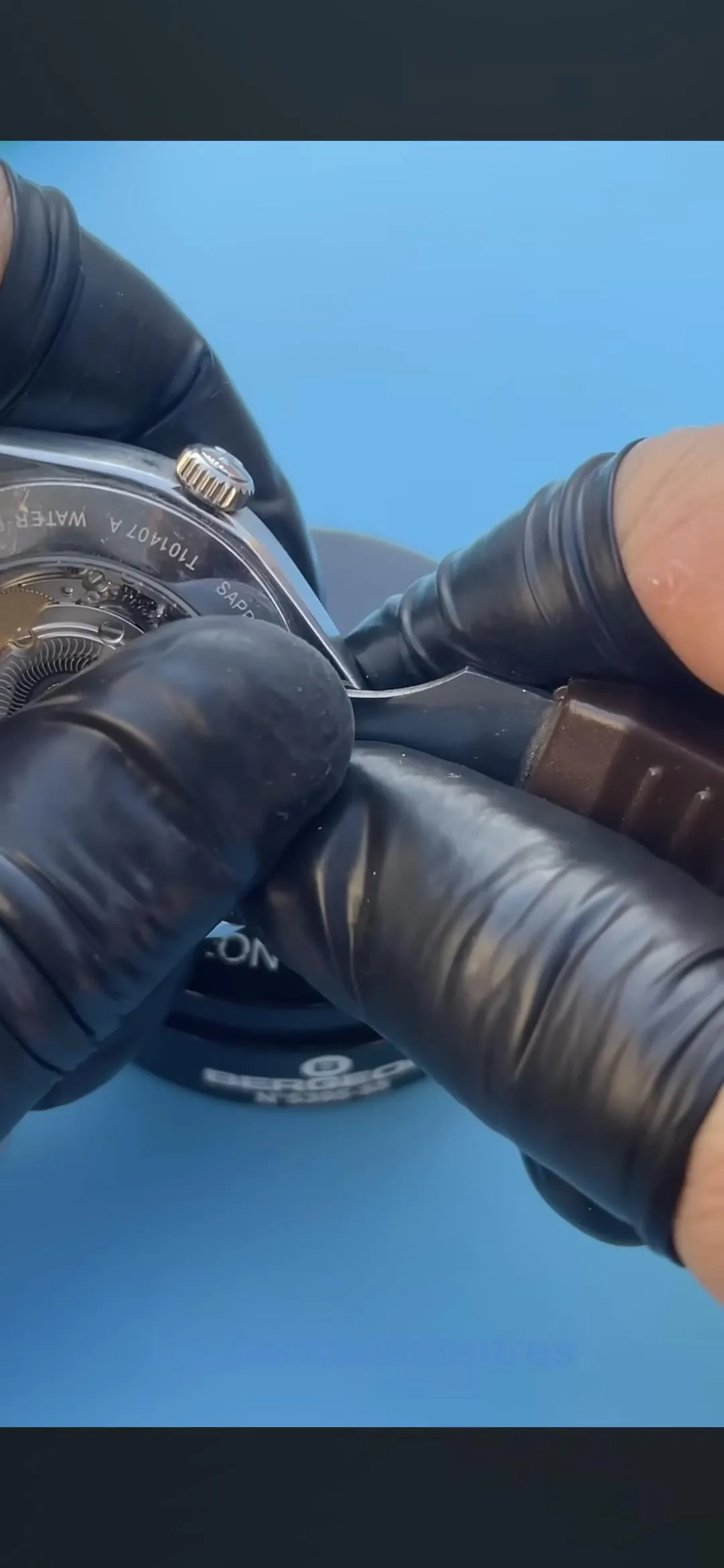 The transparent caseback shows the Powermatic 80 rotor. The movement is capable, but Tissot’s standard service approach is full module replacement rather than repair. Credit: u/darth_malmal
One owner’s experience is instructive here. They changed the battery on their quartz PRX themselves, the movement did not restart, and they paid $135 for a full movement replacement. They describe this as “not crazy” and say they will use a professional next time. That is a reasonable conclusion, but it is also a reminder that even routine maintenance on these movements carries risk if not handled correctly.
The PRX’s design lineage is genuine. The 1970s Tissot Seastar is the direct ancestor, and the visual relationship to the Rolex Oysterquartz is real rather than coincidental. One owner who describes themselves as “a design guy and a sucker for thoughtful nods to great design from the past” puts it plainly: the PRX is “the antidote” to the Tudor Black Bay design language. That is a useful frame. If you are drawn to the integrated bracelet, angular case, and 1970s sports-dress aesthetic, the PRX is working from a legitimate source rather than simply copying a trend.
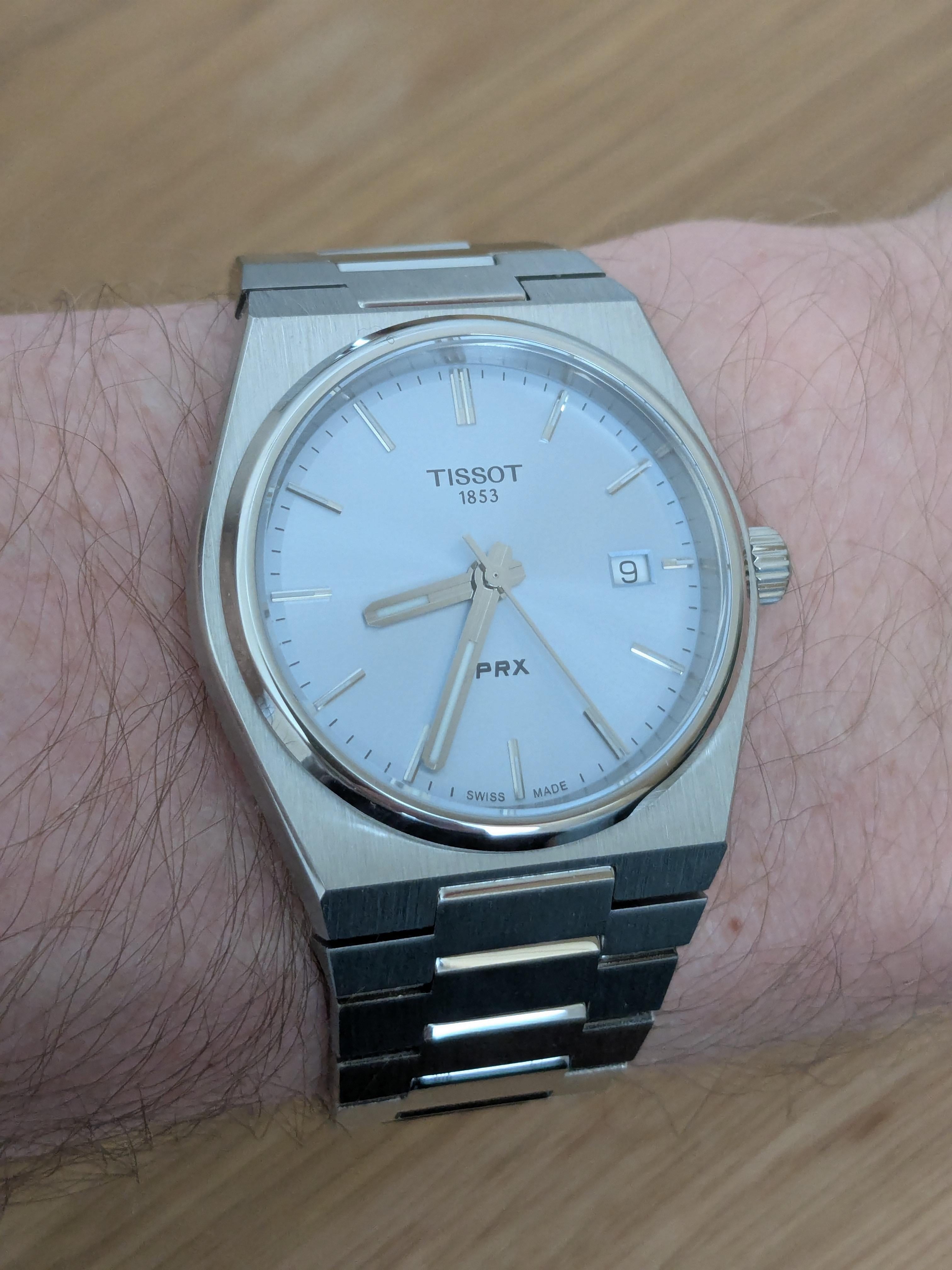
PRX fakes are actively circulating, and the authentication check is straightforward. A genuine automatic PRX says “Powermatic 80” on the dial. A genuine quartz says only “PRX.” Any listing showing “Powermatic 80” on the dial with a battery compartment on the case back is a counterfeit. This is not a subtle tell. If you are buying pre-owned or from a grey-market platform, check this first. For grey-market new stock, Jomashop is the most commonly cited source in the community, but grey-market purchases involve three separate risk categories that are worth keeping distinct. Platform risk covers return policies and warranty terms that differ from an authorised dealer purchase. Seller risk covers condition and provenance of the specific piece. Authentication risk covers the fake issue described above. These are not one undifferentiated “be careful” warning. They are three different questions requiring three different checks.
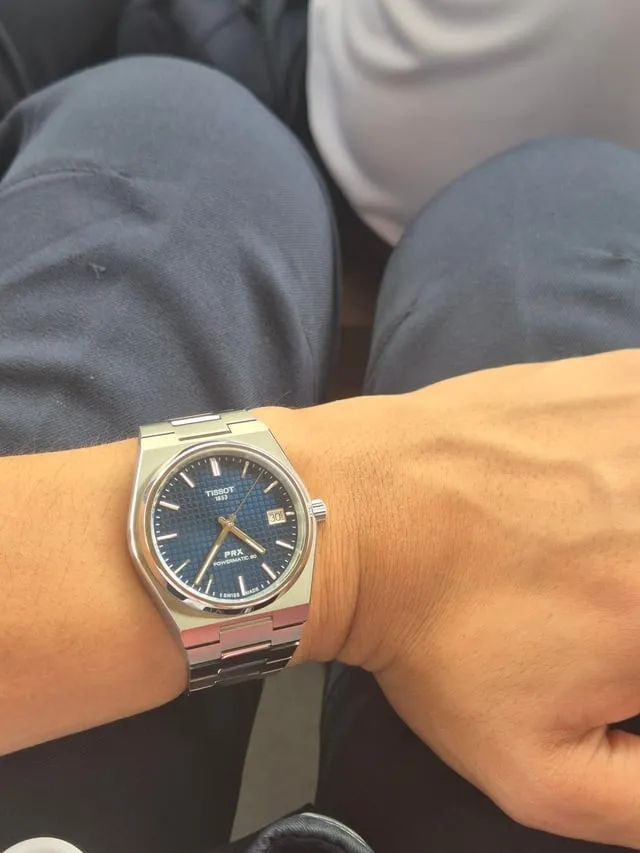 The authentication check is simple: a genuine automatic dial reads ‘Powermatic 80’ below the PRX logo. A quartz dial does not. Any listing that contradicts this is a fake. Credit: u/fidms
Common comparisons
The brief does not include structured comparison data for the PRX, so rather than fabricating head-to-head verdicts, it is more useful to map the decision space honestly.
The watch most often mentioned alongside the PRX in community discussions is the Seiko range at similar or lower price points. The comparison is almost always about dial quality. Seiko’s sunburst and textured dials at $200–$500 are genuinely impressive, and several PRX critics cite Seiko as having set expectations the PRX cannot meet. If dial finishing is your primary criterion, Seiko is a serious alternative and the comparison is fair. Where the PRX pulls ahead is in the integrated bracelet execution and the Swiss-made movement, both of which Seiko does not match at this price.
The Christopher Ward Twelve comes up as the next step up in finishing quality. One owner who has handled both describes the C.W. Twelve as “a step up in finishing” while still finding the PRX “lovely and very affordable.” The C.W. Twelve retails at a higher price point and is not available through traditional AD networks, which changes the buying experience. If finishing quality is the gap you are trying to close, the C.W. Twelve is the comparison worth making before committing to the PRX.
The Tudor Black Bay is referenced in the brief as a design counterpoint rather than a direct competitor. At roughly twice the price of the PRX automatic, the Tudor offers a repairable movement, better finishing, and a different aesthetic entirely. The comparison is useful for calibrating what the step up to $2,000–$2,500 actually buys you in the Swiss-made category.
The Citizen Tsuyosa comes up in bracelet discussions, with at least one PRX owner noting they would have preferred a bracelet style closer to the Tsuyosa’s design. At a lower price point, the Tsuyosa is worth considering if the integrated bracelet aesthetic appeals but the PRX’s specific bracelet execution does not.
The Rolex Oysterquartz is the design ancestor rather than a competitor, but it is worth naming because the visual relationship is close enough that some buyers find the PRX reads as derivative. Whether that bothers you depends on whether you see the PRX as a tribute to a legitimate design lineage or as a watch that is trading on someone else’s equity.
Overall take
The Tissot PRX is a $375–$825 Swiss-made watch with an integrated bracelet, sapphire crystal, 100m water resistance, and a design that references the 1970s Tissot Seastar and the Rolex Oysterquartz. At that price, those are real specifications. The finishing reflects the price, which is to say it is good but not exceptional, and anyone who tells you otherwise has not spent time with a Christopher Ward Twelve or a Tudor Black Bay at twice the money.
The movement question is the one most first-time buyers underestimate. The Powermatic 80 automatic is a capable calibre with an 80-hour power reserve, but it contains plastic components and Tissot’s standard service approach is full module replacement rather than repair. Community reports put that replacement in the $135–$400 range depending on the watchmaker and the work required, which is a meaningful fraction of what you paid for the watch. That is not a reason to avoid the PRX, but it is a reason to factor ongoing costs into your decision rather than treating the purchase price as the whole number. The quartz variant sidesteps this concern somewhat, using the ETA F06.115 calibre, which is accurate and long-lived, though it lacks the anti-reflective coating the automatic includes.
The hype is real and so is the backlash to the hype, and neither tells you much about whether this watch works for you. What the evidence does tell you is this: try both sizes in person before buying, because the 40mm’s 51.5mm lug-to-lug wears larger than the case diameter implies, and the size decision is the one buyers most consistently report getting wrong. Check the dial colour in person too, particularly if you are considering teal.
If you are buying pre-owned or grey market, the authentication risk on the PRX is specific and easy to check: the automatic dial says “Powermatic 80,” the quartz dial does not. Any listing that contradicts that is selling you a fake. For grey-market new stock, Jomashop is the most commonly cited source in the community, but understand that grey-market purchases carry platform risk (return policies differ from AD purchases), seller risk (condition and provenance), and authentication risk (the fake issue above) as three separate considerations, not one undifferentiated warning.
The PRX is not a watch you should buy because watch YouTube told you it is the best option under $1,000. It may well be, for you, but that is a conclusion worth reaching on your own terms after handling it. It is also not a watch to avoid because the same YouTube ecosystem made it ubiquitous. The watch itself is unchanged by how many people own one. What it is, plainly, is a well-specified Swiss-made watch at a price where well-specified Swiss-made watches are still relatively rare, with a bracelet that consistently surprises people who try it on, and a set of real trade-offs that are worth understanding before you hand over your money.