Why Pre-Owned Is Often the Right First Luxury Watch Choice
Key takeaways
- Someone else already absorbed the worst depreciation: A new non-Rolex watch loses roughly 20–30% of its retail value in year one, buying pre-owned means stepping in after that drop, not before it.
- The financial case varies by reference: The Seamaster 300M holds pre-owned value unusually well, narrowing the gap; always check live Chrono24 prices against new retail before assuming an advantage exists.
- Three risk types, not one vague anxiety: Platform risk, seller risk, and authentication risk are distinct, collapsing them into a single fear leads to bad decisions in both directions.
- A $75–$150 inspection is non-negotiable on private purchases: An independent watchmaker confirms authenticity and movement condition; it is the cheapest insurance available on a $3,000 watch.
- New wins in specific, nameable scenarios: Genuine Rolex allocation scarcity, a meaningful preference for the new-watch experience, and thin pre-owned markets are the three legitimate reasons to pay the new premium.
Buying pre-owned isn’t a compromise. For most first buyers in the $1,500–$4,000 range, it is the financially smarter move. That’s the thesis, and it’s worth stating plainly before anything else.
The conventional wisdom runs the other way. You’ve probably heard it: buy new for your first watch, it’s safer, you get the warranty, you know the history.
That advice isn’t wrong exactly. But it isn’t neutral either.
Understanding whose interests it serves is the first step to making a better decision.
The advice you’ve probably already received, and why it’s not neutral
The “buy new for peace of mind” line comes from two places: authorised dealer (AD) sales staff and watch forum consensus. Both have something to protect.
AD staff earn margin on new sales. That’s not a conspiracy, it’s how retail works.
A salesperson who steers you toward a $5,100 new Omega Seamaster over a $3,400 pre-owned one isn’t lying to you. They’re doing their job.
The advice is biased toward new, and you should weigh it accordingly.
Forum consensus is subtler. Many forum members own new watches. They made that choice, often at real financial cost, and they have an emotional stake in it being the right one. The “buy new” advice on Reddit and WatchUSeek isn’t malicious. It’s the advice of people who want their own decision validated.
There is a legitimate kernel of truth here. Buying new eliminates authentication risk, comes with a manufacturer warranty, and gives you the full history of the watch, because there isn’t one yet. These are real advantages, and this piece won’t pretend otherwise.
But for most first buyers in the $1,500–$4,000 range, those advantages don’t outweigh the financial reality of buying new. The depreciation math is the reason.
What actually happens to a watch’s value in year one
A new watch from a non-Rolex brand loses roughly 20–30% of its retail value in the first twelve months after purchase. This isn’t speculation. Chrono24’s pre-owned market data for references including the Omega Seamaster 300M, Tudor Black Bay 58, and TAG Heuer Aquaracer shows it consistently.
Take the Omega Seamaster 300M (ref. 210.30.42.20.01.001) as a concrete example. It retails new at an authorised dealer for approximately $5,100. A 1–2 year pre-owned example in good condition lists on Chrono24 in the $4,999–$5,146 range from certified sellers.
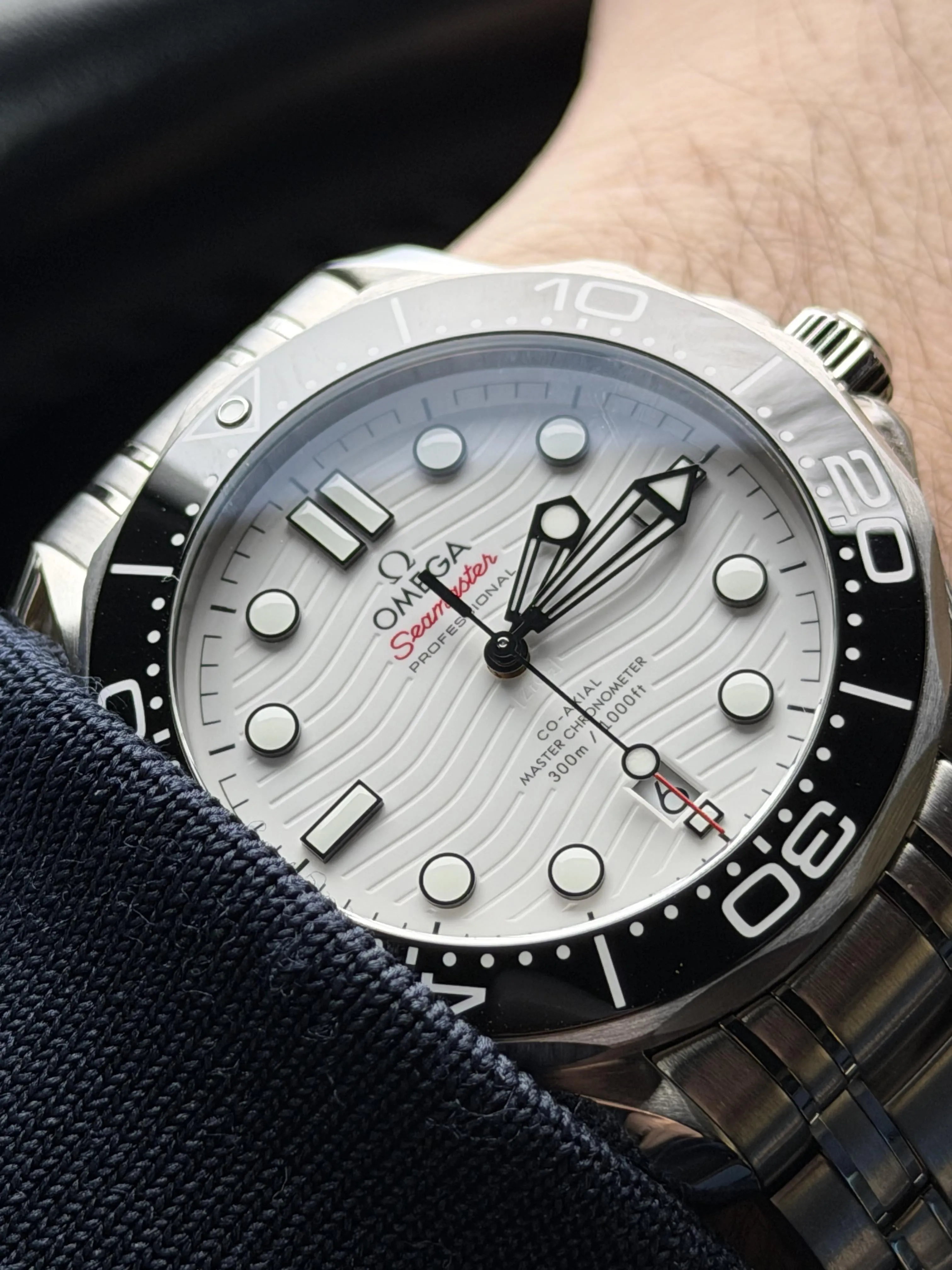 The Seamaster 300M holds pre-owned value unusually well for a non-Rolex reference. Check live Chrono24 prices before assuming the gap over new retail is large, because on this watch it often isn’t. Credit: u/Sensitive-Swan-6436
That gap is narrow. On some listings it disappears entirely. The Seamaster 300M holds its pre-owned value more stubbornly than many references in its tier, so the depreciation advantage that usually drives the pre-owned case is smaller here than the 20–30% rule suggests.
That said, the broader principle still applies across the pre-owned market: someone else absorbed the steepest part of the depreciation curve on most references. When you buy pre-owned, you step in after that drop. The watch doesn’t stop depreciating from that point, but you didn’t pay for the initial fall.
Here’s the scenario that matters most for a first buyer: you spend $5,100 on a new Seamaster, wear it for eighteen months, and decide it isn’t quite right. Maybe the size is off. Maybe you want something with a different character. You sell it. At that point, you’re likely recovering $3,400–$3,800, a loss of $1,300–$1,700 on a watch you owned for a year and a half.
If you’d bought pre-owned at $4,999–$5,146, your exposure on the same outcome is only marginally smaller for this reference. That’s precisely why checking the live pre-owned market before you buy matters. The Seamaster 300M is an unusually strong holder of value. For Omega, Tudor, Grand Seiko, and Longines references with thinner pre-owned demand, the gap between new and pre-owned is wider, and the financial case for pre-owned is correspondingly stronger.
The occasion that prompted the purchase is real and significant. But the occasion doesn’t change the depreciation math. It makes getting the decision right more important, not less.
There is a small set of references where this logic doesn’t apply. The Rolex Submariner ref. 124060, the GMT-Master II ref. 126710BLNR, the Daytona ref. 116500LN, and the Explorer in certain configurations have demonstrated genuine resale strength. These references trade at or near retail on Chrono24 even after several years of ownership. But these are exceptions, not the rule for the Rolex catalogue, and certainly not the rule for the broader market. For every other reference from Omega, Tudor, Grand Seiko, or Longines, the depreciation curve is real and significant.
The worked example: one reference, three purchase paths
The Omega Seamaster 300M (ref. 210.30.42.20.01.001) is a useful worked example. It sits squarely in the $2,500–$5,000 first-buyer range, has a liquid pre-owned market with hundreds of listings at any given time, and has genuine horological credibility. Hodinkee’s coverage of the Seamaster 300M points to the Co-Axial escapement and in-house calibre as meaningful differentiators, not just marketing. Hodinkee has commercial relationships, an insurance product, a shop, so weight their enthusiasm accordingly, but the movement quality claim holds up independently.
Here are the three paths, with honest accounting of what each costs and what it gives up.
Path 1. AD new
Current retail: approximately $5,100 (verified Q2 2025, check Omega’s site before purchasing, as prices change). You get a 5-year Omega warranty, zero authentication risk, full box and papers, and the knowledge that you are the first owner. The Seamaster 300M is not waitlisted; you can walk into most Omega ADs and buy one the same day.
Omega’s marketing spend is high relative to its movement quality, and that’s a fair criticism of the brand. But the Cal. 8800 movement in this reference is genuinely well-made, and the AD experience for Omega is considerably less fraught than for Rolex.
Path 2. Certified pre-owned (Watchfinder, Chrono24 Trusted Seller)
Price range: $4,999–$5,146 for certified listings of this reference on Chrono24, with shipping on top in some cases. Watchfinder’s CPO programme covers authentication, a service check, and a 12-month warranty. Chrono24 Trusted Seller status requires a verified transaction history and comes with platform buyer protection.
What CPO doesn’t guarantee: original box and papers may be absent, and cosmetic wear (light scratches on the case, bracelet stretch) is normal at this age. Watchfinder has inventory to move; they are a commercial source, not a neutral one. But their authentication process is documented and their warranty is real.
The dollar gap between Path 1 and Path 2 on this reference: narrow to negligible at current market prices. For the Seamaster 300M specifically, the pre-owned price advantage that exists for many other references largely disappears in the certified tier. That is the cost of the new-watch experience on this reference, and on this one, it may be close to zero.
Path 3. Private seller (eBay, Chrono24 private listing)
Price range: $2,800–$3,400 for the same reference. The authentication burden falls entirely on you. There is no warranty. But the lowest prices in the market live here, and a full set, box, papers, original bracelet, is more commonly available from private sellers than from dealers who have broken sets apart. The risk profile is higher, but not uniformly high. A private seller with 500+ eBay feedback, movement photos, and a clear return policy is a different proposition from a zero-feedback listing with stock photos.
The gap between Path 1 and Path 3 is $1,700–$2,300. Whether that’s worth the additional due diligence is the decision this piece is helping you make.
When pre-owned wins, and when it doesn’t
Locate yourself in one of these scenarios and you’ll have a direct answer, not a hedge.
Pre-owned wins
Scenario 1: Budget $1,500–$4,000, reference is widely available pre-owned.
If you’re looking at Omega, Tudor, Grand Seiko, or Longines, the pre-owned market is liquid. Hundreds of listings exist on Chrono24 at any given time. You can be selective about condition, seller history, and set completeness. The financial case for pre-owned is strong enough here that buying new requires a specific reason, not just a default preference. Note that the strength of that case varies by reference: always check the live pre-owned price against new retail before assuming a gap exists.
Scenario 2: The reference you want is discontinued or waitlisted new.
The Tudor Black Bay 58 in certain dial configurations and the Grand Seiko SBGA211 “Snowflake” are examples where pre-owned isn’t just the smarter financial move, it’s the only practical path. Fratello Watches’ hands-on comparison of Grand Seiko finishing quality makes the case that the SBGA211’s dial work is objectively better than what Rolex or Omega produces at equivalent price points. If you want that watch, pre-owned is where you find it.
Scenario 3: You want to access a higher-tier reference than your budget allows new.
A $4,000 budget buys a new Tudor Black Bay or a new Omega Seamaster. The same $4,000 buys a pre-owned Rolex Explorer ref. 114270 in good condition. These are not equivalent watches. The Explorer’s movement finishing, case quality, and long-term resale liquidity represent a genuine step up. Fratello’s comparative reviews of the Explorer vs. Tudor and Omega alternatives document the finishing difference in detail. Pre-owned is the mechanism that makes this trade-up possible.
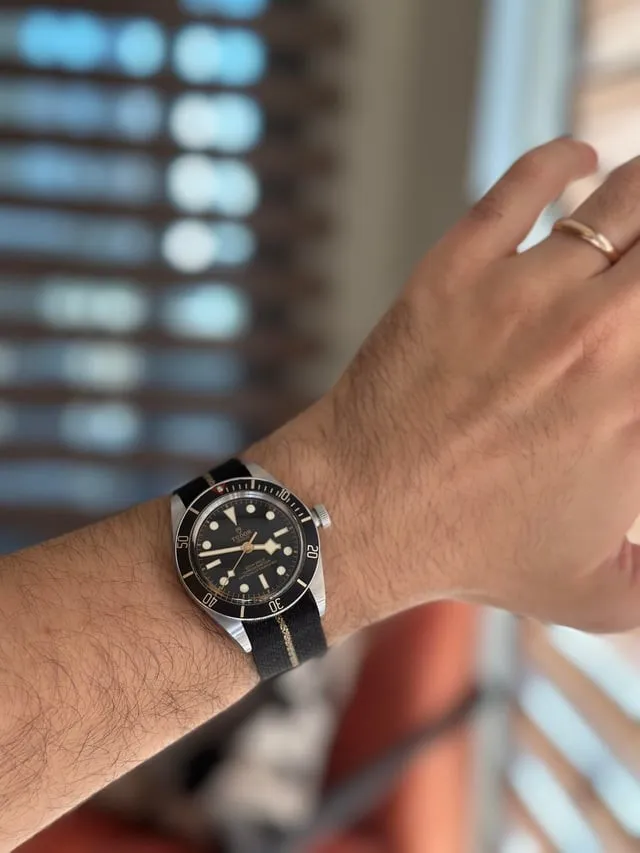 The Black Bay 58 is a genuinely good watch at its new price. Pre-owned is the mechanism that lets a $4,000 budget reach past it into Rolex Explorer territory. Credit: u/CanayGicvan
New wins
Scenario 1: The reference is a Rolex with genuine allocation scarcity.
The Submariner ref. 124060, the GMT-Master II ref. 126710BLNR, and the Daytona ref. 116500LN are a different calculation. Grey market prices for these references have compressed since their 2021–2022 peak, but they still trade at or near retail on Chrono24. The pre-owned price advantage that exists for Omega or Tudor largely disappears here. If you can access one of these references through an AD relationship, buying new is the right path. If you can’t, the grey market premium makes the comparison moot in a different direction.
Scenario 2: The new-purchase experience matters to you.
The unboxing, the first wear, knowing the full history of the watch, these are legitimate preferences, not weaknesses. If the milestone occasion is part of why you’re buying, and the new-watch experience is part of what makes it feel significant, the premium for new is the cost of that experience. That’s a reasonable thing to spend money on. The financial case for pre-owned doesn’t override a genuine preference. It just makes sure you’re paying for it consciously, not by default.
Scenario 3: The brand has thin pre-owned liquidity or limited authentication resources.
Some microbrands and certain German independents have pre-owned markets too thin to navigate safely as a first buyer. If Chrono24 shows fewer than 20 listings for the reference you’re considering, the market is thin. Thin markets mean less price transparency, fewer seller options, and a higher authentication burden. In these cases, new is the lower-friction path.
The direct resolution: if your budget is under $4,000 and the reference you want has a liquid pre-owned market with a genuine gap between new and pre-owned pricing, the financial case for pre-owned is strong enough that buying new requires a specific reason, not just a default preference for new.
The risks are real, here is what they actually are
Pre-owned buying has genuine risks. But “be careful” is not useful advice. The risks are specific, and so are the mitigations.
There are three distinct risk types. Collapsing them into a single anxiety is the mistake most first buyers make.
Platform risk is about whether the platform has buyer protection if something goes wrong. Chrono24’s Trusted Seller programme includes buyer protection and a verified transaction history requirement. eBay’s Money Back Guarantee covers most transactions but has limits. A private sale through a watch forum has no platform protection at all. These are different risk profiles, know which one you’re operating in.
Seller risk is about the individual you’re buying from. A Chrono24 Trusted Seller with 500+ completed transactions, movement photos, and a documented return policy is a different proposition from a zero-feedback private listing with stock images. Feedback history, photo quality (especially movement shots showing the calibre number), and the presence of a return policy are the three things to check before anything else.
Authentication risk is about whether the watch is what it claims to be. For the most common first-buyer references, the tells are specific. For Omega: serial number verification is available through Omega’s online tool. A movement photo should show the calibre number matching the reference year. Dial printing on fakes is often slightly off, font weight, lume plot alignment, and the depth of the text are the places to look. For Rolex: the reference and serial number on the caseback should match the papers; the movement should be visible through the caseback on modern references.
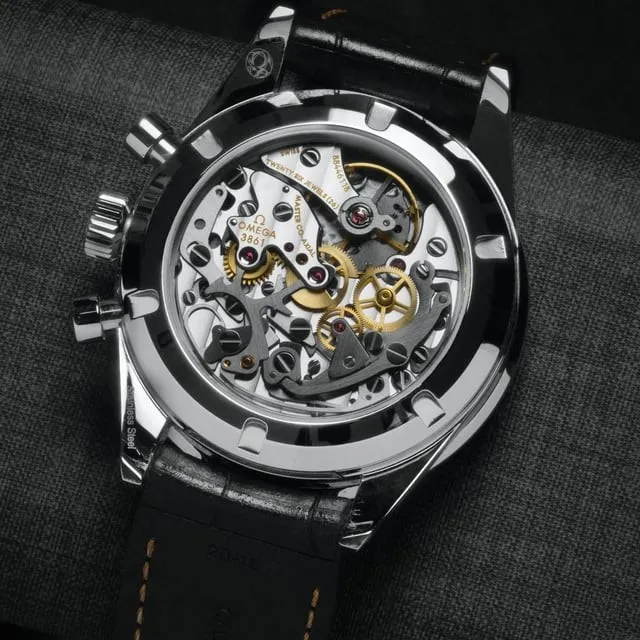 A movement photo showing the calibre number is the first thing to request from any private seller. If they won’t provide one, that is your answer. Credit: u/Hamibh
The National Association of Watch and Clock Collectors (NAWCC) is the professional authentication standard body in the US. Their member directory includes independent watchmakers who offer pre-purchase inspections. An inspection typically costs $50–$150 and is the single most cost-effective risk mitigation available for any private purchase. For a $3,000 watch, spending $100 to have an expert confirm it’s genuine and running correctly is not optional, it’s the minimum due diligence.
The real scam risk lives in a specific place: zero-feedback private sellers, listings with no movement photos, and prices more than 25–30% below market. That last signal is the most reliable red flag. A $3,200 Omega Seamaster on Chrono24 from a Trusted Seller with 500+ transactions and movement photos is a different risk profile from the same watch from a zero-feedback eBay seller at $2,100. Treat them as different decisions, because they are.
How to use this in practice
Step 1: Check listing volume before you commit to a reference.
Go to Chrono24 and search for the specific reference you’re considering. Fewer than 20 listings means a thin market, less price transparency, fewer seller options. In that case, new may be the lower-friction path. Fifty or more listings means the market is liquid enough to be selective.
Step 2: Shortlist Trusted Sellers or CPO dealers with a 12-month minimum warranty.
Watchfinder and Chrono24 Trusted Sellers are the two most accessible CPO paths for most first buyers. Both are commercial sources with inventory to move, but both offer documented authentication and warranty coverage. Use them as your baseline. Private sellers can offer better prices, but only approach them after you’ve established what the CPO price looks like for the same reference.
Step 3: Budget $75–$150 for an independent watchmaker inspection on any private purchase.
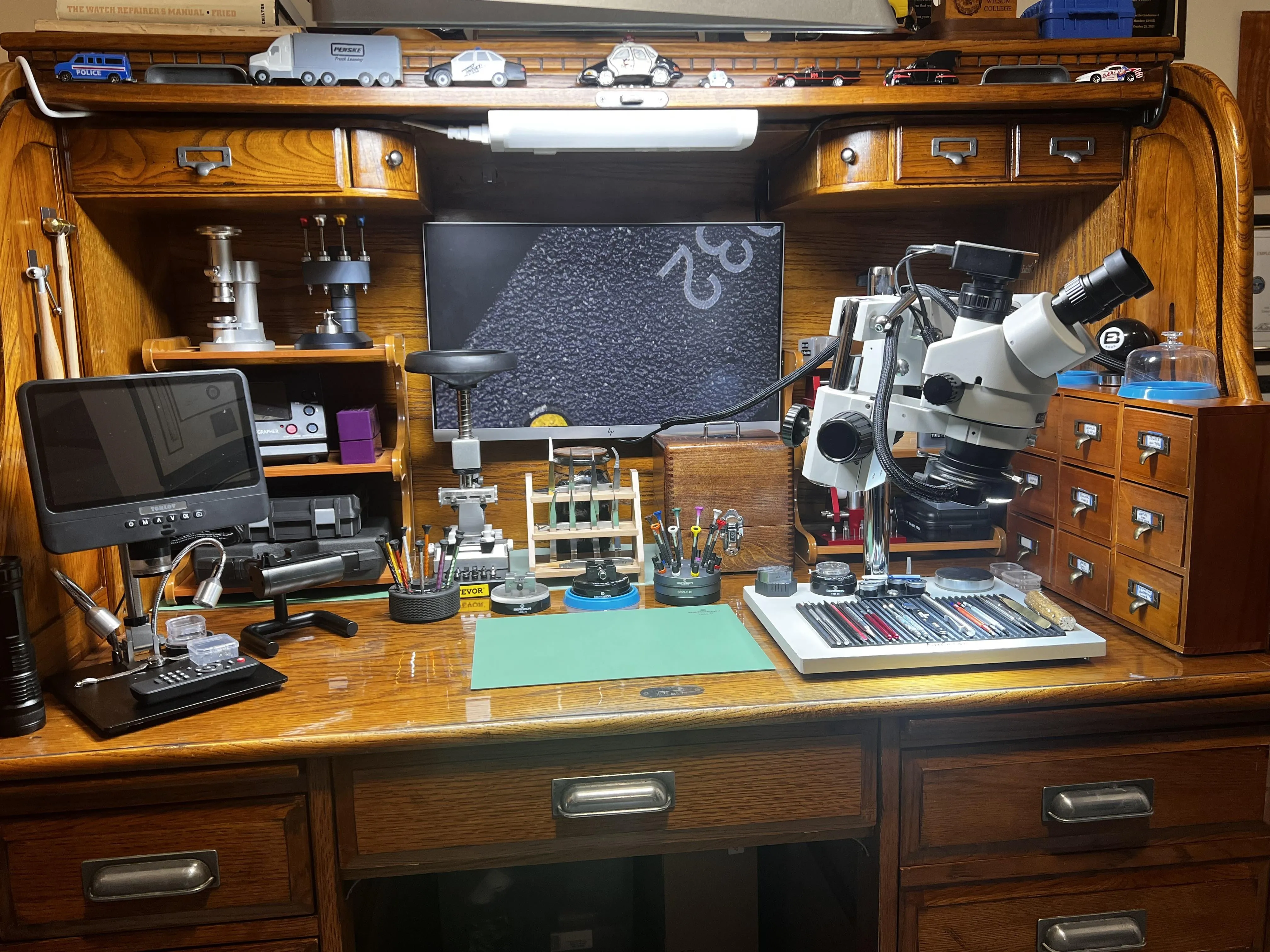 A $75 to $150 inspection by an independent watchmaker is the cheapest insurance available on a $3,000 private purchase. It confirms authenticity and flags whether a service is due. Credit: u/_CdrikFr
This is non-negotiable. Find a NAWCC member or a well-reviewed independent watchmaker in your area. Send them the watch before you finalise the purchase, or arrange to meet the seller at their shop. The inspection confirms authenticity, movement condition, and whether a service is imminent. It is the cheapest insurance you can buy.
💡 Before you decide between new and pre-owned, run your specific budget through the Total Cost of Ownership Calculator. The 10-year cost gap between a $3,000 new purchase and a $3,000 pre-owned purchase isn’t just the sticker price difference. The calculator factors in service costs ($400–$800 at an independent watchmaker, $800–$1,200 at a manufacturer service centre), insurance, and the depreciation you’re absorbing, or not, on day one. The pre-owned advantage narrows or widens significantly depending on the reference. See the full picture before you commit.
This piece covers the strategic “should I?” The tactical “how do I?” lives in the authentication guide, the condition grades explainer, and the CPO programmes comparison. All three go deeper on the specific steps outlined here. Read this one first, then use those to execute.
The financial case for pre-owned in the $1,500–$4,000 range is not a close call for most references. Someone else absorbed the depreciation. You get the watch. The risks are real and manageable. The premium for buying new is the cost of a specific experience, and now you know exactly what that experience costs.