The Investment Watch Myth: What the Data Actually Says About Luxury Watch Resale (And Why It Shouldn’t Drive Your First Purchase)
Key takeaways
- Above-retail resale is the exception, not the rule: Only about four Rolex references trade above retail on the secondary market, the rest of the catalogue, and almost every other brand, depreciates.
- Scarcity is not the same as investment performance: The Submariner’s secondary premium exists because of a supply constraint, not because watches behave like financial assets.
- Buying pre-owned is the single most effective depreciation hedge: The steepest part of the depreciation curve hits in the first 12–18 months; buying pre-owned means someone else absorbs it for you.
- Total cost of ownership is the honest number: A $3,000 Tudor Black Bay 58 costs approximately $200–$285 per year to own over five years once service, insurance, and realistic resale are factored in.
- The right question is not resale value but whether you’d buy it anyway: If a watch is only justifiable as a financial hedge, that’s a signal to reconsider the purchase or the price point.
Someone in your research has told you that a good watch holds its value. Maybe it was a Reddit thread. Maybe it was the person behind the counter at an authorised dealer. Maybe it was a YouTube channel where a guy in a nice apartment talks about “building a collection.”
They are not lying to you. They are also not giving you a financial analysis.
This piece is the financial analysis. We will show you the actual resale numbers for the references most commonly cited as “holding value,” and explain why those numbers look the way they do. Then we replace the question. Not will it hold value? but what does this watch cost me to own over five years?
Those are different questions. The second one has a cleaner answer.
Where the Myth Comes From, and Who Keeps It Alive
The claim is simple: a serious watch is not just a purchase, it is an asset. Spend $3,000 now, and in five years you will get most of it back. Maybe more.
This idea has three main sources, and each one has a reason to keep repeating it.
Reddit’s watch forums are full of milestone-purchase posts. Someone buys their first Rolex and writes about it. The community celebrates. The framing that emerges, “it holds its value, so it’s not really spending money”, is a way of validating an expensive emotional purchase. That is understandable. It is not analysis.
AD sales staff use the framing as a closing tool. “This isn’t just a watch, it’s an asset” is a sentence designed to make a $7,000 purchase feel responsible. The staff member may genuinely believe it. That does not make it true for the watch you are about to buy.
Grey-market YouTube channels have the strongest incentive of all. Their content is built around watch flipping, buying at one price, selling at another. When the investment narrative is strong, their audience grows and their margins hold. A video titled “Why Watches Are a Terrible Investment” does not get the same clicks as “Top 5 Watches That Hold Their Value.”
The position this piece takes: some references do depreciate slowly.
That is a real phenomenon.
It is not the same thing as being a financial investment, and the distinction matters enormously for someone buying their first serious watch.
The Data: Which Watches Actually Hold Value (And What Share of the Market They Represent)
Let’s look at the three references most commonly cited in the “holds its value” conversation.
Rolex Submariner 124060, retail $9,100 USD per the Rolex official price list. On Chrono24’s pre-owned Submariner listings, good-to-very-good examples currently ask $9,500–$11,500 depending on condition, box and papers, and seller. This reference trades above retail on the secondary market. That part of the story is true.
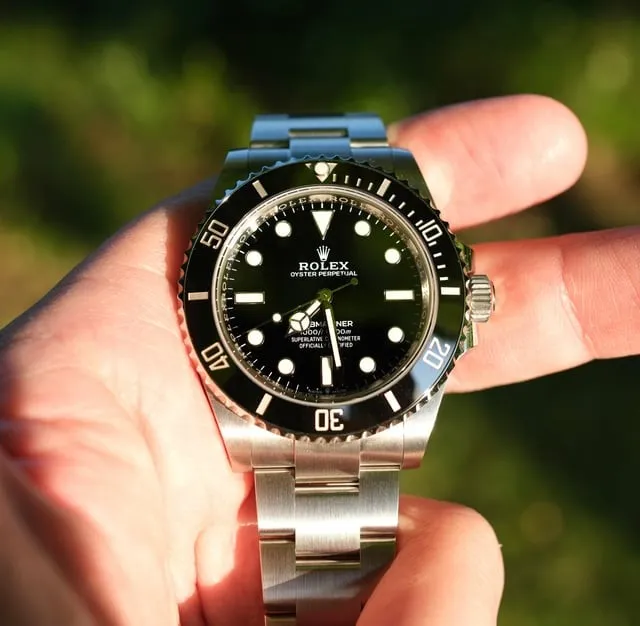 The Submariner 124060 is one of roughly four Rolex references that consistently trades above retail. The rest of the catalogue does not. Credit: u/Drrhizome
Omega Speedmaster Moonwatch 310.30.42.50.01.001, retail approximately $6,300 USD per WatchTime’s reference database. Pre-owned asking prices on Chrono24’s Speedmaster listings for good-condition examples typically run $4,400–$5,400, or roughly 70–85% of retail. The Speedmaster has stronger resale than most Omega references. It still trades below what you paid new.
Rolex Datejust 41 126300, retail approximately $7,150 USD per Rolex official pricing. Pre-owned examples on Chrono24’s Datejust listings ask $6,000–$7,200, at or slightly below retail, depending on configuration and condition. The Datejust is the most-produced reference in the Rolex catalogue. It does not have a waitlist. It does not trade at a premium.
That last point is worth sitting with.
The Datejust is a Rolex. It has the same crown on the dial as the Submariner.
It does not “hold its value” in the way the myth implies.
Rolex does not publish production figures. Hodinkee’s secondary market coverage and WatchCharts market data consistently show that above-retail secondary premiums are concentrated in a small number of references: the Submariner, the GMT-Master II, the Daytona, and the Explorer in certain configurations.
That is four references out of a catalogue of roughly 30 distinct models across the Oyster Perpetual, Datejust, Day-Date, Submariner, Sea-Dweller, GMT-Master, Daytona, Explorer, Milgauss, and Yacht-Master families. The references that trade above retail are the exception. The rest of the catalogue trades at or below retail, just like almost every other watch brand.
The “Rolex holds its value” claim is true for about four references. For the other models in the catalogue, it is a marketing inference that does not survive contact with actual resale data.
Why Scarcity Is Not the Same as Investment Performance
The Submariner and GMT-Master II trade above retail for a specific reason: Rolex manages supply tightly, and authorised dealers cannot meet demand at the retail price. That gap between supply and demand creates a secondary market premium.
This is not investment-grade asset behaviour. It is a supply constraint.
Hodinkee’s reporting on the Rolex secondary market has documented this dynamic clearly: the premium exists because you cannot easily buy these references at retail without AD relationship history. If Rolex increased production to meet demand, the secondary premium would compress toward zero.
That is not how a financial asset works.
There is a second problem for a first buyer thinking about resale. When you sell a watch, you do not receive the asking price you see on Chrono24. You receive the asking price minus transaction costs. Chrono24’s published seller fee structure and Watchfinder’s buyer and seller terms both point to a combined cost of roughly 10–15% of the sale price (platform fees, dealer margin, and authentication). On a $9,000 Submariner, that is $900–$1,350 leaving your pocket before you see a cent.
Now compare that to an actual investment. The S&P 500 has returned approximately 10% annually on average over the past 30 years, in nominal terms. A watch that “holds its value” at 0% real return is not competing with that. It is not trying to. It is a watch.
The honest framing: a Submariner purchased at retail and sold within three to five years will likely return close to what you paid, minus transaction costs. That is a better outcome than most watches. It is not a reason to buy a watch.
The References That Depreciate, and How Fast
Most first buyers are not shopping for a Submariner. They are shopping in the $1,500–$6,000 range, where the resale picture looks different.
Tudor Black Bay 58, retail approximately $3,725. Pre-owned examples on Chrono24’s Black Bay 58 listings typically ask $2,800–$3,400, or 75–90% of retail. The Black Bay 58 has relatively strong resale for its price tier. You will still lose money selling it within five years.
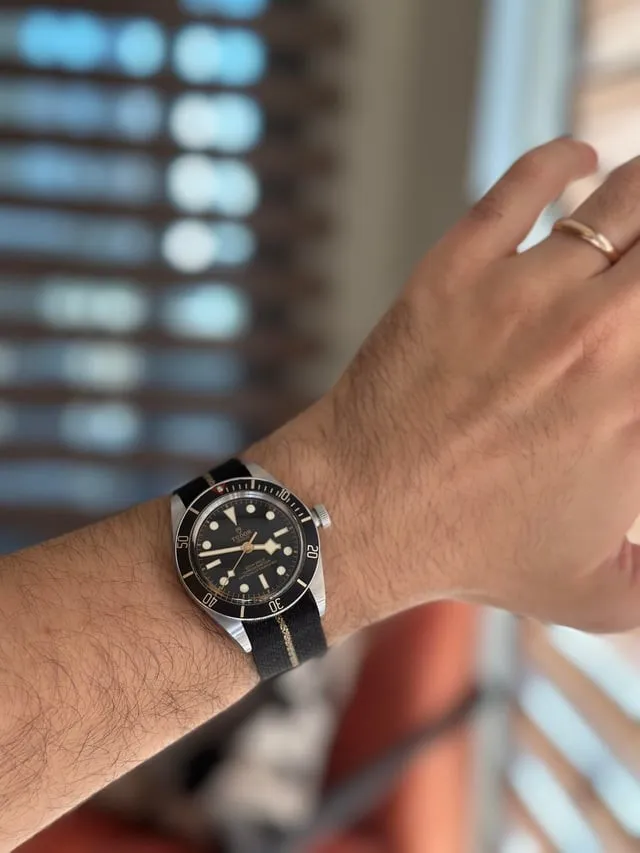 The Black Bay 58 has relatively strong resale for its price tier. You will still lose money selling it within five years, and that is fine. Credit: u/CanayGicvan
Grand Seiko SBGR251 and equivalent Spring Drive references, retail in the $4,500–$5,500 range. Pre-owned asking prices on Chrono24’s Grand Seiko listings typically run 65–80% of retail. The Grand Seiko pre-owned market is thinner than Rolex or Omega, fewer buyers means more price volatility. A watch that lists at 70% of retail today might clear at 60% if you need to sell quickly. Fratello Watches’ comparative market analysis has noted this liquidity difference as a genuine consideration for buyers at this price point.
Omega Seamaster Aqua Terra, retail approximately $5,200 per WatchTime’s specification database. Pre-owned examples on Chrono24 and Watchfinder typically ask 60–75% of retail. The Aqua Terra is a well-regarded, well-finished watch. It simply depreciates. There is no mystery here and no failure on the watch’s part. It is priced at retail to include brand margin, retailer margin, and marketing cost. The secondary market prices it on what it is worth to a buyer who does not need the box.
For most watches in the $1,500–$6,000 range, buying new and selling within five years means realising 65–85 cents on the dollar before transaction costs. That is not a catastrophe. It is also not “holding value.”
One thing that changes this: buying pre-owned. The depreciation curve is steepest in the first 12–18 months after a watch leaves the retailer. If you buy a two-year-old Aqua Terra at 70% of retail and sell it at 65% of retail three years later, your loss is much smaller than if you bought new. The person who bought it new absorbed the steepest part of the curve for you.
The Better Question: What Does This Watch Actually Cost You Over Five Years?
Stop asking whether the watch will hold its value. Start asking what it costs you to own it.
Here is a specific example: a Tudor Black Bay 58, purchased pre-owned in good condition for $3,000.
Service. Tudor recommends service every five years. WatchUSeek community threads on Tudor service costs document a real-world range of $300–$600 at an independent watchmaker, and $500–$800 at a Tudor service centre. Call it $400 as a midpoint for planning purposes.
Insurance. Specialist watch insurance through providers like Hodinkee Insurance or Jewelers Mutual typically runs 1–1.5% of declared value annually. On a $3,000 watch, that is $30–$45 per year, or $150–$225 over five years.
Strap or bracelet. You will almost certainly replace the strap within the first year. Budget $50–$200 depending on material.
Resale at year five. A pre-owned Black Bay 58 purchased at $3,000 and sold after five years will likely clear $2,400–$2,600, or 80–87% of your purchase price. Net loss on the watch itself: $400–$600.
Add it up: $400–$600 depreciation, plus $400 service, plus $150–$225 insurance, plus $50–$200 strap. Total five-year cost of ownership: approximately $1,000–$1,425 on a $3,000 watch. That is $200–$285 per year.
That is the honest number you are agreeing to. It is a reasonable thing to spend on something you wear every day. It is not an investment. It does not need to be.
💡 Run your own numbers. The worked example above uses a $3,000 Tudor Black Bay 58, but your situation is different. The TCO Calculator lets you input your intended purchase price, choose from several specific references at your price point, and see the full five-year cost breakdown, service, insurance, realistic resale scenarios, and the difference between buying new versus pre-owned. The myth-busting only means something when it’s attached to your actual number, not a hypothetical one.
How to Use This When You’re Talking to a Sales Associate
At some point in your buying process, someone will say one of two things: “Rolex holds its value” or “think of it as an asset, not just a purchase.”
Name it for what it is: a sales technique. Not a lie, but not a financial analysis either. The person saying it may genuinely believe it. That does not make it applicable to the specific watch you are considering, at the specific price you are paying, with the specific timeline you have in mind.
The response you can use internally, you do not need to say it out loud, is this: “I am buying this because I want to own it, not because I expect to profit from it. That is fine.”
Grey-market dealers have the strongest incentive to use investment framing. Their margin depends on the buyer believing the watch is worth more than the grey-market premium they are charging. When a grey-market seller tells you a watch is “a great investment at this price,” they are describing their margin, not your return.
One practical note: ADs for Omega, Tudor, and Grand Seiko are less likely to use investment framing than Rolex ADs. The resale data for those brands does not support the claim as cleanly, and most AD staff know it. If you hear strong investment language from a non-Rolex AD, treat it as a signal about the sales culture of that particular store.
The Honest Conclusion: Buy It Because You Want to Wear It
Here is what the data shows.
If resale matters to you, buying pre-owned is the single most effective thing you can do to reduce your exposure to depreciation. You let someone else absorb the steepest part of the curve. A two-year-old watch bought at 75% of retail and sold at 70% three years later is a very different financial outcome from buying new and selling at 70% five years later.
If you are buying new and resale genuinely matters, the references with the strongest track record are the Rolex Submariner, GMT-Master II, and Explorer. But those are also the hardest watches to buy at retail without existing AD relationship history. The resale data does not help you if you cannot acquire the watch at retail in the first place.
Before you buy, ask yourself one question: if this watch were worth $0 in five years, would you still want to own it?
If yes, the investment question is irrelevant. You are buying a watch. That is a legitimate thing to do.
If no, reconsider the purchase or the price point. A watch you are buying partly as a financial hedge is a watch you have not fully committed to owning. That is worth knowing before you spend $3,000 or $6,000 or more.
The number that actually matters is what this watch costs you to own, not what it might sell for. That number is real, it is calculable, and it is the honest basis for a first purchase decision.