What Actually Happens Inside an Authorised Dealer, and How to Walk In Without Feeling Like You’re Being Managed
Key takeaways
- Allocation rules only apply to a handful of references: The “build a relationship with your AD” advice comes from the Rolex Submariner/GMT/Daytona world, for Omega, Tudor, Grand Seiko, and most other references, you can walk in and buy the same day.
- The grey-market spread is your best pre-visit intelligence: Check Chrono24 before you go, if grey-market prices are 20–40% above retail, you’re walking into a high-friction environment; at or below retail means low allocation pressure.
- Know the reference number, not just the model name: Arriving with “124060” instead of “Submariner” signals preparation and changes the conversation from the first minute.
- The real ten-year cost is materially higher than the sticker price: A $9,100 Submariner runs $11,500–$13,000 over a decade once you factor in one service, insurance, and a replacement strap.
- Walking away without buying is a legitimate outcome: Warranty already activated, price above published retail, or missing box and papers are each sufficient reasons to leave, and none of them are failures.
Walking into a Rolex authorised dealer for the first time is a specific kind of uncomfortable. The watches are in locked cases. The staff are professionally warm in a way that feels slightly transactional. There is an unspoken suggestion that you should be grateful for the opportunity to spend your money here.
That dynamic is real. It is deliberate. And once you understand why it exists, it becomes much easier to navigate.
A thread on Reddit put it plainly: “We just want to buy a watch. We don’t want to build a relationship with your sales staff.” That frustration is valid. It is also, depending on which watch you are trying to buy, either a reasonable expectation or a misunderstanding of how the system works.
This is the distinction that matters more than anything else in this piece.
The AD experience is fundamentally different depending on whether you are buying a high-demand allocated reference (a Rolex Submariner, a Patek Nautilus) or a standard in-stock watch from a brand without allocation constraints.
Almost every guide online conflates the two.
That conflation makes the advice either naively optimistic or unnecessarily adversarial, depending on which watch you are actually after.
By the end of this piece, you will know what is happening at each stage of an AD visit, why it is happening, and what to say. You will also know which brands require the relationship game and which ones do not, because for most watches in the $1,500–$6,000 range, they do not.
Why the AD Visit Feels Like a Test You Didn’t Study For
The locked cases are not security theatre. They are a signal. In a standard retail environment, products are accessible, you pick them up, try them on, decide. In a watch AD, access to the product is itself a managed experience.
At a Rolex AD, the staff are not just salespeople.
They are managing a scarce resource.
Certain references (the Submariner, the GMT-Master II, the Daytona) are distributed to ADs in quantities that do not meet demand. The sales associate’s job is partly to sell watches and partly to decide who gets access to the ones that are hard to get. That is a real structural role, not a personal power trip.
At an Omega AD, a Tudor AD, or a Grand Seiko AD, none of that applies. The sales associate is a standard luxury retail employee with a commission structure and a floor full of watches available to anyone who walks in. The professionally warm greeting is the same. The underlying dynamic is completely different.
Most first-time buyers do not know this going in. They have read forum threads about “building a relationship with your AD” and assumed it applies universally. It does not. That advice comes from the Rolex allocation world and has been exported, incorrectly, to every other brand in the category.
Before You Walk In: The Research That Actually Matters
The information gap in an AD visit is real. The sales associate knows the stock, the allocation, the pricing, and the purchase history of every customer who has walked in before you. Closing that gap before you arrive is the most useful thing you can do.
Confirm the retail price from the brand’s official site. Rolex publishes US retail prices for every reference on rolex.com. So does every other major brand. Look up the exact price before you go. Any AD quoting above that price for an in-stock piece is a red flag. ADs are not permitted to sell above retail on new watches. If one does, walk out.
Know the reference number, not just the model name. “Submariner” covers multiple references at different price points. Arriving with “124060” or “126610LN” on your lips signals preparation and changes the conversation.
Check the grey-market spread on Chrono24’s search listings before you go. Search the reference you want and look at what pre-owned and grey-market sellers are asking. If the grey-market price is at or below retail, allocation pressure is low. If it is 20–40% above retail, a Daytona ref. 116500LN at $18,000–$20,000 when retail is $14,550, for example, you are walking into a high-friction environment. That spread tells you more about your odds at the AD than anything the sales associate will say.
Know whether the AD is mono-brand or multi-brand. A boutique that sells only Rolex operates differently from a multi-brand AD carrying Omega, TAG Heuer, and Longines under one roof. The power dynamic is less acute at multi-brand retailers, the sales associate has more inventory to move and less allocation to protect.
Know your wrist size and preferred lug width. Sales associates use the sizing conversation as a qualifying signal: it tells them whether you are a serious buyer or a browser. Arriving with your wrist circumference measured and a preference between bracelet and strap means you control that part of the conversation.
What the Sales Associate Is Actually Doing When You Walk In
The questions you get in the first two minutes are not small talk. They are inventory-management tools. Understanding what each question is actually assessing changes how you answer.
“What brings you in today?” This is a buyer-qualification question. The sales associate is assessing whether you are a first-time visitor, a returning customer, or someone referred by a friend. Returning customers with purchase history get different treatment at high-demand ADs. A clear, specific answer, “I’m looking at the Seamaster 300M, the 41mm, and I’d like to try it on”, signals intent.
“Have you shopped with us before?” At a Rolex AD, this is an allocation question. Purchase history at that specific AD is a documented factor in access to high-demand references. WatchUSeek forum threads on Rolex AD allocation have documented this extensively, it is not an informal rumour. At an Omega or Tudor AD, the same question is routine data collection with no allocation consequence.
“Are you looking for yourself or as a gift?” Partly a sales-routing question, partly a timeline question. A gift with a deadline creates urgency the sales associate can use. If you are buying for yourself with no deadline, say so.
Here is the two-column reality of the sales associate conversation:
| What the SA says | What it means |
|---|---|
| ”We don’t have that in stock right now.” | At a Rolex AD: genuine allocation scarcity. At a standard AD: they ordered the wrong stock, or it sold last week. These are different situations. |
| ”We’d love to get to know you better as a customer.” | At a Rolex AD: purchase history is a real factor in allocation. At an Omega AD: a sales relationship pitch with no mechanical consequence. |
| ”That reference is very popular right now.” | Could be true. Could be a scarcity signal designed to create urgency. Check the grey-market spread before you respond. |
| ”Let me show you something similar.” | The watch you asked about is not available. The SA is pivoting to what is on the floor. Fine, but stay in control of whether you want to pivot. |
The commission structure matters here too. Most AD sales associates are on salary plus commission or bonus. They have an incentive to sell what is on the floor today. That does not make them adversaries. It does mean their recommendation of an alternative reference is not purely disinterested advice.
At the Counter: Questions That Work, Questions That Don’t
Ask to see the watch outside the case and on your wrist. This is non-negotiable. Case size, lug-to-lug length, and bracelet weight cannot be assessed from photos or spec sheets. Spend at least five minutes with the watch on your wrist in natural light. A 40mm watch on a 6.5-inch wrist looks and feels completely different from the same watch on a 7.5-inch wrist.
Ask for the box and papers. For a new watch, full set, box, warranty card, hang tags, should be standard. One detail worth knowing: Rolex replaced the physical green warranty card with a digital registration system in 2020. If a sales associate presents a physical green card on a watch described as new and purchased after 2020, that is a provenance red flag. Ask when the AD received the watch.
Ask about the warranty start date. Some ADs activate the warranty on receipt rather than on sale. You want the warranty to start the day you buy. Ask directly: “When does the warranty start, today, or when the AD received the watch?”
Ask the allocation question neutrally. “Is this reference typically available, or is there usually a waiting list?” is a factual question any sales associate should answer honestly. Deflection or vagueness tells you something about how they handle transparency.
Questions to skip. “What’s your best price?” ADs do not discount on allocated references and rarely discount on others. Asking signals inexperience without any upside. “Can you tell me what other customers paid?” This is unanswerable and creates an awkward dynamic for no reason.
The Allocation Conversation: How to Ask Without Sounding Naive
For the three Rolex references that generate the most allocation friction, the situation is specific and documented.
The Submariner ref. 124060 retails at approximately $9,100. The GMT-Master II ref. 126710BLRO retails at approximately $10,700. The Daytona ref. 116500LN retails at approximately $14,550. For all three, purchase history at the specific AD is a real factor in access. This is a documented feature of the Rolex AD model, not an informal rumour. Rolex has never officially confirmed the practice, but the community evidence is consistent and extensive.
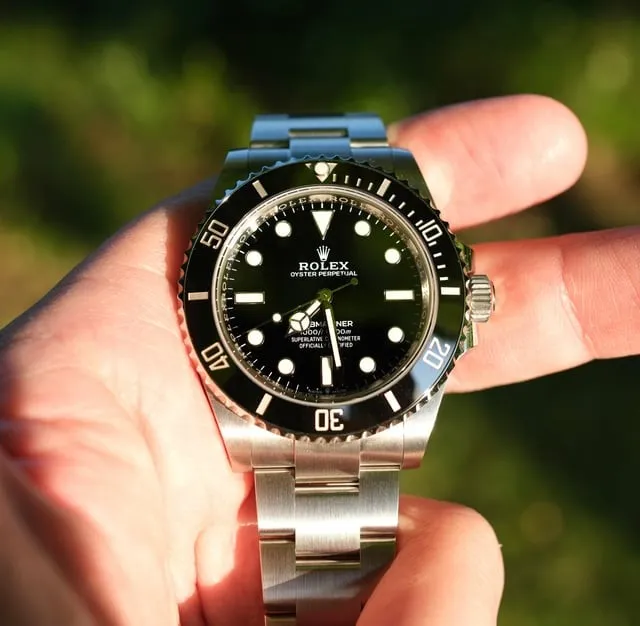 The Submariner 124060 is the reference that made the allocation game famous. No date, no frills, and a grey-market premium that tells you everything about the friction you will face at the AD counter. Credit: u/Drrhizome
What “building a relationship” actually means in practice: buying other pieces from the AD (straps, accessories, or other brands in their portfolio) to establish a purchase history before the sales associate will offer you an allocated reference. Name the cost of that strategy honestly. If you spend $500 on accessories to establish history, that is $500 added to the effective cost of the watch. Factor it in.
For most other references, including many Rolex models outside those top three, and virtually all Omega, Tudor, Grand Seiko, and Longines references, the allocation dynamic does not apply. You do not need to build a relationship to buy a Seamaster or a Tudor Black Bay. If a sales associate tells you that you need to “get on the list” for a non-allocated reference, that is either a misunderstanding or a sales tactic. Both are worth naming directly: “I understood this reference was typically in stock, is that not the case here?”
💡 Before you hand over your card: If the sales associate is quoting you a price right now, the First Watch Budget & Total Cost of Ownership Calculator will show you what that number actually costs over ten years, service, insurance, and the strap you will replace within six months. A $9,100 Submariner is closer to $11,500–$13,000 over a decade once you account for one service ($800–$1,200 at a Rolex service centre), insurance (~$100–$150 per year), and a replacement strap. Worth knowing before you set a real budget for your first luxury watch before you commit.
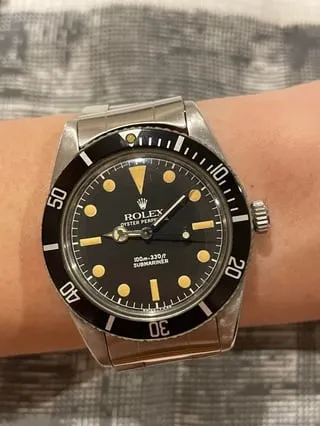 The sticker price is $9,100. Add one service, a decade of insurance, and a replacement bracelet or strap and the real number is closer to $13,000. Worth knowing before you hand over the card. Credit: u/Longjumping_Good9029
When to Walk Away, and What to Do Next
Walking away from an AD visit without a purchase is not a failure. It is sometimes the right outcome. Here are four specific reasons to leave without buying.
Walk away if the sales associate cannot produce box and papers for a new watch. Full set is standard. An explanation for missing components is a yellow flag at minimum.
Walk away if the warranty has already been activated. A watch sitting in the AD’s stock for two years with an active warranty is a watch with two years of coverage already consumed. That is a material difference from a fresh warranty starting today.
Walk away if the price quoted is above published retail for an in-stock piece. This should not happen at a legitimate AD. If it does, it is either an error or a test of your preparation. Either way, leave.
Walk away if you feel pressured to decide before you are ready. “We have another customer interested in this piece” is a sales technique. It may occasionally be true. It is also a reason to slow down, not speed up. A watch you buy under pressure is a watch you may regret.
If you leave without buying, write down the sales associate’s name and what you discussed. If you return to that AD, continuity matters, especially at high-demand brands, and it costs you nothing to remember who you spoke to.
The alternatives are real and worth using. Chrono24’s buyer-protection programme covers pre-owned purchases with seller ratings and a searchable database of grey-market and private-seller inventory. Watchfinder & Co.’s certified pre-owned programme offers condition grading, useful if you want the pre-owned price with some of the new-watch assurance. Authorised online retailers exist for brands that sell direct.
On grey-market dealers specifically: a grey-market dealer is an unauthorised reseller who buys from ADs in lower-demand markets and resells at a spread. The real risks are no manufacturer warranty and potential for undisclosed service history. If you have done authentication research and are comfortable with the trade-off, it is a legitimate channel. But platform risk, seller risk, and authentication risk are three different things. Collapsing them into a single “be careful” warning does not help you make a decision. We cover the grey-market option in depth in a dedicated piece.
The AD is one channel. For most references outside the top allocation tier, the pre-owned market offers better value and lower friction. That is not a compromise. For most first buyers, it is the smarter move.
Brand-by-Brand: How the AD Experience Actually Differs
Calibrate your expectations before you walk in, not after.
Rolex. Genuine allocation constraints exist for the Submariner (ref. 124060, ~$9,100 retail), GMT-Master II (ref. 126710BLRO, ~$10,700 retail), and Daytona (ref. 116500LN, ~$14,550 retail). Purchase history at the specific AD is a real factor in access to these references. For other references, the Datejust, the Explorer, the Oyster Perpetual, availability is more normal and the relationship-building requirement is much less acute. Rolex’s resale liquidity on the top three references is real and documented. The friction is also real. Go in knowing both.
Omega. No meaningful allocation constraints on the Seamaster or the Speedmaster. The AD experience is standard luxury retail. The sales associate may use relationship-building language, but it is not a purchasing prerequisite. If you want a Seamaster 300M and walk into an Omega AD, you can buy it that day. The “build a relationship” advice that circulates on forums is Rolex-specific. It does not apply here.
Tudor. Sold through Rolex ADs and independent Tudor ADs. No allocation constraints. The Black Bay 58 ref. M79030N retails at approximately $3,325 and is typically in stock. The AD experience is low-friction. Tudor makes essentially the same case for itself that Rolex does. Swiss manufacture, in-house movements, serious tool-watch heritage, at roughly half the retail price of an entry Submariner. Whether that trade-off works for you depends on how much of what you are paying for at Rolex is the watch versus the name on the dial. That is the right question to be asking.
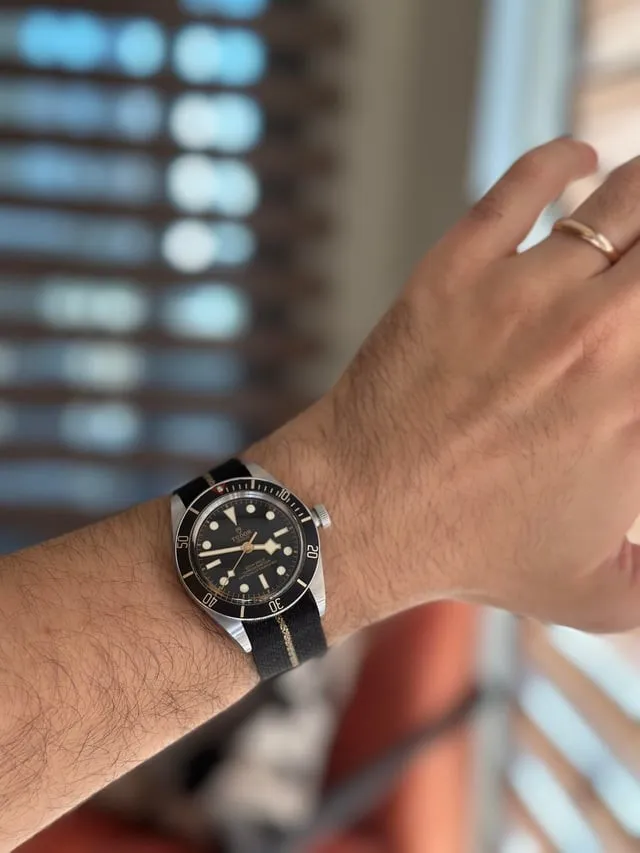 The Black Bay 58 sits in stock at most ADs, no history required, no waiting list. At $3,325 retail it makes a direct argument against paying the Submariner premium. Credit: u/CanayGicvan
Grand Seiko. The AD network in the US is limited, Fratello Watches has documented fewer than 50 authorised dealers in the US. The scarcity is geographic, not allocation-based. If you are near a Grand Seiko AD, the experience is typically low-pressure. The dial finishing at equivalent price points is, objectively, better than what Rolex or Omega produces at the same tier, that is a craft comparison anyone who has held both watches can verify. The trade-off is a limited service network and a smaller resale market in Western countries.
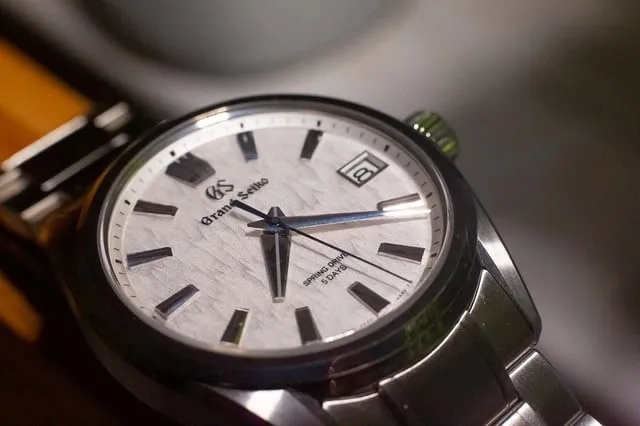 Grand Seiko’s dial finishing at this price tier is a craft argument that is hard to dismiss once you have seen it in person. The texture is not printed, it is cut. Credit: u/silverphoenix48
Patek Philippe and Audemars Piguet. These sit at the edge of this site’s scope. The allocation dynamic is more extreme than Rolex, and the relationship-building requirement is real, multi-year, and involves purchase history measured in tens of thousands of dollars. If you are considering either brand, the buying process is a separate research project from anything covered here. They appear in this piece as orientation points, not buying guides.
The AD visit is not a test you need to pass. It is a retail transaction with an unusual power dynamic, one that is real at high-demand brands and largely absent everywhere else. Understanding which situation you are in before you walk through the door is the difference between a frustrating experience and a straightforward one.
For most watches in the $1,500–$6,000 range, the AD visit is exactly what it looks like: a shop where you can try on a watch and buy it. The locked cases and the professional warmth are ambient. The allocation game is not in play. Walk in, ask the right questions, try the watch on your wrist for five minutes in natural light, and make the decision that is right for you.