Grey Market Watches: Why the Price Is Lower, What You Actually Give Up, and When It’s Worth It
Key takeaways
- Grey market watches are genuine, new, parallel imports: The watch is identical to what an authorised dealer sells, same movement, same case, same dial, just sourced through a different distribution path.
- The manufacturer warranty trade-off is smaller than advertised: Warranties cover manufacturing defects only, not wear or damage, and a legitimate grey market dealer’s 1–2 year warranty covers the same practical risk window.
- The AD relationship only compounds for Rolex: For Omega, Tudor, Grand Seiko, and Longines, the authorised dealer relationship is transactional, losing it costs you almost nothing.
- Resale impact is reference-specific and calculable: The AD provenance premium on a Rolex Submariner is roughly $400–$600; on an Omega Seamaster or Tudor Black Bay, it is negligible. Run the numbers for your specific watch.
- Dealer vetting is the only variable that actually matters: Seven observable criteria separate a legitimate grey market dealer from a bad actor, the saving is real enough to attract both.
You’ve found the same watch for $600 less on a site that isn’t the brand’s authorised dealer. The listing says new-in-box. The photos look right.
Now you’re wondering whether you’re about to make a smart move or a costly mistake.
Most content that answers this question is written by grey market dealers. That’s not a conspiracy, it’s just how the internet works.
But it means the analysis you’ll find is rarely neutral. This piece has no inventory to move and no brand relationship to protect. The goal is a straight answer: what the grey market actually is, what you give up, what you keep, and when the saving is real.
What the Grey Market Actually Is (and What It Isn’t)
Start with the mechanism, because most of the anxiety around grey market watches comes from not understanding where the discount comes from.
A grey market watch is a parallel import. The watch was made by the brand, sold to an authorised dealer in one country, then resold by that dealer or an intermediary into another country without the manufacturer’s involvement. The watch is genuine. It is typically new and unworn. It has not been stolen, counterfeited, or refurbished. It is the same physical object you would buy at an authorised dealer in your city.
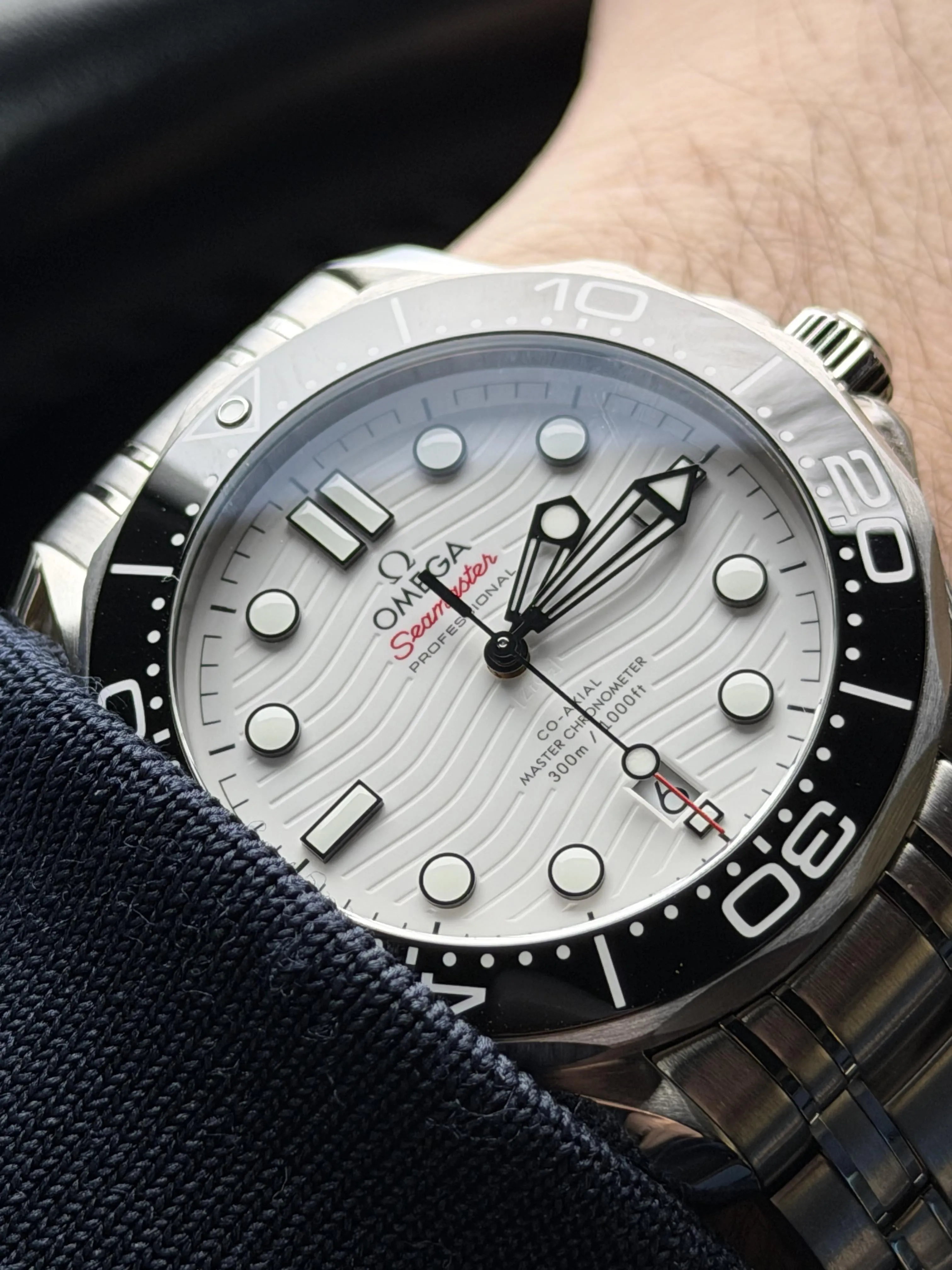 The Seamaster 300M retails at US authorised dealers for around $5,400. Grey market listings for the same reference, new and unworn, typically run $4,600 to $4,900. The watch is identical in both cases. Credit: u/Sensitive-Swan-6436
The price is lower for two reasons. First, watch brands price differently across regions. A reference that retails for $5,400 in the United States may retail for the equivalent of $4,600 in Hong Kong or Singapore after currency conversion. Second, the grey market dealer runs on thinner margins than an AD, lower overhead, no boutique to maintain, no brand-mandated retail experience to fund.
That’s the whole mechanism. There is no catch hidden in the definition.
What grey market is not: It is not counterfeit. It is not stolen. It is not pre-owned or secondhand unless the listing explicitly says so. This distinction matters because the risk profile of a grey market purchase and a pre-owned purchase are completely different. A grey market watch is new. A pre-owned watch has been worn, possibly serviced, and has a history you need to verify. If you’re considering a used watch, that’s a separate decision with a separate vetting process. This piece covers parallel imports only.
A concrete example. The Omega Seamaster 300M ref. 210.30.42.20.01.001 on Chrono24 retails at US authorised dealers for approximately $5,400. Grey market listings for the same reference, new, unworn, with box and papers, typically run $4,600–$4,900. That’s a saving of $500–$800, or roughly 10–15% of retail. The watch in both cases is identical.
What You Actually Give Up
AD sales staff, brand marketing, and forum orthodoxy all converge on the same answer: buy from an authorised dealer. Before accepting that, it’s worth asking what you’re actually paying for when you do.
The manufacturer warranty
Rolex and Omega both provide manufacturer warranties on new watches. Rolex’s current warranty is five years for watches purchased from authorised dealers. Omega’s warranty is five years from the date of purchase at an authorised retailer.
Here is what those warranties cover: manufacturing defects. Not wear. Not accidental damage. Not water ingress from a damaged crown gasket you didn’t notice. Not a crystal cracked on a doorframe.
The coverage is narrower than most buyers assume. In most regions it is voided by a grey market purchase. The manufacturer warranty is typically only valid when the watch is bought through the brand’s authorised network in the buyer’s country.
We’ll come back to what this is actually worth in practice. The short version: less than you’ve been told.
The AD relationship
For Rolex, the AD relationship has real future value. Rolex operates under genuine allocation constraints on its sport references: the Submariner, the GMT-Master II, the Daytona. Build a purchase history at an AD and you improve your position for future allocations. Buy grey market and that history doesn’t exist. Fratello Watches’ coverage of the Rolex AD allocation dynamic makes the point. The relationship is a real asset for buyers who want continued access to the brand’s most sought-after references.
For Omega, Tudor, Grand Seiko, and Longines, the AD relationship is largely transactional. These brands do not operate under the same allocation constraints. Walking into an Omega AD, buying a Seamaster, and leaving does not meaningfully improve your access to future Omega references. The relationship has no compounding value, and losing it costs you almost nothing.
Resale liquidity
This is where the grey market calculation gets specific, and where vague warnings do the most damage.
For Rolex sport references, particularly the Submariner ref. 124060, buyers in the secondary market do ask about provenance. Full AD box-and-papers commands a premium on Chrono24’s Submariner ref. 124060 listings. Current listings show AD-provenance examples trading at roughly $9,500–$10,200, while grey market-provenance examples in equivalent condition list at $9,000–$9,800. That’s a gap of approximately $400–$600, or 4–6% of the secondary market price. We’ll return to what that means for the net saving calculation.
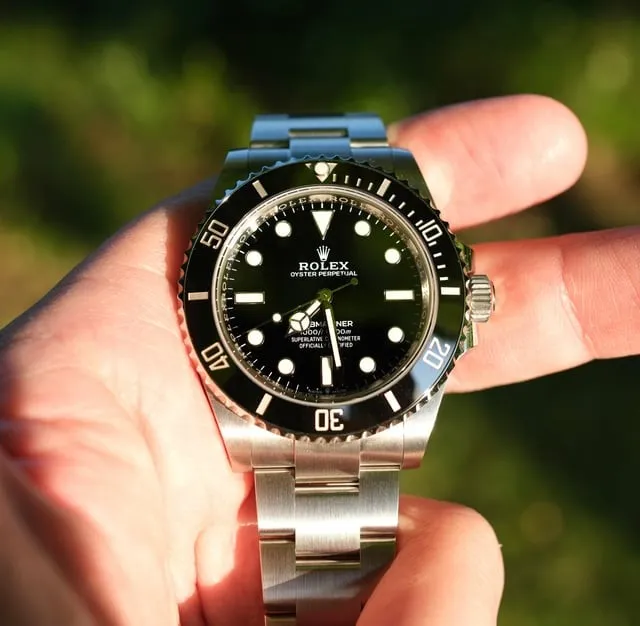 The Submariner 124060 is the reference where AD provenance carries a real secondary-market premium, roughly $400 to $600 on current Chrono24 listings. For every other brand in this article, that gap is negligible. Credit: u/Drrhizome
For Omega Seamaster, Tudor Black Bay, and Grand Seiko references, the secondary market does not price AD provenance as a meaningful premium. A Seamaster 300M with grey market provenance and one with AD provenance sell for essentially the same price on Chrono24, all else being equal.
Brand service history
A grey market watch purchased new has no service history, because it hasn’t been serviced. This only matters if the watch has been sitting in a dealer’s inventory for several years before reaching you. For a watch that left the factory recently, it’s a non-issue.
What You Keep
The grey market buyer receives the same watch. Same movement. Same case. Same dial. Same finishing. The reference number on the caseback is identical to the one at the AD.
The dealer warranty
A legitimate grey market dealer provides their own warranty. Terms vary, but a credible operation offers 1–2 years of coverage on parts and labour for manufacturing defects. In practical terms, this covers the same risk window as the manufacturer warranty for a new watch. If the movement has a defect, it will typically show up within the first year of wear, well within a dealer warranty period.
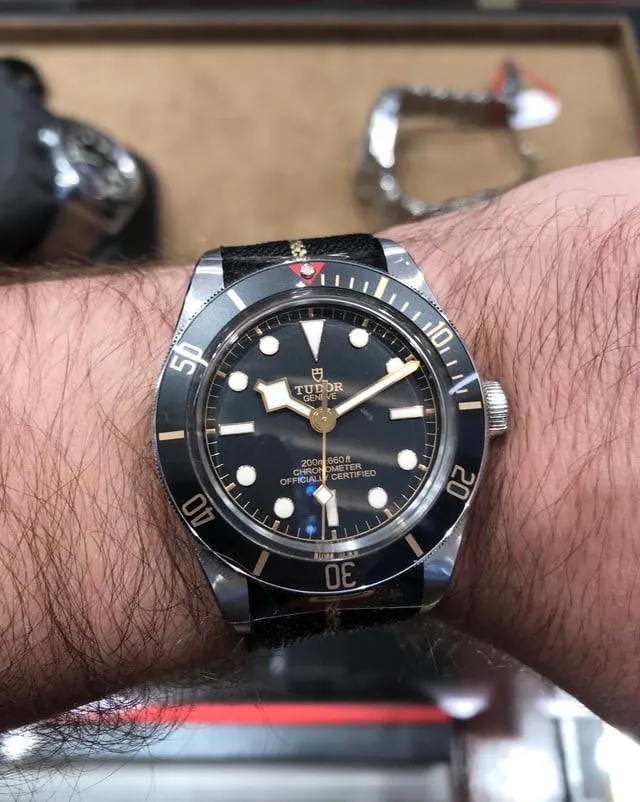 The Black Bay 58 sits $200 to $400 below AD retail on grey market listings, and secondary market buyers do not pay a premium for AD provenance. The dealer warranty covers the same practical defect window as the manufacturer warranty. Credit: u/RepostsAreBadMkay
What to look for: a written warranty document with specific terms. Duration, what’s covered, what’s excluded, and a clear claims process. “We stand behind our watches” is not a warranty. A PDF with terms and a claims address is.
The saving in real numbers
$500–$800 on a $5,400 watch is 10–15%. That is a real number. Before deciding whether it’s worth it, run it against the full 10-year cost of ownership, not just the sticker price.
💡 The grey market saving looks different in context. A $600 saving on a $5,400 watch is meaningful, but so is the $500–$900 service you’ll pay in year seven. Before making the grey market call, use the First Watch Budget & Total Cost of Ownership Calculator to see the full 10-year number. The saving may be larger or smaller than it looks against the sticker price alone.
Access to waitlisted references
For Rolex sport references that are waitlisted at AD, the grey market is sometimes the only path to the watch at a price close to retail. No AD purchase history to build. No indeterminate wait. This is a real benefit for a specific buyer. It comes with the resale liquidity trade-off described above, and that trade-off should be calculated before committing.
When the Grey Market Is the Rational Choice
This is the section that dealer-written content won’t give you plainly. Here it is.
If you’re buying a watch to wear, not to resell within three years, the grey market saving is real for most references. The manufacturer warranty trade-off is minimal (more on this below). The dealer warranty covers the practical risk window. The saving is $500–$800 in your pocket.
If you’re buying Omega, Tudor, Grand Seiko, or Longines, the AD relationship has no meaningful future allocation value. You are paying AD retail for a transactional purchase. The grey market is the rational choice if the dealer passes the vetting criteria in the next section.
If you’re buying a Rolex sport reference and resale matters to you, the calculation is more specific. The AD provenance premium on a Submariner ref. 124060 is approximately $400–$600 in the secondary market. If the grey market saving is $600 and the resale premium is $500, the net saving is $100. That may not be worth the additional vetting work. Run the numbers for your specific reference before deciding.
If you’re buying a Rolex sport reference to wear and not to sell, the resale premium is irrelevant. The grey market saving is real.
The grey market is not the rational choice if the dealer does not pass the vetting criteria below. A $600 saving is not worth a dealer who won’t honour their warranty or who misrepresents the watch’s condition.
How to Vet a Grey Market Dealer: The Criteria That Actually Matter
“Buy from a reputable dealer” is the most useless piece of advice in this space. Here is what reputable actually means, in observable terms you can verify before handing over $4,000.
1. Written warranty documentation
The dealer must provide a written warranty with specific terms. Duration (minimum one year). What’s covered (manufacturing defects, movement failure). What’s excluded (accidental damage, wear). And a clear claims process with a contact address. A warranty that lives only in a FAQ paragraph on the website is not a warranty. Ask for the document before purchase.
2. Return policy
Minimum acceptable terms: 14 days, no-questions-asked return for unworn watches in original condition. Restocking fees are a warning signal. A 7-day window is too short for a purchase of this size. If the dealer won’t give you two weeks to decide you’ve made a mistake, that tells you something about how they handle disputes.
3. Authentication process
A legitimate dealer describes their authentication process in specific terms: movement inspection, serial number verification against manufacturer records, case and dial examination for signs of tampering or replacement. NAWCC authentication standards provide the non-commercial benchmark for what this process should include. Generic claims (“all watches are authenticated by our experts”) are not enough. Ask what the process involves. A vague answer is a risk signal.
4. Grey market disclosure
The dealer must explicitly state that the watch is a parallel import and that the manufacturer warranty may not be valid in your region. Dealers who obscure this, who imply the manufacturer warranty is intact when it isn’t, are misrepresenting the product. This is the clearest single signal of a dealer operating in bad faith.
5. Community reputation
WatchUSeek forums and the r/Watches subreddit are your primary research tools here. Search the dealer’s name. Look for volume of transactions discussed (a dealer with 50 community mentions over five years is different from one with 500), how disputes were resolved (did the dealer make it right, or disappear?), and how long the dealer has had a community presence. Discount single negative reviews from accounts with no other history. Competitor-posted complaints are real. Weight patterns over individual incidents.
6. Physical address and business registration
A legitimate grey market dealer has a verifiable physical address and a registered business entity you can look up. A PO box as the only address is a risk signal. Spend three minutes on your state’s business registration database and confirm the entity exists.
7. Chrono24 seller ratings
If the dealer sells through Chrono24, check their seller profile. Look at transaction volume (100+ completed sales is a reasonable threshold), average rating, and the content of any negative reviews. Chrono24’s buyer protection also provides a layer of platform-level recourse that a direct purchase from a dealer’s own website does not.
These seven criteria map onto three separate risks that most “be careful” warnings collapse into one. Platform risk (buying through Chrono24 vs. a dealer’s own site) affects your recourse options. Dealer risk (the dealer’s business practices) affects warranty and return outcomes. Authentication risk (whether the watch is genuine) is addressed by criteria 3 and 4. Treat them separately.
The Warranty Myth: Why the Manufacturer Warranty Is Worth Less Than You’ve Been Told
AD sales staff have a financial interest in you buying from them. Brand marketing has a financial interest in you valuing the manufacturer warranty. Forum orthodoxy repeats what it has heard. None of these sources have an interest in telling you that the manufacturer warranty is, for most first buyers, a low-value trade-off.
Here is the honest calculation.
Rolex officially recommends service every 10 years for current production references. Omega’s official recommendation is every 5–8 years, depending on the reference and conditions of use. A first buyer who purchases a new watch today will almost certainly not need service within the 5-year manufacturer warranty period. The watch is most likely to need service in years six through ten, after the warranty has expired regardless of where you bought it.
Manufacturer warranties cover manufacturing defects only. Not wear. Not damage. Not the scratched crystal from the doorframe in year two. The practical claim rate on new watches within the warranty period is low. Modern Swiss and Japanese movements are reliable. A defect that will manifest typically does so in the first few months of wear, well within a dealer warranty period.
The dealer warranty from a legitimate grey market operation covers the same practical risk window. If the movement has a manufacturing defect, a 1–2 year dealer warranty catches it. The manufacturer warranty’s additional years of coverage protect against a low-probability event that the dealer warranty also addresses.
The manufacturer warranty is a meaningful trade-off in one specific scenario: the watch develops a manufacturing defect in year three or four, after the dealer warranty has expired but within the manufacturer warranty period. That is a real scenario. It is also an uncommon one. Weigh it as one specific risk with a specific probability, not as a reason to automatically pay AD retail.
Grey Market and Resale: The Honest Numbers
If you might sell the watch within five years, the resale impact of grey market provenance is the most important number in this piece.
Rolex Submariner ref. 124060. Rolex’s current US retail price for the Submariner ref. 124060 is $9,100. Grey market pricing for the same reference, new-in-box, runs approximately $8,400–$8,800 on Chrono24, a saving of $300–$700 at purchase. In the secondary market, AD-provenance examples with full box-and-papers trade at roughly $9,500–$10,200. Grey market-provenance examples in equivalent condition list at $9,000–$9,800. The AD provenance premium is approximately $400–$600.
The net saving calculation: if you save $600 buying grey market and recover $500 less on resale, the net saving is $100. If you save $300 and recover $500 less, you’ve lost $200 relative to the AD purchase. For the Submariner specifically, the grey market saving is real but the resale impact is also real. Run your specific numbers.
Omega Seamaster 300M ref. 210.30.42.20.01.001. Grey market pricing runs $4,600–$4,900 against a US AD retail of approximately $5,400, a saving of $500–$800. Chrono24 listings for this reference show no meaningful price differential between AD-provenance and grey market-provenance examples. The resale impact is negligible. The grey market saving is the full saving.
Tudor Black Bay 58 ref. M79030N. Grey market pricing is approximately $200–$400 below AD retail. Secondary market pricing does not distinguish meaningfully between AD and grey market provenance. The saving is real and the resale impact is minimal.
The pattern is consistent: the more allocation-constrained the reference, the more AD provenance matters in the secondary market. For references where supply meets demand at retail, provenance is a minor factor.
The Decision Framework: A One-Page Summary
Condition 1: You’re buying to wear, not to resell within three years. The grey market saving is real for most references. The warranty trade-off is minimal. Vet the dealer using the seven criteria above and proceed.
Condition 2: You’re buying a Rolex sport reference and resale liquidity matters. The AD provenance premium in the secondary market is approximately $400–$600 for the Submariner ref. 124060. Compare this to the grey market saving on your specific reference. If the saving exceeds the resale premium by a meaningful margin, grey market makes sense. If not, the AD purchase may be the better total-cost decision. Use Chrono24’s current listings to check both provenance types before deciding.
Condition 3: You’re buying Omega, Tudor, Grand Seiko, or Longines. The AD relationship has no meaningful future allocation value for these brands. The secondary market does not price AD provenance as a premium on these references. If the dealer passes the seven vetting criteria, the grey market is the rational choice.
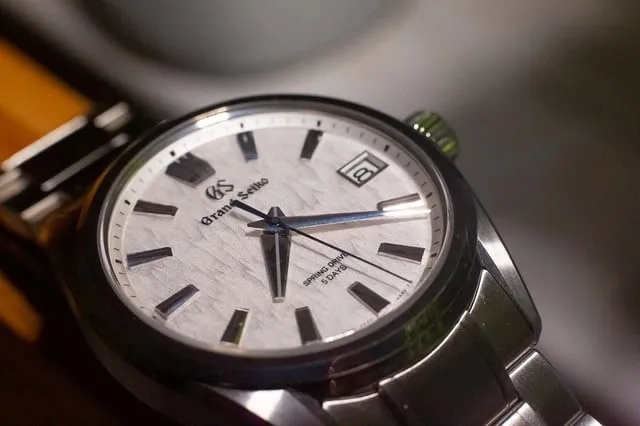 Grand Seiko, like Omega and Tudor, does not operate under Rolex-style allocation constraints. The AD relationship is transactional, and the secondary market prices grey market provenance the same as AD provenance. Credit: u/silverphoenix48
Condition 4: The dealer fails any of the seven vetting criteria. Do not buy, regardless of the saving. A $600 saving is not worth a dealer who won’t honour their warranty, won’t accept returns, or won’t disclose that the manufacturer warranty is void. The criteria exist precisely because the saving is real enough to attract bad actors.
The grey market is not a shortcut for the impatient. It is a legitimate distribution channel with a specific trade-off profile. The trade-off is real, it is quantifiable, and for most first buyers purchasing Omega, Tudor, Grand Seiko, or Longines to wear daily, it resolves in favour of the grey market purchase. For Rolex sport references where resale matters, the calculation is closer and worth running with actual numbers.
Know the trade-off. Vet the dealer. The saving is real.