Dress Watch, Sport Watch, or Everyday Watch: Choosing a Category That Fits Your Life
Key takeaways
- The dress-vs-sport binary is the wrong question: Most first buyers need an everyday watch that works across office, weekend, and occasional formal contexts, a category the industry consistently undersells.
- Water resistance ratings are widely misunderstood: 30–50m means splash-resistant only; 100m is the minimum for pool-safe, anxiety-free daily wear.
- Category choice determines ten-year cost, not just sticker price: Leather strap replacements for a daily-worn dress watch run $80–$300 every 2–3 years, a real cost that doesn’t appear on the spec sheet.
- Pre-owned risk is three separate risks: Platform risk, seller risk, and authentication risk behave differently by category and reference, collapsing them into one warning is not useful.
- For most first buyers, the context mapping already has an answer: Business-casual office, occasional formal events, weekend casual, no serious water sports points to the everyday category before you’ve looked at a single reference.
The Question You’re Actually Asking
Watch forums and Reddit threads frame this as a binary: dress watch or sport watch? It’s the wrong question, and it’s worth naming where that framing comes from before we dissolve it.
The dress-vs-sport binary comes from two places. First, brand marketing, because “professional dive watch” and “dress watch for the boardroom” are clean stories that anchor distinct product lines. Second, watch forums, where enthusiasts who already own five pieces debate the sixth. Neither source is optimising for someone buying their first serious watch.
Most first buyers are not choosing between a dive watch and a dinner watch. They need a single watch that works across a mix of contexts: a business-casual office, a weekend, an occasional formal event, a holiday.
That is not a dress watch problem or a sport watch problem.
That is an everyday watch problem.
The everyday watch is a distinct third category that the industry consistently undersells, because “a watch that works everywhere” doesn’t anchor a marketing story the way the other two do. That’s the reason the binary framing persists.
So the question to ask is not “dress or sport?” It is: what are the three most common contexts I’ll wear this watch in, and which category serves all three?
That question changes the shortlist entirely. For most first buyers (the person with a business-casual office, occasional formal events, and no serious water sports) the answer is already pointing somewhere specific before they’ve looked at a single reference.
If this is a milestone purchase, that matters. But the emotional weight of the occasion is not a reason to buy the wrong category of watch. Getting the category right first is the decision that makes everything else easier.
What Each Category Actually Means
Dress Watch
A dress watch is built around one constraint: it has to disappear under a suit sleeve. That means a case diameter of 36–40mm and a case thickness under 10mm. Anything thicker creates a visible ridge under a shirt cuff.
The other features follow from that constraint. No rotating bezel, it adds thickness and visual weight. Water resistance is typically 30–50m, which means splash-resistant in practice. Not pool-safe. Not rain-anxiety-free. A leather strap or slim metal bracelet. Dial refinement takes priority over legibility: applied indices, clean chapter rings, minimal text.
The trade-offs are real. A dress watch worn daily accumulates wear faster than a sport or everyday watch. The leather strap needs replacing every 2–3 years under daily wear, at $80–$300 per strap depending on quality. The 30–50m water resistance means low-level anxiety around hand-washing and getting caught in the rain, most people underestimate this until they own one.
Sport Watch
A sport watch starts with a water resistance floor of 100m. Dive watches, the most common sport reference in this price tier, run to 200m or 300m. The rotating bezel tracks elapsed time underwater or during any timed activity; it’s functional, not decorative.
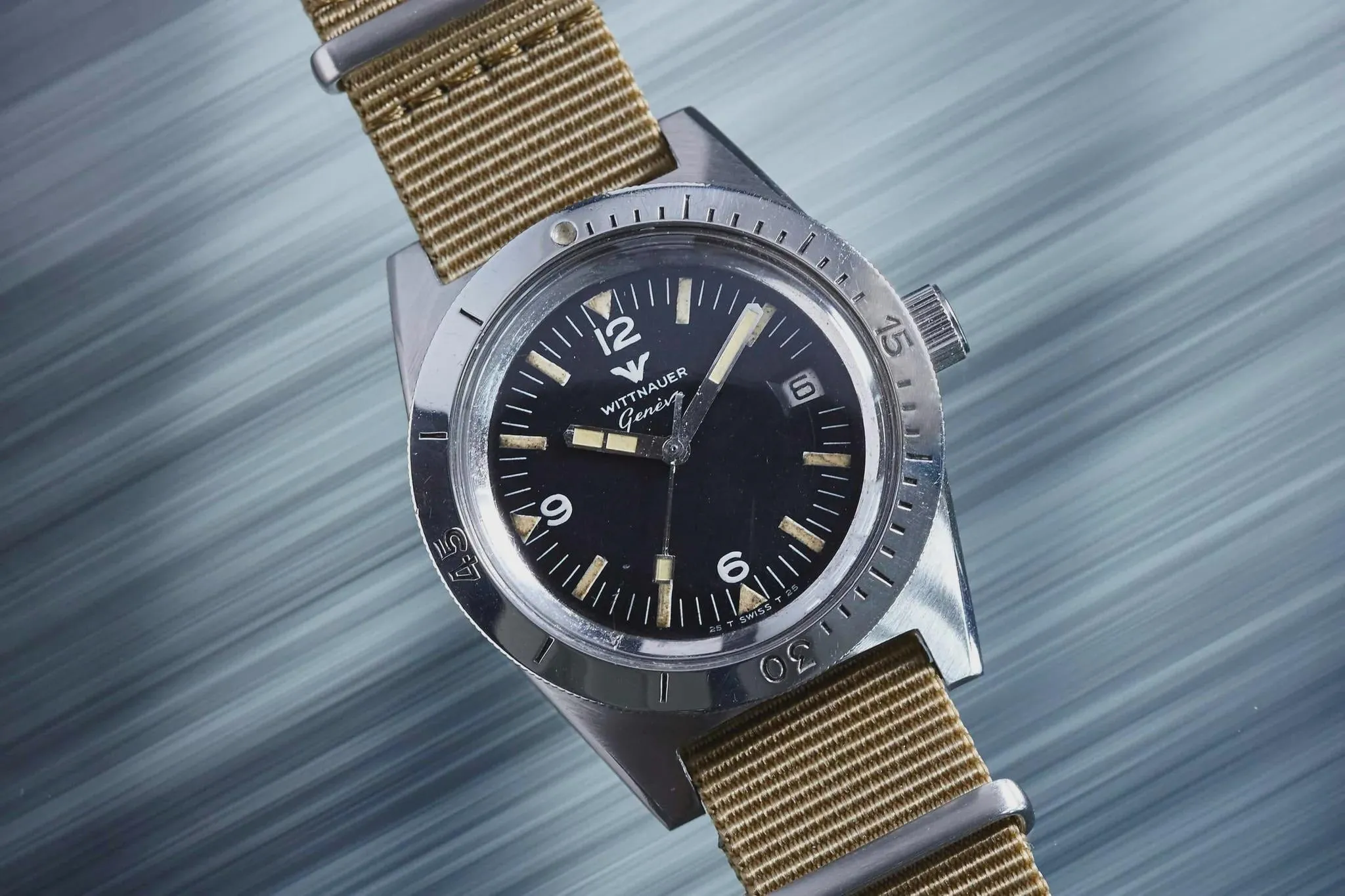 The graduated markings on a dive bezel track elapsed minutes underwater. The zero marker aligns at the start of a dive; the bezel only rotates counterclockwise so an accidental knock never overstates your remaining air. Credit: u/ShowsUpSometimes
Case diameter runs 39–44mm. Lume on hands and indices is standard, because the watch needs to be readable in low light or underwater. The bracelet is typically metal or rubber, built to take impact. Sapphire crystal is the standard expectation above $1,000 in this tier, mineral glass scratches too easily for a watch worn actively.
The sport watch is the most legible category in terms of what you’re buying. The specifications are measurable. The trade-off is size and formality: a 42mm dive watch on a metal bracelet reads as casual in most office contexts and will not disappear under a suit sleeve.
Everyday Watch
This is the category the industry doesn’t name cleanly, so we will.
An everyday watch meets four specific criteria:
- Water resistance of 100m minimum. Pool-safe, rain-safe, hand-washing-safe without anxiety.
- Case diameter of 38–42mm. Suit-compatible and casual-compatible. Wide enough to read easily; narrow enough to clear a shirt cuff.
- Dial legibility prioritised. Clear indices, readable hands, adequate lume. Not the dress watch’s refinement-over-function trade-off.
- Strap versatility. Standard spring bars or a quick-change system, so you can move between a metal bracelet for weekends and a leather or NATO strap for formal contexts without tools.
The everyday watch is not a compromise between dress and sport. It is a category with its own criteria, and those criteria describe what most first buyers actually need. The reason it doesn’t dominate the conversation is simple: “a watch that works everywhere” doesn’t sell a marketing story. “Professional dive watch” does.
The Specifications That Actually Matter
Here are the numbers to use when evaluating any watch against the three categories.
Water Resistance
The ratings are widely misunderstood. 30m does not mean safe at 30 metres depth. The ISO 22810:2010 standard uses static pressure tests, not real-world immersion. In practice:
- 30–50m: Splash-resistant. Safe for careful hand-washing. Not pool-safe. Not reliably rain-safe.
- 100m: Pool-safe. Safe for snorkelling. Not rated for scuba diving.
- 200m+: Recreational dive-safe. The floor for any watch marketed as a dive watch.
A dress watch at 30m worn daily means thinking about your watch every time you wash your hands. That is a real cost that doesn’t appear on the spec sheet.
Case Diameter
- Dress: 36–40mm. Clears a suit sleeve without a ridge.
- Everyday: 38–42mm. The overlap with dress at 38–40mm is intentional, this is where the most versatile references live.
- Sport: 39–44mm. The larger end reads as casual; the smaller end (39–40mm) can pass in business-casual contexts.
Case Thickness
- Under 10mm for dress (suit-sleeve clearance).
- Under 13mm for everyday (jacket-sleeve clearance).
- Sport watches often run 12–14mm, fine for casual wear, occasionally awkward under formal sleeves.
Crystal
Sapphire crystal is the standard expectation above $1,000 in this price tier. Mineral glass is acceptable under $500 but scratches visibly with daily wear. If a watch above $1,000 ships with mineral glass, that is a cost-cutting decision worth knowing about.
Lume
Lume is not a sport-only feature. An everyday watch benefits from legibility in low light, a dim restaurant, an early morning, a cinema. Dress watches often omit lume for aesthetic reasons. That is a real trade-off, not a minor detail.
Strap and Bracelet Versatility
A single-watch buyer needs strap options. Integrated bracelets, where the bracelet is designed as part of the case and cannot be swapped without specialist tools, lock you into one look. Standard spring bars or a quick-change system let you move between a metal bracelet for weekends and a leather or NATO strap for formal contexts. This matters more for everyday watches than for dress or sport, where the context is more fixed.
The Context-Mapping Exercise
Five variables determine which category fits your life. Work through each one honestly.
1. Office dress code
- Formal (suit required most days): dress or everyday.
- Business casual (jacket optional, no tie): everyday.
- Casual or no office: sport or everyday.
2. Physical activity while wearing
- Swimming, water sports, or frequent outdoor activity: sport or everyday (100m floor is non-negotiable).
- Gym or hiking without water exposure: everyday.
- Desk-based, no physical activity: any category works on this variable alone.
3. Travel frequency
- Frequent traveller: everyday or sport. Durability and strap versatility matter when a watch is in transit, in overhead lockers, and on unfamiliar wrists in unfamiliar climates.
- Occasional traveller: any category.
4. Formal event frequency
- Black tie or weddings more than twice a year: dress or everyday. A sport watch at a black-tie event is a choice, not a mistake, but it is a visible one.
- Occasional formal events (once or twice a year): everyday handles this without a dedicated dress watch.
5. Single watch or eventual collection
- Single watch for the foreseeable future: everyday, almost by definition. A single watch that can’t cross contexts will frustrate you within a year.
- Planning to add a second watch within two to three years: more flexibility. A sport watch first, a dress watch second, is a coherent strategy.
The most common first-buyer profile is: business-casual office, occasional formal events (two or fewer per year), weekend casual, no serious water sports. If that describes you, the context mapping points to the everyday category, not because it’s the safe choice, but because it’s the rational one for that set of variables.
The “I want a dress watch for the aesthetic” case is valid. Dress watches are genuinely beautiful objects, and the refinement of a slim case and a clean dial is a real thing to want. But name the trade-off clearly: a dress watch worn daily will show wear faster, the leather strap is a recurring cost, and the 30–50m water resistance will create low-level anxiety in ordinary situations. If you want a dress watch and you understand those trade-offs, that is a reasonable decision. If you haven’t thought through the daily-wear reality, this is the moment to do it.
💡 The category you choose affects what the watch costs you over ten years, not just the sticker price. Leather strap replacements for a dress watch worn daily run $80–$300 every 2–3 years. A sport watch bracelet may need link replacement or a full service over the same period. The numbers add up differently depending on which category you land in. Run the 10-year total cost of ownership calculation for your specific budget here, it takes about two minutes and changes how the sticker prices look.
What Each Category Looks Like at Your Budget
The $1,500–$4,000 range is where the category decision has the most practical consequence. Here is what each category offers at that price, with honest assessments.
Dress Watches ($1,500–$4,000)
Longines Master Collection: ~$1,800–$2,200 retail The honest entry point for a Swiss dress watch with genuine movement quality. The Master Collection uses an in-house movement, with a column-wheel chronograph in some configurations, and the finishing is appropriate for the price. The trade-off: Longines sits below Tudor and Grand Seiko in brand recognition, which matters if the name on the dial is part of what you’re buying. If it isn’t, this is a strong case for the lower end of the budget.
Hamilton Jazzmaster: ~$600–$900 retail Below the $1,500–$4,000 range, but worth naming honestly. If your budget is at the lower end and a dress aesthetic is what you want, the Jazzmaster is the honest option. It uses ETA-based movements, the finishing is appropriate for the price, and it won’t embarrass itself next to more expensive watches. The trade-off: it will not hold its value, and the brand carries less weight than Longines in most contexts.
True Swiss dress watches above $3,000, the Jaeger-LeCoultre Reverso entry models, the IWC Portofino, exist and are excellent. They push the budget ceiling. If you’re considering them, the shortlisting piece covers that tier in more detail.
Sport Watches ($1,500–$4,000)
Tudor Black Bay 58: ~$3,400–$3,700 retail The clearest case in this tier. The Black Bay 58 is a 39mm dive watch with 200m water resistance and an in-house movement (MT5402). At 39mm, it sits closer to the everyday category than most dive watches. On Chrono24, two-year-old pre-owned examples run $2,800–$3,200, a meaningful delta from retail for a watch that holds its value better than most in this tier. The trade-off: Tudor is a Rolex-adjacent brand, and some of what you’re paying for is that proximity. The watch itself is excellent; the brand story is borrowed.
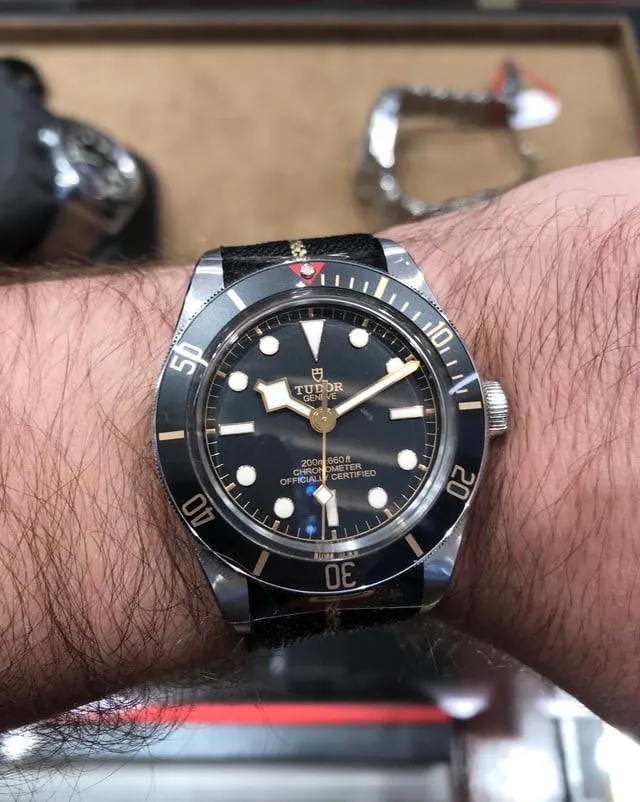 The Black Bay 58 at 39mm sits closer to the everyday category than most dive watches. At $2,800 to $3,200 pre-owned, it is the most straightforward value case in this tier. Credit: u/RepostsAreBadMkay
Seiko Prospex line: ~$500–$800 retail Below the $1,500–$4,000 range, but the honest entry point for a sport watch with genuine dive credentials. The Prospex line uses Seiko’s in-house movements and carries ISO 6425 dive certification on some references. The trade-off: the finishing and bracelet quality reflect the price. If your budget is at the lower end and sport is the right category, this is where to start.
Omega Seamaster Diver 300m: ~$10,500 retail Above the $4,000 ceiling at retail. Named here because it is the aspirational ceiling for this category and the reference most first buyers in this tier are comparing against. The Seamaster 300m is a genuinely excellent watch: METAS-certified movement, 300m water resistance, strong finishing. The trade-off: at $10,500 retail it sits well above the ceiling, and on Chrono24 pre-owned examples run $3,200–$4,000 for recent references, which brings it into range. Omega depreciates more steeply than Tudor or Rolex in this tier, a buying opportunity pre-owned, a resale risk new, depending on your perspective.
Everyday Watches ($1,500–$4,000)
Tudor Black Bay 36: ~$3,000–$3,200 retail The 36mm case sits at the smaller end of the everyday range and crosses into dress-watch territory in terms of wrist presence. 200m water resistance, in-house movement, and a dial that reads as versatile rather than sporty. The trade-off: the same Rolex-adjacency note as the Black Bay 58 applies here. The watch earns its price; the brand story is part of what you’re paying for.
Grand Seiko SBGX261: ~$2,500–$3,000 retail The dial finishing on the SBGX261 is, at this price point, objectively better than what Rolex or Omega produces. Hodinkee’s coverage of Grand Seiko’s Zaratsu polishing process documents the craft in detail, it is a comparison anyone who has held both watches can verify. The movement is a high-accuracy quartz (±10 seconds per year), which some buyers find less satisfying than mechanical. The trade-off: Grand Seiko’s AD network is limited outside Japan and major US cities. Buying pre-owned or grey market is often the practical route, which introduces the authentication and platform considerations covered below.
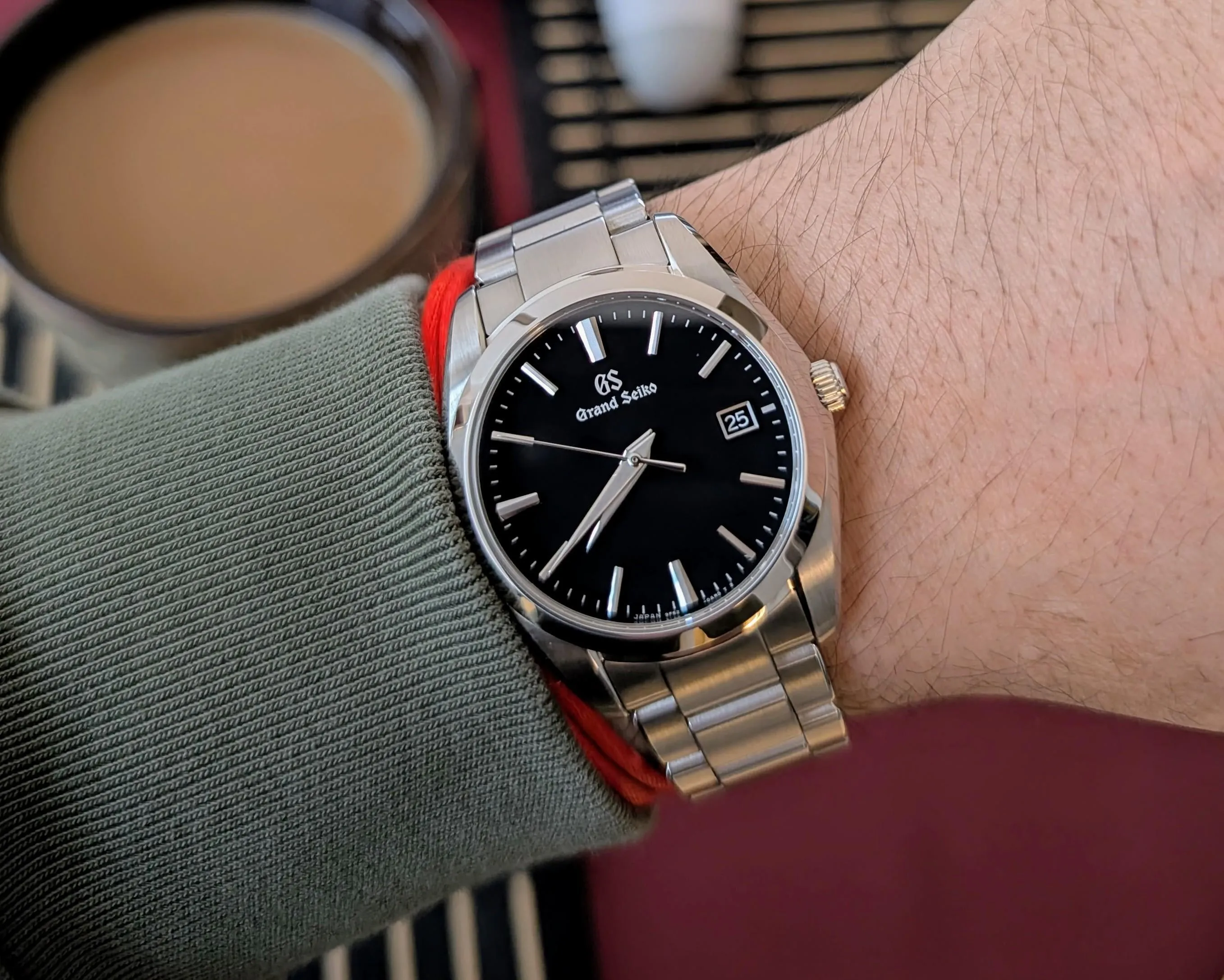 Grand Seiko’s dial finishing at this price is a factual advantage over Swiss competitors. The applied indices and case bevels are hand-finished to a standard that costs significantly more from a Swiss brand. Credit: u/Dr_Randaddy
Rolex Oyster Perpetual: ~$5,800 retail Above the $4,000 ceiling at retail. The Oyster Perpetual carries 100m water resistance, exactly the everyday category floor, in a 36mm or 41mm case, with a clean dial and a bracelet that swaps to leather or NATO without difficulty. On the grey market, current references run $5,000–$5,500. That is still above the ceiling, but worth naming because it is the reference that most clearly defines the everyday category at the higher end of the first-buyer range. If the budget stretches, or if a pre-owned example at $4,500–$5,000 is in scope, this is the reference the everyday category points toward.
The Case for Buying Pre-Owned in Each Category
The category decision interacts directly with the new-vs-pre-owned question, and the interaction is different for each category.
Sport watches depreciate least in this tier. The Tudor Black Bay 58 is the clearest example: new retail runs $3,400–$3,700; a two-year-old pre-owned example on Chrono24 runs $2,800–$3,200. That is a 10–15% delta, not a 30–40% one. Tudor and Rolex sport references hold value because demand consistently exceeds supply. Buying pre-owned saves money at the margin; it does not represent a dramatic discount.
Dress watches in this tier depreciate significantly. A pre-owned Longines Master Collection at two to three years old is often 30–40% below retail on Chrono24. That is the honest buying opportunity in this category, you access a better-finished watch for your budget than you would buying new at the same price point.
Everyday watches: the Rolex Oyster Perpetual is the clearest case where pre-owned brings an otherwise-above-budget reference into range. At $5,800 retail it sits outside the core budget. At $5,000–$5,500 on the grey market, it is at the ceiling. At $4,200–$4,800 for a two-to-three-year-old pre-owned example on Chrono24, it becomes a realistic option for a buyer at the upper end of the $1,500–$4,000 range.
Pre-owned risk is not a single variable. Three separate risks apply, and collapsing them into a single “be careful” warning is not useful.
-
Platform risk: Chrono24 offers buyer protection on transactions through its platform, if the watch is not as described, there is a dispute process. eBay’s buyer protection is weaker and more variable. Private sales carry the most platform risk. The platform you use matters as much as the watch you’re buying. How those platforms compare in detail is covered in the pre-owned buying guide.
-
Seller risk: A professional dealer on Chrono24 with 500+ transactions and photos of the movement is a different risk profile from a zero-feedback private seller. Dealer listings typically carry a premium of 5–10% over private listings, that premium is often worth paying for a first pre-owned purchase.
-
Authentication risk: The fake market is concentrated in Rolex sport references, the Submariner, the Daytona, the GMT-Master II. It is not evenly distributed across categories. Grand Seiko fakes are rare. Longines fakes are rare. A pre-owned Longines Master Collection from a reputable dealer carries minimal authentication risk. A pre-owned Rolex Submariner from a private seller carries meaningful authentication risk. Name the specific reference and the specific seller type before assessing the risk.
How to Use This Framework to Reach a Shortlist
Work through the five context variables. Be honest about the three most common contexts you’ll actually wear the watch in, not the contexts you aspire to.
For most first buyers reading this (business-casual office, occasional formal events, weekend casual, no serious water sports) the context mapping points to the everyday category. The everyday watch handles all three contexts without imposing restrictions. The dress watch fails on water resistance anxiety and daily-wear durability. The sport watch fails on formal-context versatility unless you’re comfortable with a dive watch at a wedding.
If you are genuinely undecided between dress and everyday, default to everyday. It is the more forgiving choice for a first watch. A dress watch worn in everyday contexts will show the trade-offs within six months. An everyday watch worn to occasional formal events will not.
Once you have a category, the next step is narrowing to a shortlist of two or three specific references. The shortlisting piece walks through that process in detail: how to eliminate references that don’t fit your criteria, how to compare movement quality across brands, and how to decide between new and pre-owned for your specific budget.
The category decision also affects what the watch costs you over ten years. Leather strap replacement for a dress watch worn daily runs $80–$300 every 2–3 years. A sport or everyday watch on a metal bracelet has different long-term costs: bracelet stretch, clasp wear, occasional link replacement. The sticker price is the number everyone focuses on. The ten-year number is the one that actually matters.
💡 Before you look at a single reference, run the numbers for your category. The First Watch Budget & Total Cost of Ownership Calculator takes your budget, your likely category, and your wearing context and shows you what the watch actually costs over ten years, purchase price, service intervals, strap or bracelet replacement, and insurance. Run the calculation here. It takes two minutes and changes how the sticker prices look.