Key takeaways
- Tudor is a genuine Swiss manufacturer, not just a Rolex sub-brand: Since 2015, Tudor has built its own in-house movements, giving it independent credibility beyond its Rolex heritage.
- The buying experience is one of Tudor’s real advantages: No waitlists, no allocation games, you can walk into an authorised dealer and buy the same day, which matters when you’re spending $3,000–$5,000 for the first time.
- Price creep has narrowed Tudor’s value gap: Competitors like Oris now offer strong in-house movements at lower prices, so the value case requires an honest comparison, not an assumption.
- Tudor is a keeper, not an investment: Resale value trails Rolex meaningfully, buy it because you want to wear it, not because you expect to recoup your money.
- Case size and complication fit matter more than brand reputation: The 41mm Black Bay overhangs smaller wrists; the GMT’s bi-colour bezel is a strong statement; try both in person before committing.
A short history of Tudor
Hans Wilsdorf founded Rolex in 1905. By 1926, he had a second idea: register a separate brand. Tudor, to sell Swiss-made watches at prices more people could actually afford. Same Swiss standards, lower price, different name on the dial.
That positioning held for decades. Then in 1954, Tudor did something that still defines the brand today. It supplied dive watches to the French Navy, not as a marketing exercise, but as working tools issued to professional divers who needed a watch that would not fail them underwater. That military heritage is real, and it runs through every tool watch Tudor has made since.
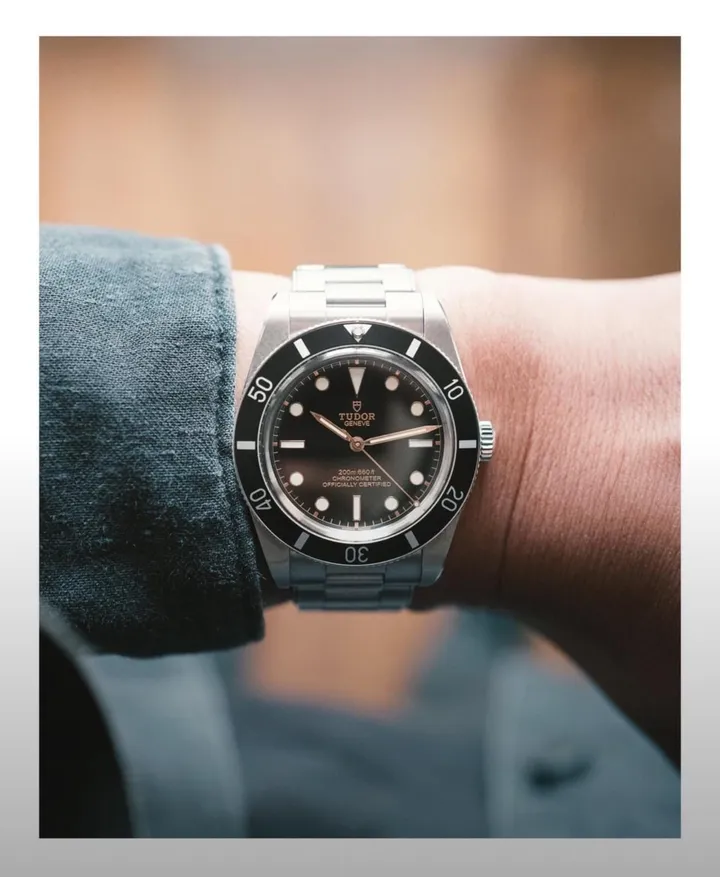
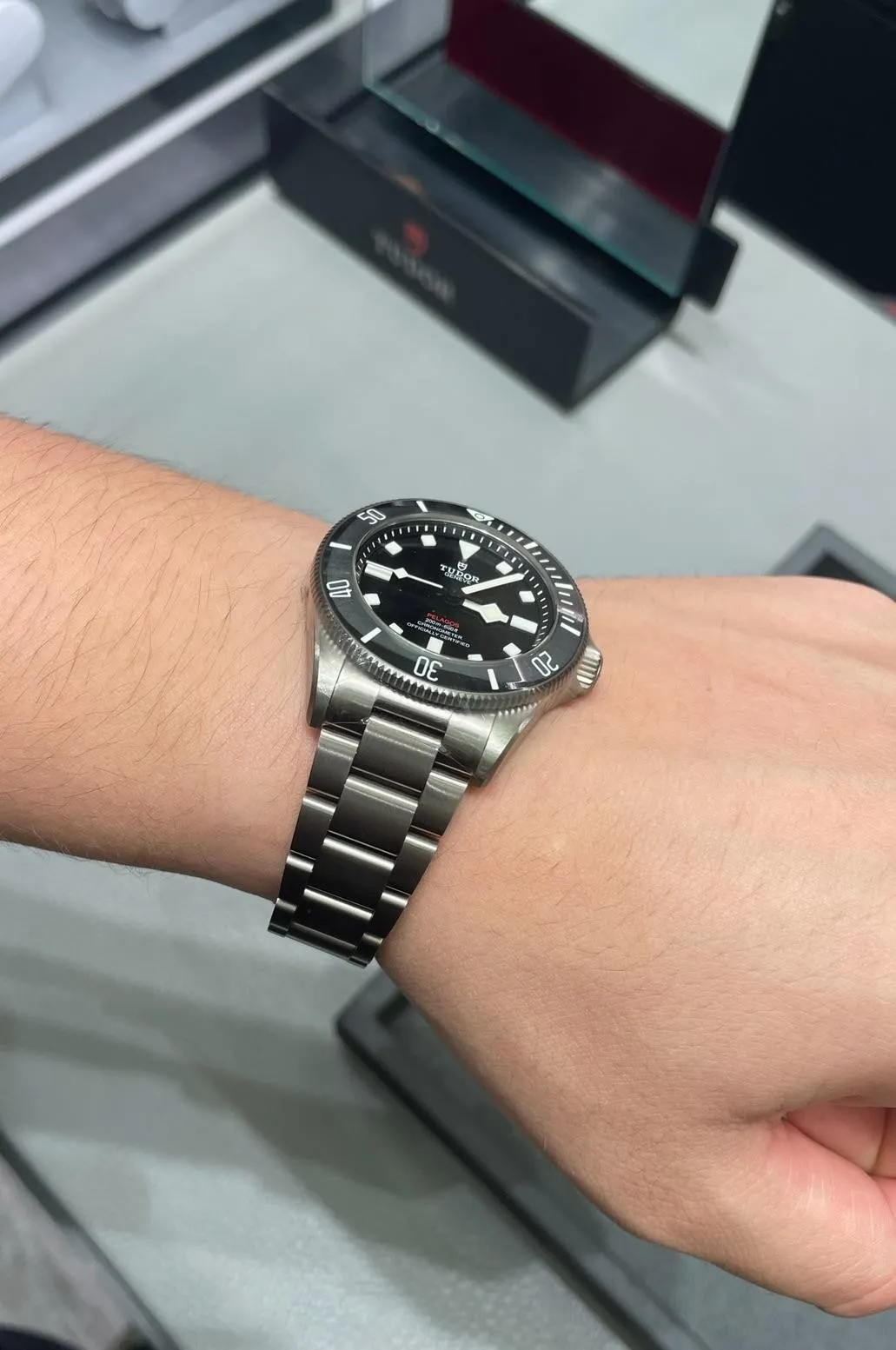 The Pelagos is the direct descendant of the watches Tudor supplied to the French Navy in 1954. The tool-watch brief has not changed. Credit: u/Legitimate-Doubt8516
For most of the late twentieth century, Tudor sat quietly in Rolex’s shadow. Respectable, but not talked about. That changed in 2012, when Tudor relaunched the Black Bay. The watch revived Tudor’s vintage diver aesthetic, and watch forums, Reddit threads, and YouTube channels picked it up fast. Tudor went from a footnote to a headline.
Three years later, in 2015, Tudor introduced its first in-house movement, the MT5000 series. Before that, Tudor used movements from ETA, the same supplier used by dozens of other brands. Building its own calibre changed the conversation. Tudor was no longer just a cheaper Rolex alternative. It was a manufacturer with its own identity, producing movements that could stand on their own merits.
That combination, genuine Swiss manufacture, military tool-watch heritage, and a revived vintage aesthetic, is what Tudor brings to the table today.
What buyers love about Tudor
The most consistent thing owners say about Tudor is that the watches feel honest. You pay a fair price, you get a Swiss-made watch with an in-house movement, and nobody makes you feel like you should be grateful for the privilege of buying it.
That last point matters more than it sounds. Walking into a Tudor authorised dealer is a different experience from walking into a Rolex AD. Owners report that Tudor boutiques are welcoming in a way that Rolex and Omega boutiques often are not. No waitlist theatre. No allocation games. You can walk in, try the watch on, and buy it the same day. For a first-time buyer already anxious about spending $3,000 to $5,000, that experience is worth something real.
The movements back up the price. The MT5000 series calibres are accurate, well-specified, and genuinely Tudor’s own. Multiple owners of the Ranger have tracked the MT5402 over months of daily wear and reported near-zero daily deviation. That is not marketing copy. That is a movement performing at a level that competes with watches costing significantly more.
Build quality is equally consistent. Owners describe Black Bay variants as built like a tank, worn daily for years without complaint. The Pelagos family uses titanium construction, which is genuinely rare at this price. Titanium is lighter than steel, hypoallergenic, and supremely comfortable for all-day wear. You are not getting that from Rolex or Omega at the same price.
Then there is the emotional dimension. Tudor watches carry Rolex DNA without the Rolex price or the Rolex waitlist. For buyers who want a watch that belongs in the same conversation as a Submariner, but who cannot or do not want to spend $10,000 or more. Tudor is the most direct answer available. Owners consistently describe Black Bay purchases as milestone markers, watches they plan to pass down, watches that re-sparked their love of the hobby. That emotional resonance is real, and it is not manufactured by marketing.
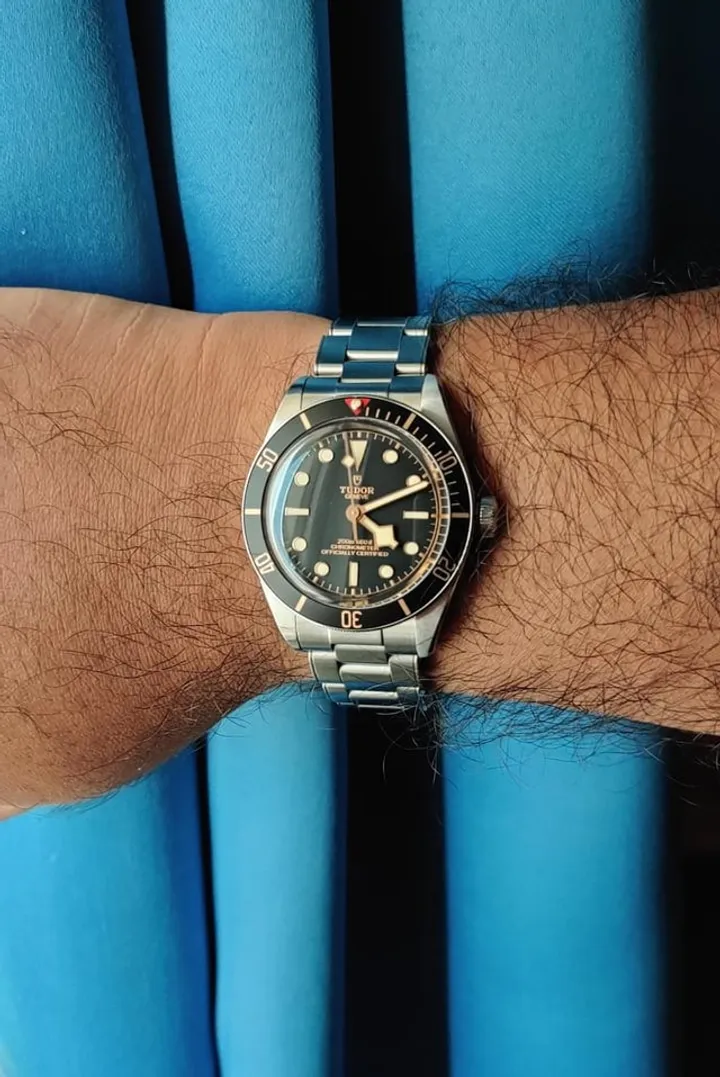
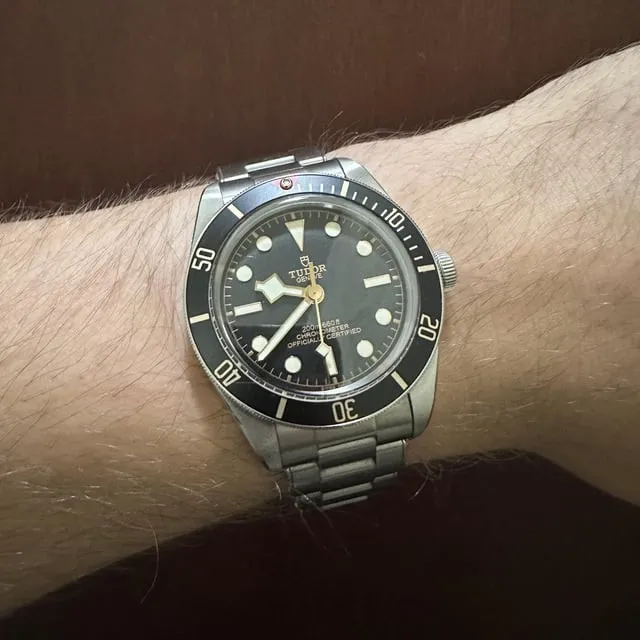 Five-year ownership reviews of the BB58 are almost uniformly positive. Owners wear it daily, worry about it rarely, and plan to pass it on. Credit: u/TomHudsonOfficial
What buyers criticise
Tudor’s success has created its own problem. The Black Bay is now the default recommendation on every watch forum, every Reddit thread, every YouTube channel aimed at first-time buyers. That ubiquity has eroded the sense of discovery that made it feel special. Owners have started pushing back, asking for something less predictable. If you want a watch that feels like a personal find rather than the obvious answer, Tudor’s popularity works against you.
Price creep is a real issue. Tudor’s value case was easier to make five years ago. Prices have risen, and the gap between Tudor and its competitors has narrowed. A used Black Bay 58 in blue can run £1,800 on eBay, while a new Oris Aquis with the Calibre 400 movement costs £1,300. That is a meaningful difference. Tudor still makes a strong case at its price, but do the comparison honestly rather than assuming the value is automatic.
After-sales service is inconsistent, and that is a genuine concern for a watch you plan to wear hard. One owner sent a Pelagos in for a simple bezel replacement and got it back making a clicking noise it did not make before. Tudor’s service network does not have the depth or consistency of Rolex’s, and if something goes wrong, your experience will depend heavily on which service centre you use.
The used market carries real fraud risk. One buyer purchased a 2012 Black Bay on Chrono24 and received a watch that was not what was advertised: wrong year, wrong box, wrong papers, wrong warranty. Tudor’s popularity makes it a frequent target. If you are buying pre-owned, buy from a seller with a documented track record, ask for movement photos, and verify the reference number against the papers before you pay. Platform risk, seller risk, and authentication risk are three separate problems, collapsing them into a single “be careful” warning does not help you.
On resale: Tudor is a keeper, not a vehicle for recouping your money. Owners acknowledge openly that Rolex holds value better. Some have sold their Tudor to fund a different purchase. That is fine, but go in with clear eyes. If resale value matters to you, Tudor is not the right answer. The watch will depreciate. Buy it because you want to wear it, not because you expect to sell it at a profit.
Who Tudor suits, and who it doesn’t
Tudor makes the strongest case for someone buying their first serious watch who wants Swiss manufacture, a proven in-house movement, and a design that will still look right in twenty years. The price range, roughly $2,000 to $5,000 depending on the reference, sits squarely in the first-buyer sweet spot. The AD experience is welcoming. The watches are available without a waitlist. And the build quality means you can wear the watch hard without treating it as a precious object.
If you want a single watch that works at a desk, on a trail, and at a dinner table, Tudor’s lineup has an answer. The Ranger handles the versatile everyday role. The Black Bay 58 handles the milestone-purchase dive-watch role. The Pelagos handles the serious tool-watch role. Each one is a complete watch, not a compromise.
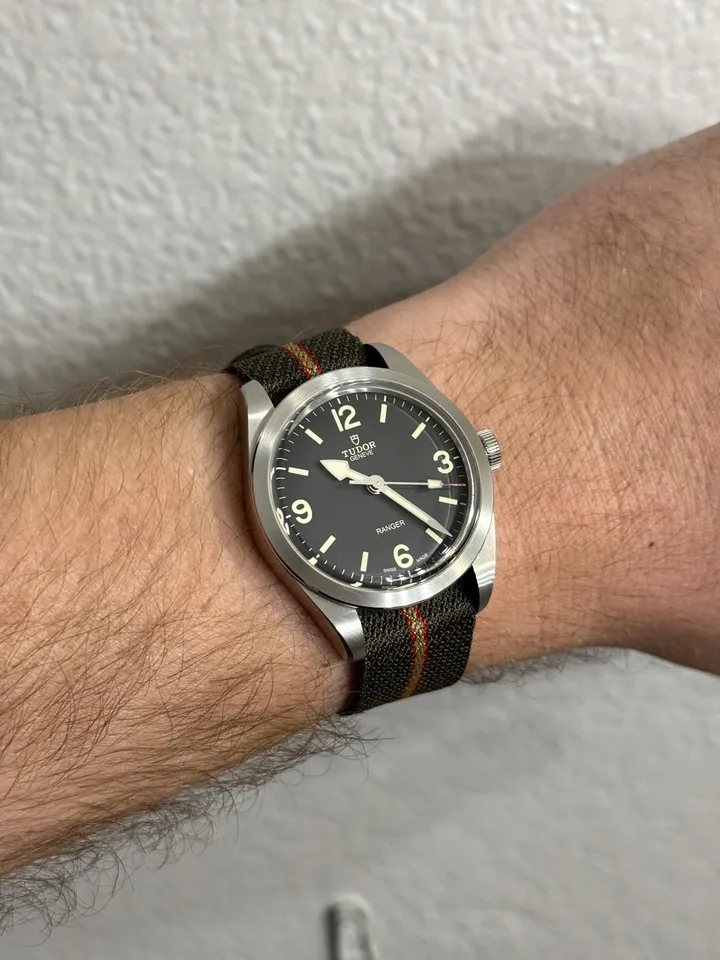
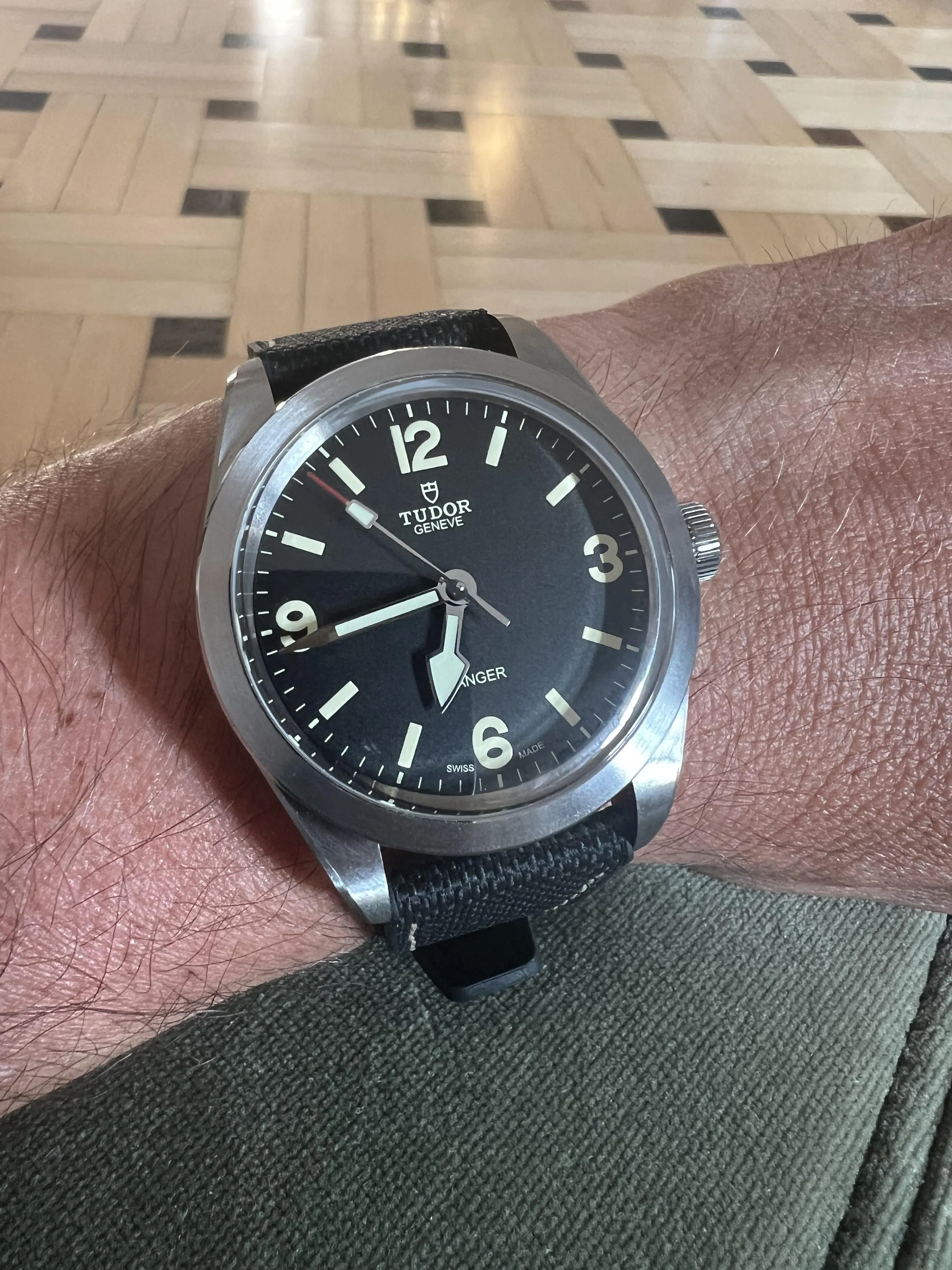 The Ranger’s 39mm case and dateless dial mean it disappears under a shirt cuff as easily as it sits on a hiking pack strap. Credit: u/Ill_Ad2971
Tudor also suits buyers who are drawn to Rolex but cannot justify the price or the waitlist. The Black Bay GMT, for example, delivers Rolex Batman aesthetics with a 70-hour power reserve and an anti-magnetic movement, genuinely better specs than the vintage Rolex it visually references. If you have been eyeing a Rolex GMT-Master II and cannot stomach the grey-market premium, the Tudor is the most honest alternative available.
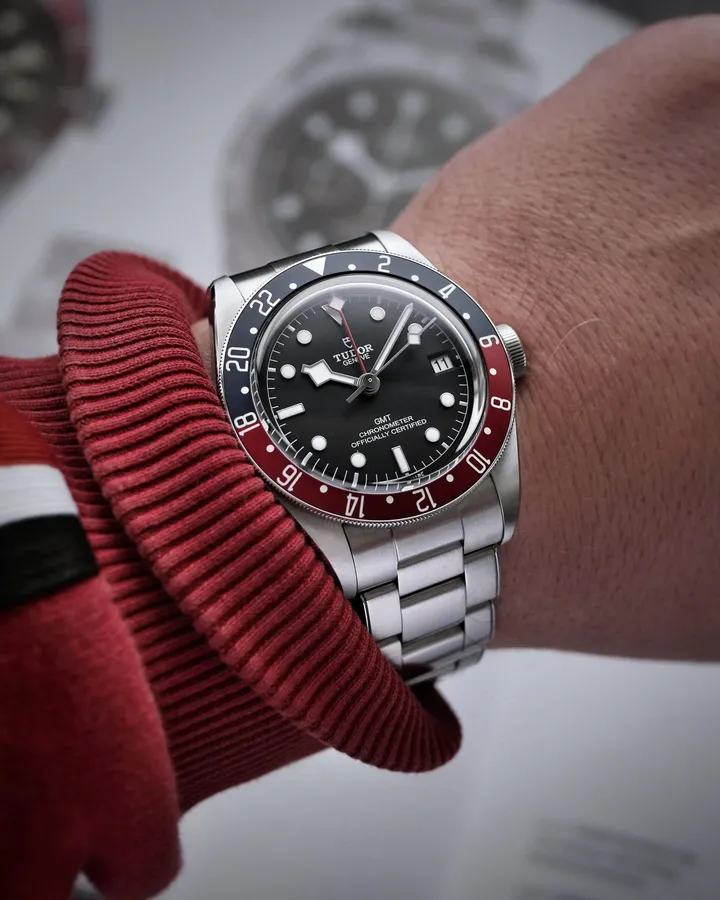
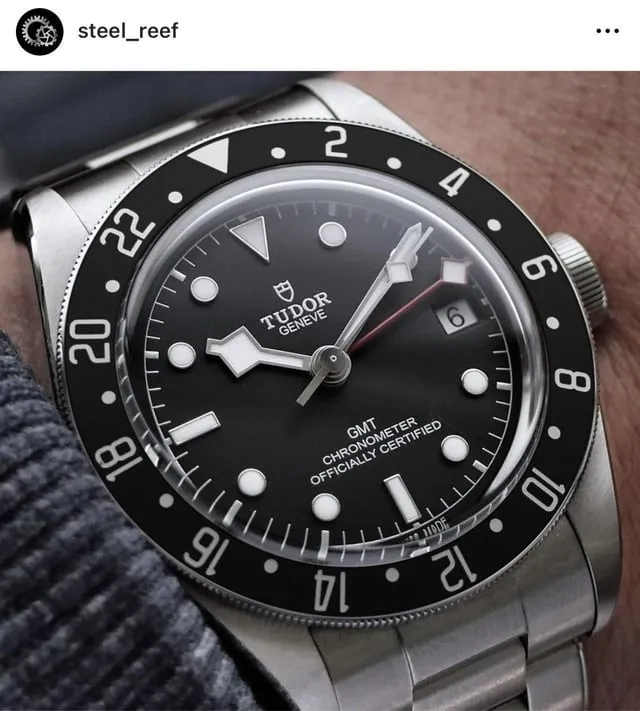 The MT5652’s 70-hour power reserve and anti-magnetic construction are better specs than the vintage Rolex GMT the Black Bay GMT visually references. Credit: u/Bruno_M3
Tudor does not suit buyers who prioritise exclusivity or strong resale value. If you need a watch that holds its value like a Rolex Submariner, or one that turns heads with instant name recognition outside watch circles, Tudor’s positioning as the accessible option works against you. Most people will not know what a Black Bay is. That is not a criticism, it is a fact about the brand’s market position, and it matters if external recognition is part of what you are buying.
It also does not suit buyers who want the most distinctive watch in the room. The Black Bay and the Pelagos 39 are everywhere now. If you have been to a watch meetup, a corporate office, or a boarding school recently, you have already seen several. That ubiquity is a direct consequence of the brand doing everything right for first-time buyers. But if you want something that feels like a personal find rather than the consensus pick, look elsewhere.
One specific note on the full-size Black Bay family: the 41mm Black Bay and the Black Bay GMT are both excellent watches, but they are not automatically right for every first-time buyer. The 41mm case will overhang on wrists under 6.5 inches and look costume-y rather than purposeful. The GMT’s bi-colour bezel is a strong aesthetic statement that some partners and workplaces will find too loud. And if you never travel across time zones, you are paying for a complication you will rarely use. The BB58 at 39mm is the more universally flattering entry point into the family, and the Ranger is the more versatile daily watch for buyers who find dive watches too sporty. Try both in person before you decide.
Tudor rewards buyers who want to wear their watch hard, who value Swiss manufacture and movement quality over brand prestige, and who are happy to own the consensus pick rather than the contrarian one. If that describes you, Tudor is one of the strongest first-watch decisions you can make at this price. If it does not, the brand’s strengths become irrelevant, look at what actually matches your priorities.