Brands  /  omega No. 06 / 11

— Brand orientation

omega.

Is Omega worth it for a first-time buyer? Candid breakdown of brand history, what owners love and criticise, real pricing, and which references to consider or avoid.

Price bandUSD 6,500–7,500 – USD 4,500–10,000
First-buyer fitselective
omega

Recommended omega watches. For first buyers.

6 picks

Some are iconic. Some are first-time-buyer-friendly. Some are both. Every pick carries an explicit why reject note so you can rule it out for your specific situation.

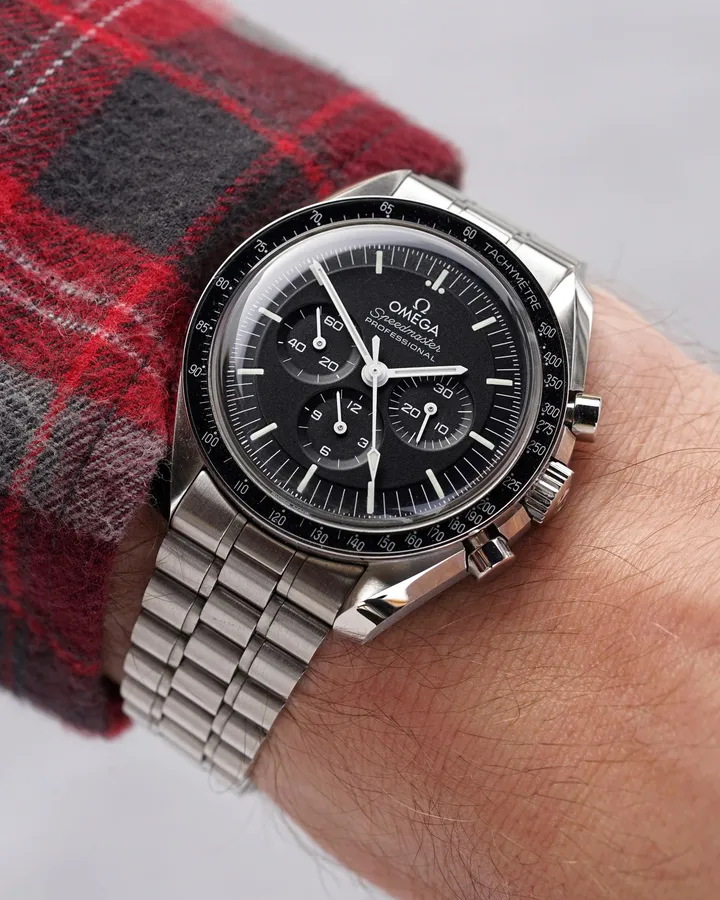
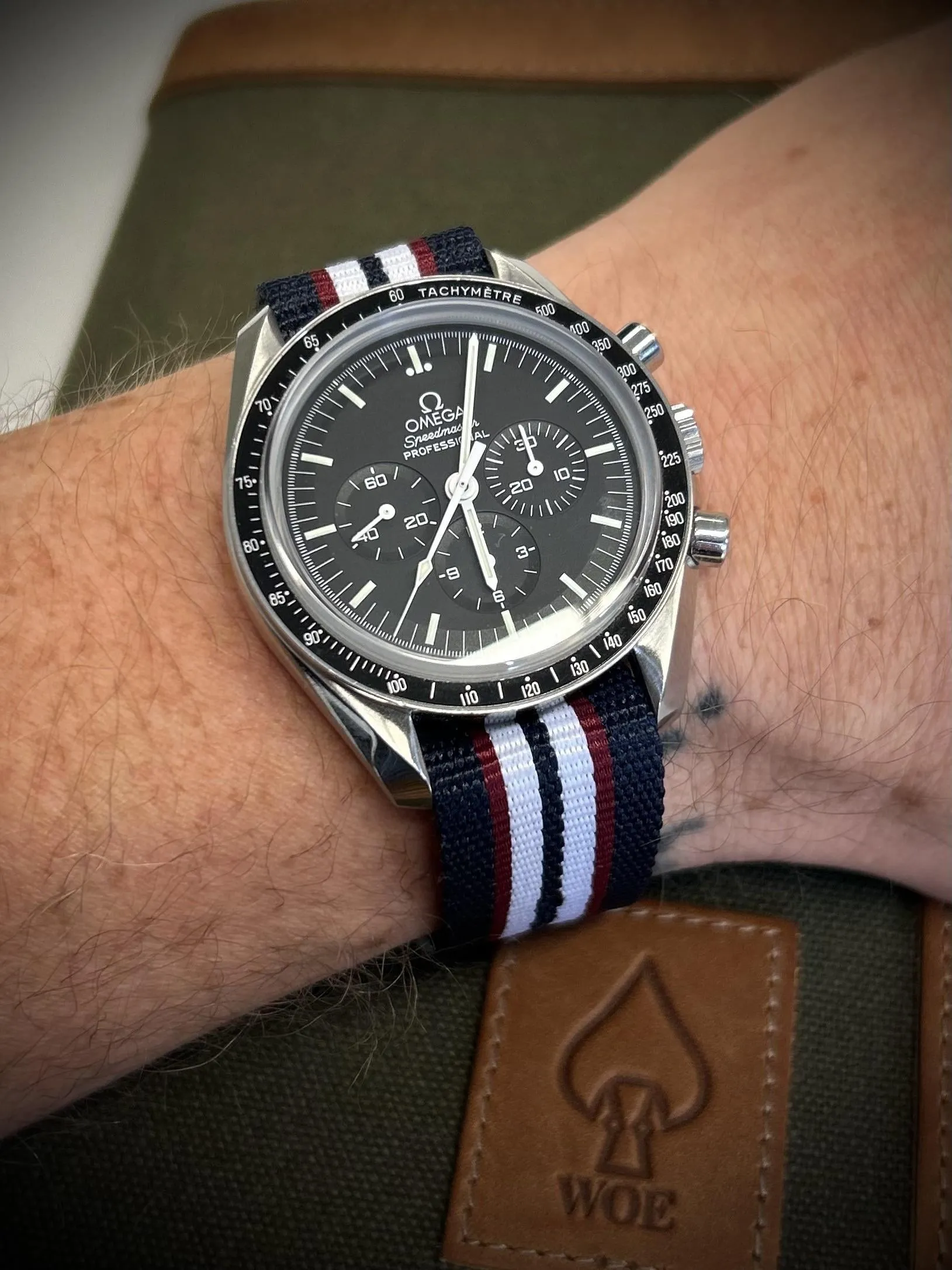
Omega Speedmaster Professional (Moonwatch)
Iconic USD 6,500–7,500

Omega Speedmaster Professional (Moonwatch)

The watch NASA strapped to astronauts' wrists for the Moon landings, a hand-wound mechanical chronograph with 60 years of unbroken space heritage that remains one of the most emotionally resonant first luxury watches money can buy.

Why consider

If you want one watch that carries a story no other brand can match at this price, the actual watch worn on the Moon, the Speedmaster Professional is it. First-time buyers consistently report that the history makes the purchase feel earned rather than indulgent, and the hand-wound Cal. 3861 gives you a tactile ritual that quartz and even most automatics can't replicate. It wears well in a suit or with jeans, and the black-on-steel colourway is genuinely timeless. Buyers who've saved for years and finally pulled the trigger almost universally report zero regret.

Why reject

If your wrists run slim (under 16.5 cm) or you hate the idea of a thick case under a shirt cuff, the modern Moonwatch's added bulk is a real problem, the sandwich construction that critics call 'bloated' is not going away. If you need a date complication for daily practicality, there isn't one. If you're stretching your budget to reach $6,500–$7,500 and would feel financial stress wearing it, the anxiety will undercut the joy, the Seamaster Diver 300M or Aqua Terra deliver more everyday functionality for less money. And if prestige recognition from non-watch people matters to you, the Speedmaster is far less universally known than a Rolex Submariner.

What people love
  • Iconic NASA/space heritage makes ownership feel genuinely meaningful
  • Surprisingly versatile daily wearer, works dressed up or down
  • Cal. 3861 Master Chronometer movement is well-regarded; hand-winding ritual feels authentic
  • Deep sentimental attachment, a true grail and milestone watch that people save years for
  • Hesalite crystal holds up better in daily wear than buyers fear
What people criticise
  • Modern case is noticeably thicker than the original, the sandwich construction bloated a once-slim icon
  • Price has crept up to $6,500–$7,500+, making value-for-money a genuine question
  • Hesalite vs. sapphire crystal choice causes real buyer anxiety before purchase
  • Considered overhyped by a vocal segment of the enthusiast community
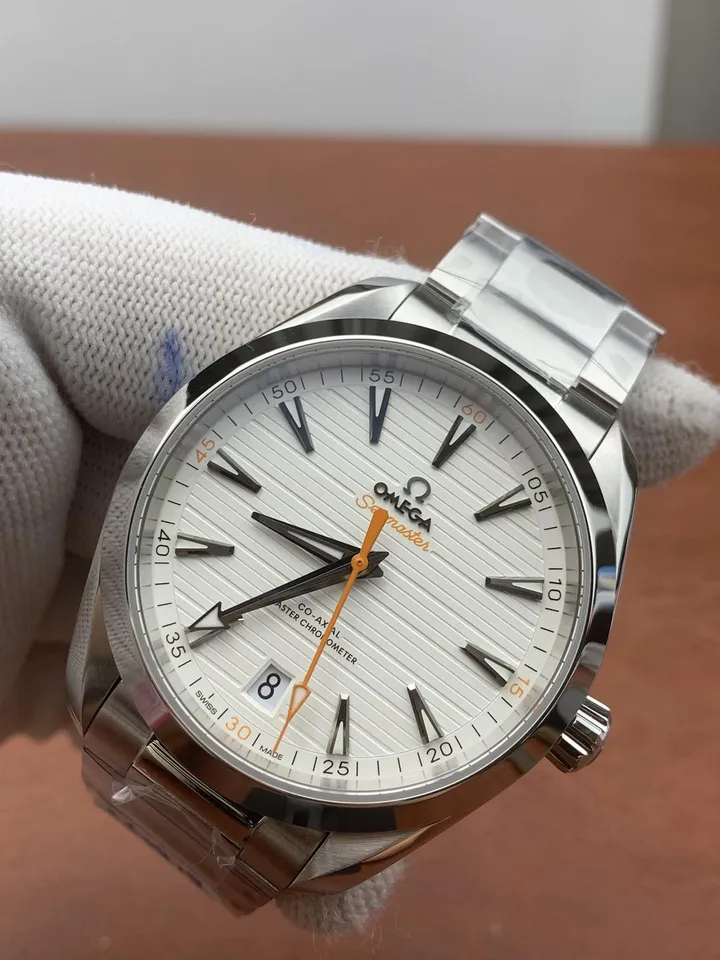
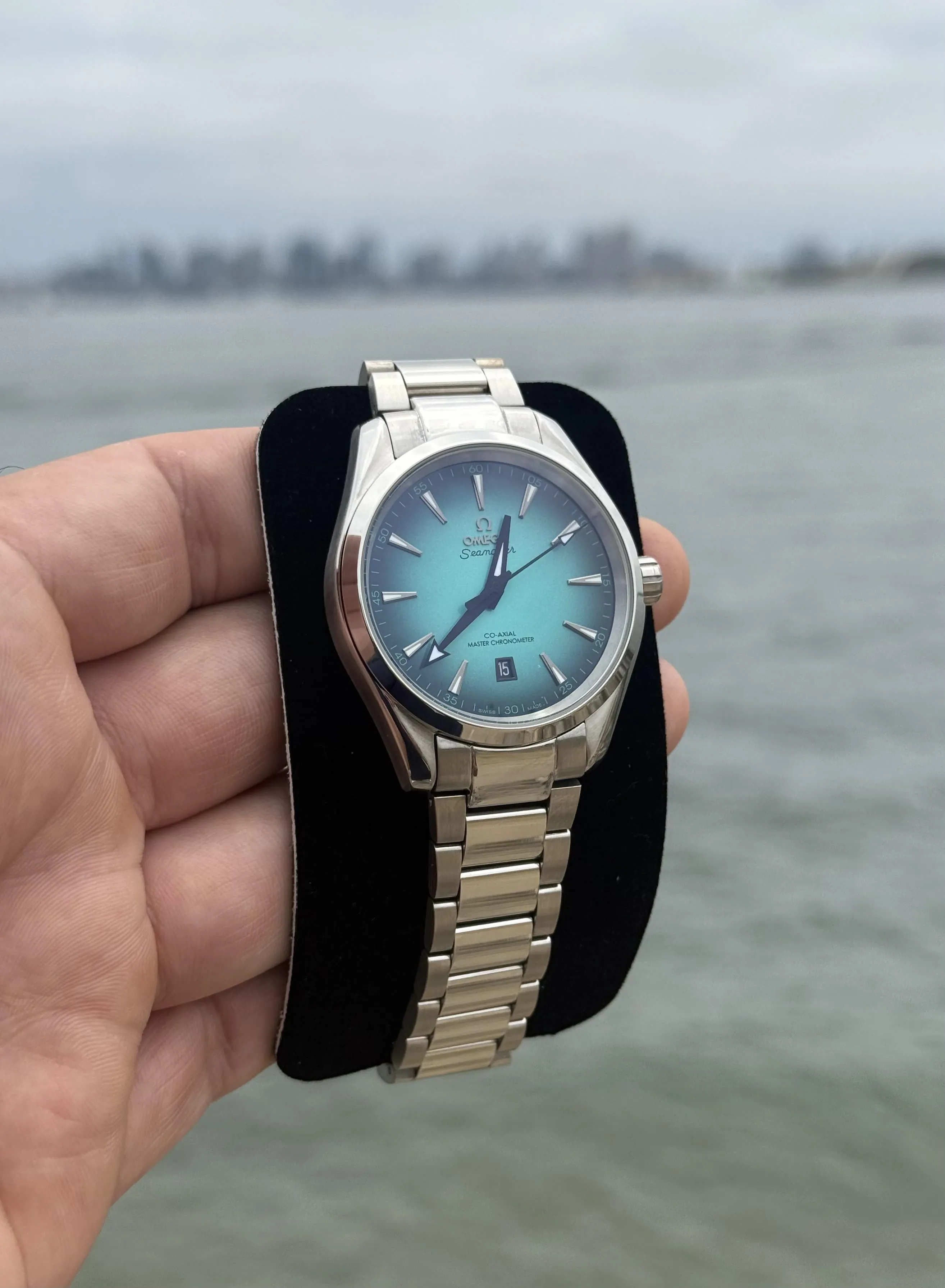
Omega Seamaster Aqua Terra
First-time recommended USD 5,500–7,000

Omega Seamaster Aqua Terra

Omega's most versatile everyday watch, a refined, dress-capable automatic that goes from boardroom to weekend without missing a beat, making it the go-to first luxury pick for buyers who want one watch that does everything.

Why consider

The Aqua Terra is the answer when you want one watch that genuinely does everything. It's the most-cited first luxury watch among buyers who prioritise versatility: it looks at home with a suit, a t-shirt, or a rubber strap on holiday. The dial options, especially the black lacquer and blue teakwood, are among the most attractive in Omega's lineup at this price, and the Co-Axial movement means you're getting real horological substance, not just a pretty face. If you're buying one watch and need it to cover every occasion for the next decade, this is the safest and most rewarding choice in Omega's catalogue.

Why reject

If your wrist is under 16 cm (roughly 6.3 inches) and you've set your heart on a specific dial colour, check availability in 38mm before you commit, several popular colourways only come in 41mm, which will look and feel oversized on a slim wrist. If you want a watch that turns heads and sparks conversations with non-watch people, the Aqua Terra's understated elegance works against it, it's genuinely under-the-radar, which is a feature for some and a frustration for others. And if you're drawn to the Seamaster name primarily for the dive-watch aesthetic and Bond association, the Diver 300M is the more visually dramatic choice.

What people love
  • True GADA versatility, dresses up and down better than almost any other watch at this price
  • Dial variety and colour options are genuinely exciting, blue, black lacquer, turquoise, white and more
  • Strap versatility, bracelet, rubber, and leather all work, letting you change the watch's character
  • Strong milestone and celebration association, feels earned, not frivolous
  • Deep family legacy connection to the Seamaster line adds emotional weight
What people criticise
  • Clasp micro-adjust gap is a noticeable quality shortfall at this price
  • Size anxiety, 41mm can overwhelm wrists under 16.5 cm, and the 38mm is harder to find in all dial options
  • Quartz variants are seen as poor value, the mechanical version is the 'real' Aqua Terra experience
  • Underrated and under-discussed, the community is puzzled why it doesn't get more attention
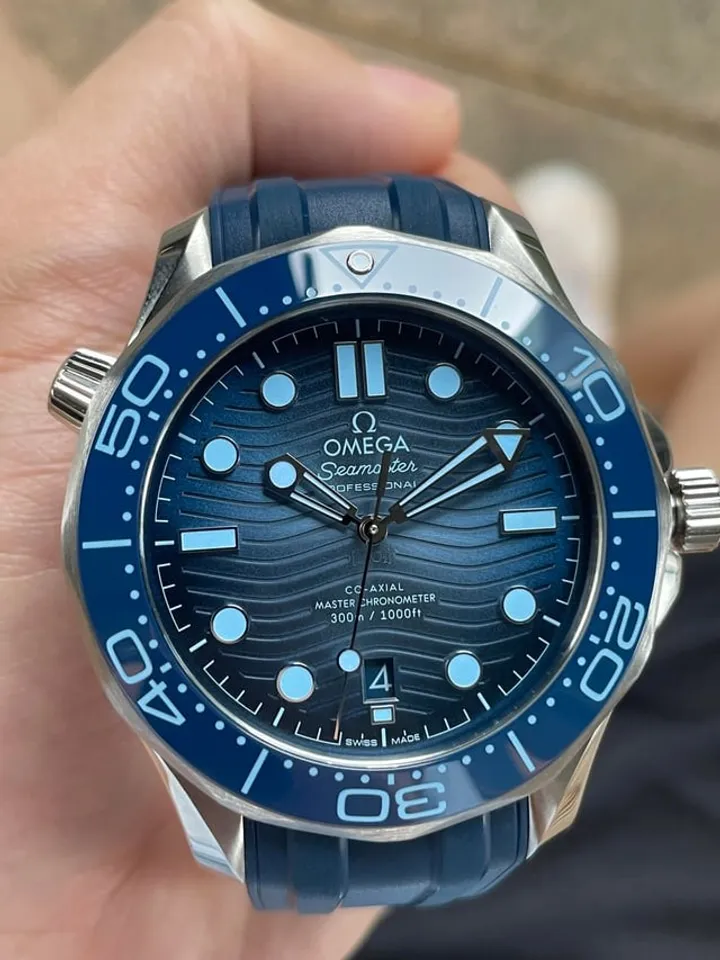
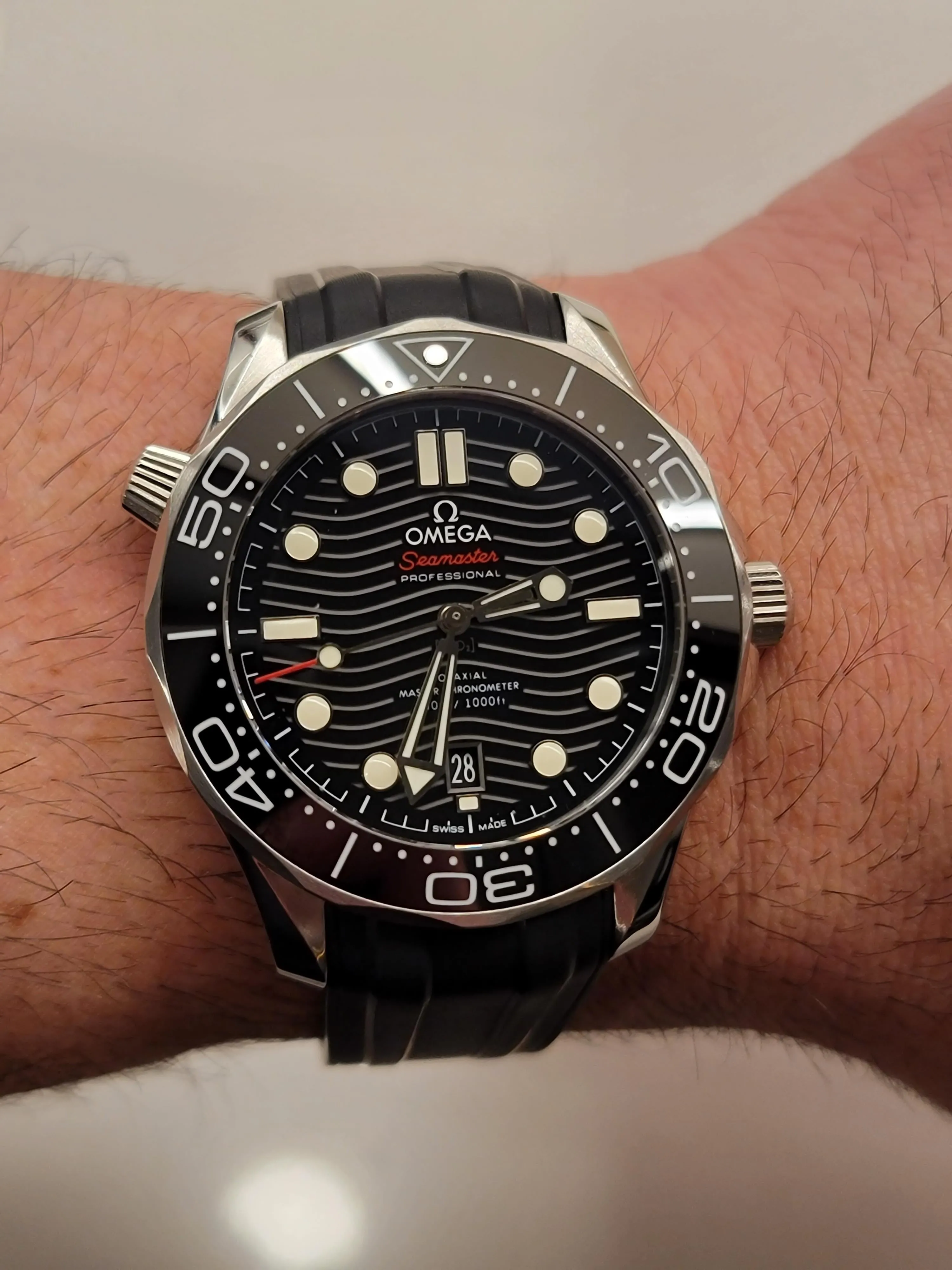
Omega Seamaster Diver 300M
First-time recommended USD 5,500–7,000

Omega Seamaster Diver 300M

The watch James Bond made famous, a ceramic-bezelled, wave-dialled sports watch with genuine 300m water resistance, METAS-certified accuracy, and enough visual drama to justify its place as one of the most popular first luxury watches on the market.

Why consider

The Diver 300M is the most visually striking first luxury watch Omega makes at this price. The wave-pattern ceramic dial, the lume performance, and the ceramic bezel combine to create a watch that genuinely looks expensive and turns heads, first-time buyers consistently report being unable to stop looking at their wrist. It's also the most capable sports watch in this guide: 300m water resistance, METAS-certified movement, and a rubber strap option that makes it genuinely pool- and ocean-ready. If you want a watch that can go from the office to the water without a second thought, this is it.

Why reject

If you need a watch that disappears under a dress shirt cuff or reads as purely formal, the Diver 300M's sporty DNA will work against you, the wave dial and rotating bezel are unmistakably casual. If your wrist is under 16 cm, try it on before buying; the 42mm case can look and feel oversized. If bracelet quality is a priority and you're comparing directly to a Rolex Submariner, the Omega's bracelet is the acknowledged weak point. And if you're tempted by a Bond special edition, be clear-eyed about the premium: the standard models offer the same movement and build quality for significantly less money.

What people love
  • Iconic wave dial and stunning visual presence, plays beautifully in different light
  • Exceptional lume, genuinely functional in the dark, not just a spec on paper
  • Impressive movement accuracy and premium build quality, ceramic bezel and dial feel genuinely luxurious
  • Better value for money than the Rolex Submariner, comparable specs, no waitlist, lower price
  • Versatile enough to wear anywhere, a true daily wearer despite its dive-watch credentials
What people criticise
  • Bracelet is the weak link, lags behind Rolex in feel and finish
  • Scratches and wear show up quickly on the clasp and case
  • Bond/007 association feels gimmicky to some, special editions carry a steep premium
  • Some buyers worry the design is too plain or trend-driven to hold collector value long-term
  • The 42mm case can run large for smaller wrists
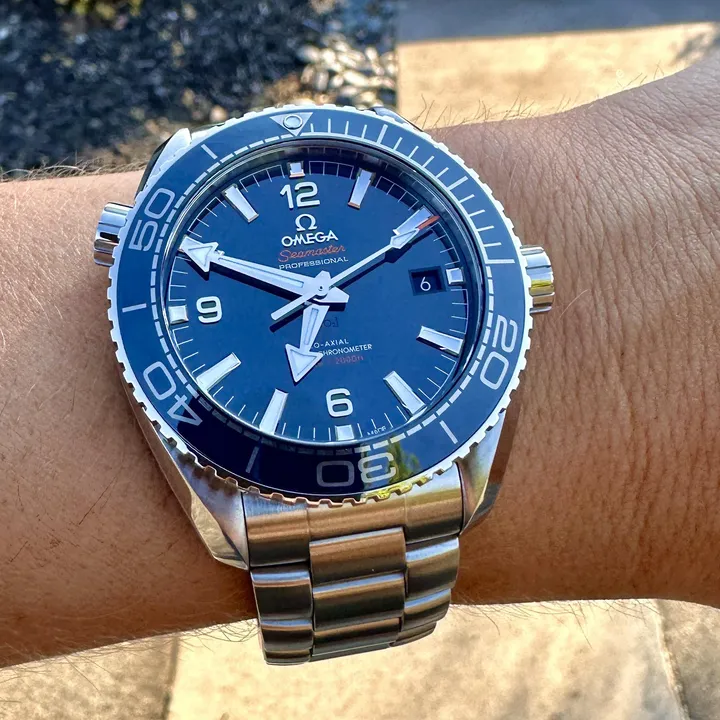
Omega Seamaster Planet Ocean
Iconic USD 7,000–10,000

Omega Seamaster Planet Ocean

Omega's serious professional diver, a larger, bolder, more tool-watch-focused alternative to the Diver 300M that rewards buyers who want maximum presence, exceptional durability, and bold colour combinations over everyday subtlety.

Why consider

The Planet Ocean is for the buyer who wants a dive watch that makes a statement, bigger, bolder, and more tool-watch-serious than the Diver 300M. The colour combinations (orange, summer blue, PyeongChang red) are genuinely exciting and unlike anything else at this price point. Owners who've worn one for a decade report it as the most durable watch they've ever owned, surviving deep dives, mountain climbs, and daily family life without complaint. If you want a watch that will still look and perform perfectly in 15 years, the Planet Ocean's track record is hard to argue with.

Why reject

If your wrist is under 17 cm, the standard Planet Ocean cases (39.5mm–45mm with thick profiles) will likely look and feel oversized, try one on in person before committing. If you want a watch that disappears under a dress shirt or reads as understated, the Planet Ocean's bold proportions and sporty aesthetic will fight you every time. At $7,000–$10,000, it's also the most expensive watch in this guide, and if you're a first-time buyer who hasn't yet confirmed that a large dive watch suits your lifestyle, the Diver 300M delivers a very similar experience for meaningfully less money. The 4th-generation design changes (sharper lugs, no helium escape valve) are also genuinely divisive, research the generation you're buying.

What people love
  • Built like a tank, wears daily for years through diving, hiking, and family life without complaint
  • Bold dial colour options, orange, summer blue, PyeongChang red, are a genuine draw for buyers who want personality
  • Wears better in person than in photos, real-life try-on converts sceptics
  • Versatile enough to dress up or down, not just a dive watch
  • Exceptional lume performance, genuinely functional in low light
What people criticise
  • It's thick and heavy, especially the larger 43.5mm and 45mm cases
  • 4th-generation design changes are divisive, sharper lugs and dropped helium escape valve upset long-time fans
  • Price is a real barrier, $7,000–$10,000 makes buyers hesitate and comparison-shop
  • Size can overwhelm smaller wrists, the standard cases run large and can catch buyers off guard
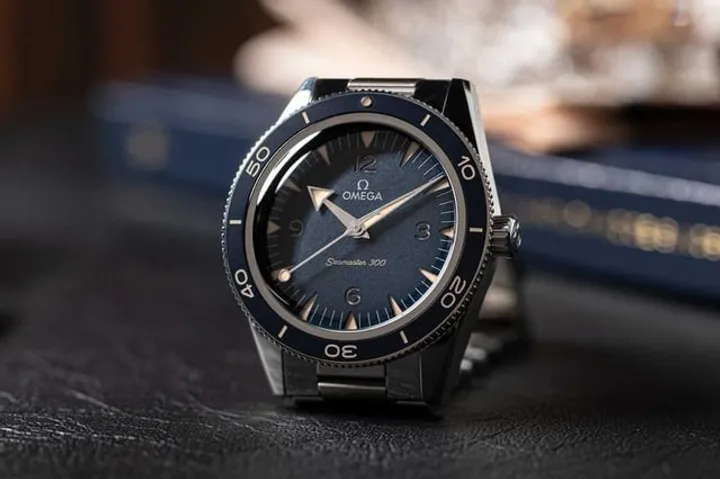
Omega Seamaster 300
Iconic USD 6,000–8,500

Omega Seamaster 300

A vintage-inspired diver with distinctive broad-arrow hands, a lollipop seconds hand, and a mesh bracelet that sets it apart from every other sports watch in Omega's lineup, for the buyer who wants heritage aesthetics with modern movement credentials.

Why consider

The Seamaster 300 is the choice for the buyer who wants a dive watch with genuine visual character, the broad-arrow hand, lollipop seconds, and mesh bracelet are details you won't find on the Diver 300M or Planet Ocean, and they give the watch a vintage-inspired personality that ages beautifully. Owners who've lived with it report it as one of the most comfortable daily wearers in the Seamaster family, and the lume performance is exceptional. If you want a sports watch that looks different from every other diver on the market, this is it.

Why reject

If you need a date complication, the Seamaster 300 doesn't have one, that alone rules it out for many daily-wear buyers. If you're drawn to the Seamaster name primarily for the Bond association and want the most recognisable version of that story, the Diver 300M is the watch that actually appeared in the films. The AR coating has been criticised as underwhelming for the price, and some owners report the design feeling 'safe' or 'boring' after the initial excitement fades. If your budget is tight, the Diver 300M delivers a very similar sports-watch experience with more modern styling for comparable or less money.

What people love
  • James Bond / pop-culture legacy makes it feel aspirational and iconic
  • Distinctive design details, broad-arrow hand, lollipop seconds, mesh bracelet, stand out from generic divers
  • Exceptional lume, genuinely functional, not just decorative
  • Versatile daily wearer, comfortable from the pool to the office
  • Wears more comfortably than its size suggests, not as bulky on the wrist as it looks
What people criticise
  • Anti-reflective coating is underwhelming for the price
  • Can feel boring or too safe once the honeymoon phase wears off
  • Price is a hard pill to swallow, many aspire to it but struggle to justify the spend
  • Dive-watch aesthetic is a love-it-or-leave-it proposition, not everyone wants the sporty look
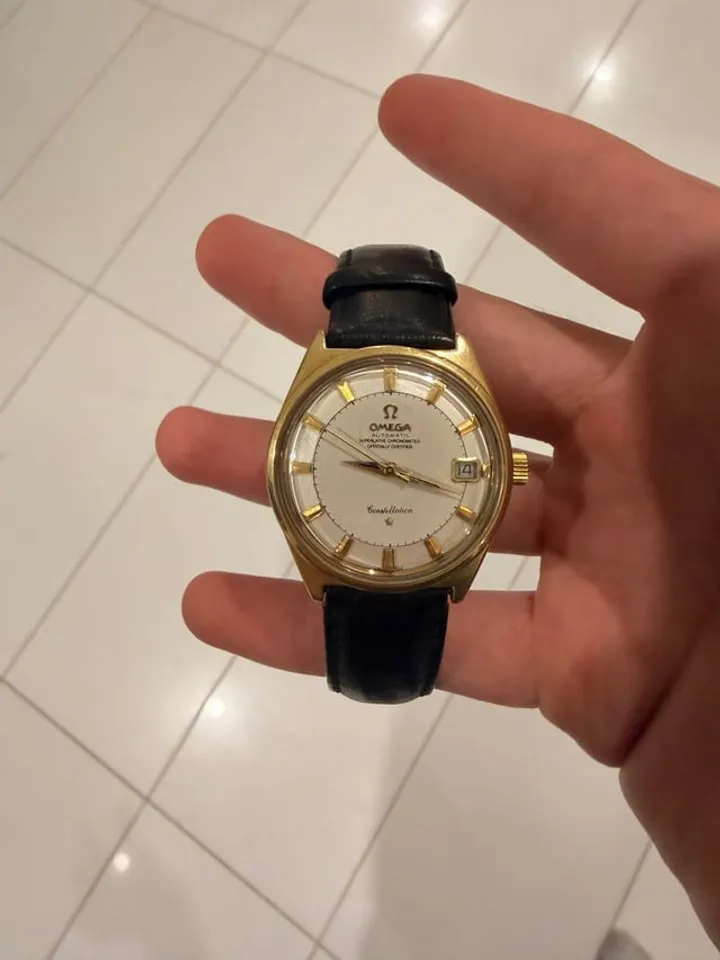
Omega Constellation
Iconic USD 4,500–10,000

Omega Constellation

Omega's original prestige dress watch, a chronometer-certified, integrated-bracelet icon with a pie-pan dial and dog-leg case that has been passed down through generations and remains one of the most underrated watches in the brand's catalogue.

Why consider

The Constellation is the right choice if you want a dress watch with genuine Omega heritage that doesn't look like every other Seamaster or Speedmaster on the market. The pie-pan dial and dog-leg case are among the most beautiful designs Omega has ever produced, and the watch carries a heirloom quality that makes it a natural candidate for passing down. Vintage examples offer exceptional value, a well-serviced 1960s Constellation with COSC credentials can be found for a fraction of the cost of a new Globemaster, and the design is arguably more interesting. If you want something understated, elegant, and genuinely different from the sports-watch crowd, the Constellation delivers.

Why reject

If you want a watch that reads as unmistakably sporty or that carries the Seamaster/Speedmaster name recognition, the Constellation will disappoint, it's a dress watch first, and its identity is quieter and more niche. The modern Globemaster and Observatory models are priced at $6,000–$10,000+, which is hard to justify when the Aqua Terra offers more versatility for similar money. The integrated bracelet has no micro-adjustment and has been criticised for fit issues, if your wrist falls between link sizes, comfort will be a daily frustration. And if you're considering vintage, go in with eyes open: buying blind online carries real risk of hidden movement damage, and a full service can add $500–$1,000 to the purchase price.

What people love
  • Iconic vintage design, the pie-pan dial and dog-leg case are genuinely beautiful and unlike anything else
  • Deep sentimental and heirloom value. Constellations get passed down through generations
  • Underrated and under-discussed, flies under the radar compared to Seamaster and Speedmaster
  • Solid chronometer movement credentials. COSC and Master Chronometer pedigree respected by enthusiasts
  • Integrated bracelet design is a genuine draw for fans of that aesthetic
What people criticise
  • Modern Constellation pricing is out of control, new models cost as much as or more than entry-level Rolex
  • New Observatory reissue gets the proportions wrong, too thick, too large, and missing key details vs. the vintage original
  • Bracelet has real comfort and fit issues, no micro-adjustment and wide end-link gaps
  • Buying vintage blind is risky, movement condition and service history are hard to verify
  • Perceived as a women's or unisex watch, some male buyers feel self-conscious about it

Omega

Key takeaways

A short history of Omega

Louis Brandt started the company in La Chaux-de-Fonds, Switzerland, in 1848, assembling pocket watches from parts sourced across the region. The brand took the name Omega later, borrowing it from a calibre that earned wide acclaim for its precision.

The story that matters most to first-time buyers happened in 1965. NASA was looking for a watch that could survive the extreme conditions of spaceflight. They tested several brands. The Speedmaster Professional passed every test. The others didn’t. From that point on, every crewed NASA mission carried an Omega, including every Apollo lunar landing. That’s not marketing copy. It’s a documented procurement decision by an agency that had no interest in brand prestige.
Thirty years later, Omega found a second cultural anchor. The 1995 Bond film GoldenEye put a Seamaster Diver 300M on Pierce Brosnan’s wrist, and the association has continued through every film since. It sparked collector demand that still runs hot today, and it gave the Seamaster line a pop-culture identity that no amount of advertising could have manufactured.
The most recent milestone is more technical, but it matters if you care about what’s inside the case. In 2015, Omega introduced the Master Chronometer standard, certified by METAS, the Swiss Federal Institute of Metrology. METAS certification tests movements for antimagnetic performance and accuracy across conditions that go well beyond standard COSC chronometer testing. Most of Omega’s current lineup carries it. It’s a genuine engineering benchmark, not a marketing badge.

That’s how a Swiss watchmaker became the brand that went to the Moon, dressed James Bond, and set a new accuracy standard for the industry. The longer version involves decades of movement development, Olympic timing contracts, and a catalogue that now spans dress watches to hardcore divers. But those four beats explain why Omega sits where it does in the first-buyer conversation.


What buyers love about Omega

The most consistent thing owners say is that the story feels real. NASA didn’t choose the Speedmaster because Omega had a good PR team. Bond didn’t wear a Seamaster because it looked nice in a tuxedo. Both associations came from the watch doing something specific, and that specificity gives ownership a weight that’s hard to manufacture. Buyers who mark a milestone with an Omega consistently report that the heritage makes the purchase feel earned rather than indulgent.

Movement quality is the second thing that comes up. Omega’s Co-Axial escapement, developed with watchmaker George Daniels and introduced in 1999, reduces friction in a way that extends service intervals and improves long-term accuracy. Pair that with METAS certification and you have a movement accurate to +0/−5 seconds per day, resistant to magnetic fields up to 15,000 gauss. That last number matters more than it sounds: everyday magnetic sources, phone speakers, bag clasps, laptop cases, can affect an unprotected movement. Omega’s current lineup handles them without issue.

The range is genuinely wide. If your style runs toward a clean dress watch, the Constellation and Aqua Terra cover that ground. If you want a sports watch with real dive credentials, the Seamaster family gives you three distinct options at different price points and aesthetics. If you want the chronograph with the most documented history in the category, the Speedmaster is it. Very few brands at this price offer that breadth without a significant quality drop at one end.

Omega also sits in a different position from Rolex when it comes to the buying experience. You can walk into an Omega authorised dealer and buy most references off the shelf, at retail, today. No waitlists for the Seamaster Diver 300M or the Aqua Terra. No purchase history requirements. No suggestion that you should be grateful for the opportunity. That’s a meaningful practical advantage for a first-time buyer who wants a straightforward transaction.

The value comparison with Rolex is real, though it needs careful framing. A Seamaster Diver 300M at $5,500–$7,000 delivers METAS-certified movement performance, a ceramic bezel, and genuine dive credentials. A Rolex Submariner starts above $9,000 and is effectively unavailable at retail without an established relationship with an AD. The Omega is not a consolation prize. It’s a different watch with a different story, and for many buyers it’s the better choice on the merits.


What buyers criticise

Omega’s prices have risen sharply over the past several years, and some models now sit at points that make the value argument against Rolex much harder to sustain. The Aqua Terra in certain configurations costs as much as an entry-level Rolex Explorer. The Speedmaster Professional runs $6,500–$7,500 new. The Constellation Observatory reissue has crossed $10,000. When buyers on Reddit ask whether Omega has “lost the plot” on pricing, they’re not being dramatic. The gap that once made Omega an obvious alternative to Rolex has narrowed considerably, and model selection now matters more than it used to.

Bracelet and clasp quality is the most consistent hardware complaint across the Seamaster line. Owners of the Aqua Terra and Diver 300M regularly flag a visible gap in the clasp when the micro-adjust is used. The Diver 300M’s bracelet is widely acknowledged as the weak point in a direct comparison with the Rolex Submariner. At $5,500–$7,000, a bracelet that feels slightly below the price point is a real shortfall, not a minor quibble.

Some flagship models attract genuine scepticism from the enthusiast community. The Speedmaster Professional appears regularly in discussions about overhyped watches. That doesn’t mean the criticism is right, but it’s worth knowing that a vocal segment of experienced collectors considers the Moonwatch’s current price hard to justify against its specifications. Form your own view rather than assuming community consensus.

The proportions issue is specific but important. Omega has a pattern of reissuing vintage references at dimensions that don’t match the originals. The modern Speedmaster’s sandwich construction made it noticeably thicker than the watch that went to the Moon. The Constellation Observatory reissue came in at 40mm and over 12mm thick, priced above $10,000, and was widely criticised for missing the point of the vintage original. If you’re drawn to Omega partly for its vintage aesthetic, check the actual dimensions of the modern version before assuming it matches what you saw in archive photos.

Buying vintage Omega carries real risk. Movement condition and service history are genuinely hard to verify from photos alone. Rattling sounds after purchase, moisture damage to the movement, and “recently serviced” claims from online auction sellers are all documented problems in the community. A full service costs $400–$800 at an independent watchmaker and $800–$1,200 at an Omega service centre. If you’re buying vintage, budget for that service as part of the purchase price and treat any seller’s service claims with scepticism until a watchmaker has confirmed them.


Who Omega suits, and who it doesn’t

Omega makes the most sense for a first-time buyer who wants a watch with a real story and enough variety to find the right fit for their lifestyle. If you’re marking a milestone, a promotion, a birth, a graduation, and you want a watch that carries genuine heritage rather than just a prestigious name, Omega delivers that across multiple price points and styles.

The Seamaster Aqua Terra ($5,500–$7,000) is the most versatile starting point: it works in a boardroom, on a weekend, and on holiday, and the dial options are genuinely attractive. The Diver 300M ($5,500–$7,000) is the right choice if you want more visual drama and a sports-watch identity. The Speedmaster ($6,500–$7,500) is for the buyer who has wanted that specific watch for years and knows exactly why.
Omega also suits buyers who want to avoid the Rolex AD experience. If building a purchase history, waiting for allocation, or paying a grey-market premium doesn’t appeal, Omega gives you comparable movement quality and a more straightforward path to ownership.

The brand is a harder fit if your primary motivation is resale value or street recognition. Omega’s resale performance is decent but not in the same category as the four or five Rolex references that genuinely hold or appreciate in value, the Submariner, GMT-Master II, Daytona, and Explorer in certain configurations. If you’re buying partly as a financial hedge, the data doesn’t support Omega as a strong choice for that purpose. Most Omega models depreciate on the secondary market in the normal way that most mechanical watches do.

Buyers who want instant recognition from non-watch people will also find Omega less satisfying than they expect. Outside watch-aware circles, the Seamaster and Speedmaster don’t carry the same instant recognition as a Rolex Submariner or Daytona. That’s not a flaw in the watch. It’s a feature for some buyers and a frustration for others. Be honest with yourself about which camp you’re in before you spend $6,000.

Price now matters more than it used to. Omega’s catalogue runs from around $4,500 for a Constellation to $10,000 and above for certain Seamaster and Speedmaster variants. If you’re stretching to reach the top of that range and would feel financial anxiety wearing the watch, the anxiety will undercut the pleasure. The Diver 300M and Aqua Terra both sit in the $5,500–$7,000 range and deliver the full Omega experience without requiring you to reach for the most expensive option in the catalogue.

Two watches deserve specific caution for first-time buyers. The Speedmaster Professional is one of the most emotionally resonant watches at this price, but the 42mm case with its sandwich construction is genuinely thick and has no date complication. If your wrists are under 16.5 cm or you need a date for daily practicality, try it on before committing. The Constellation, particularly in vintage form, is beautiful and underrated, but buying a vintage example without a verified service history is a real risk. A well-serviced piece is worth the search. A watch with hidden movement damage is not, regardless of how good the dial looks in the listing photos.

If you’ve read three Reddit threads about Omega and come away more confused than when you started, that’s a reasonable response to a brand with a genuinely wide catalogue and a community that argues about everything from crystal choice to bracelet quality. The short version: Omega makes serious watches with real heritage, available at retail without the friction of the Rolex buying experience, at prices that have risen but still represent honest value if you choose the right reference for your situation.