Key takeaways
- Swiss-made, American-branded: Hamilton has been part of the Swatch Group since 2003, meaning its watches are Swiss-manufactured despite the American heritage story.
- The Khaki Field earns its reputation but not its mystique: It is a genuinely well-made Swiss automatic at an honest price, but its ubiquity on forums and YouTube means it will feel like a consensus pick, not a personal discovery.
- AR coating is a documented weakness: Multiple owners across the Khaki Field and Khaki Aviation lines report poor or absent anti-reflective coating, a real disadvantage versus Seiko Presage or Tissot PRX at similar prices.
- Service costs bite later: Budget USD 300–600 at an independent watchmaker for a service at five to seven years; official Swatch Group channels cost more and parts availability can complicate independent repairs.
- The Ventura is a second watch, not a first: Its asymmetric case is a genuine design icon but pairs poorly with casual clothes, buy it once you already have a daily driver sorted.
A short history of Hamilton
Hamilton started in Lancaster, Pennsylvania in 1892. Not as a fashion brand, as a precision supplier. The US railroad industry needed accurate, reliable timekeeping, and Hamilton delivered it. That utility-first DNA runs through everything the brand makes today.
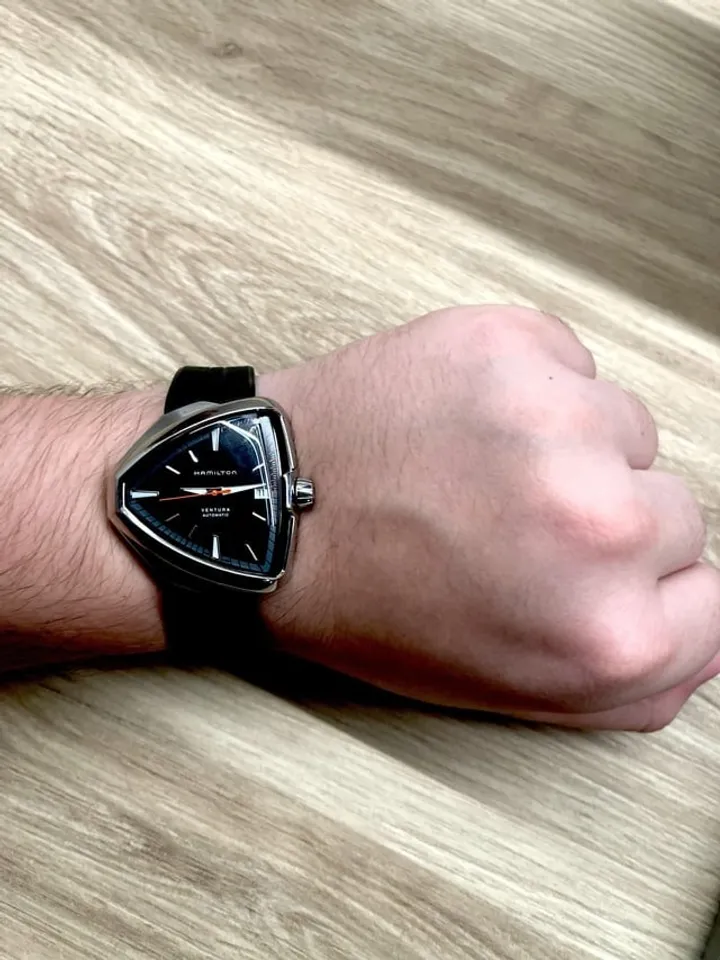
The first major turning point came in 1957. Hamilton introduced the Ventura, the world’s first electric watch. The case was asymmetric, angular, and unlike anything else on the market. Elvis Presley wore one. That single association locked Hamilton into American pop culture in a way that Swiss brands couldn’t replicate. The Ventura is still in production today, and it still looks like nothing else.
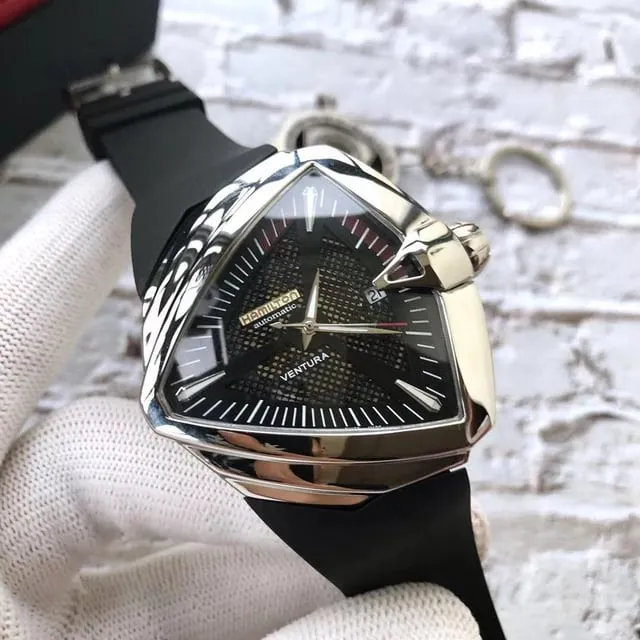 The Ventura’s asymmetric case was unlike anything else in 1957. It still is. Credit: u/Classic_Chipmunk_358
The second turning point was quieter but more consequential for buyers. In 2003, Hamilton became part of the Swatch Group. That move gave the brand access to Swiss ETA movements and Swiss manufacturing infrastructure. It also meant the “American heritage” story became a branding exercise rather than a geographic reality. Hamilton watches are Swiss-made. The Lancaster factory is long gone. That’s not a scandal, but it’s worth knowing before you buy into the origin story.
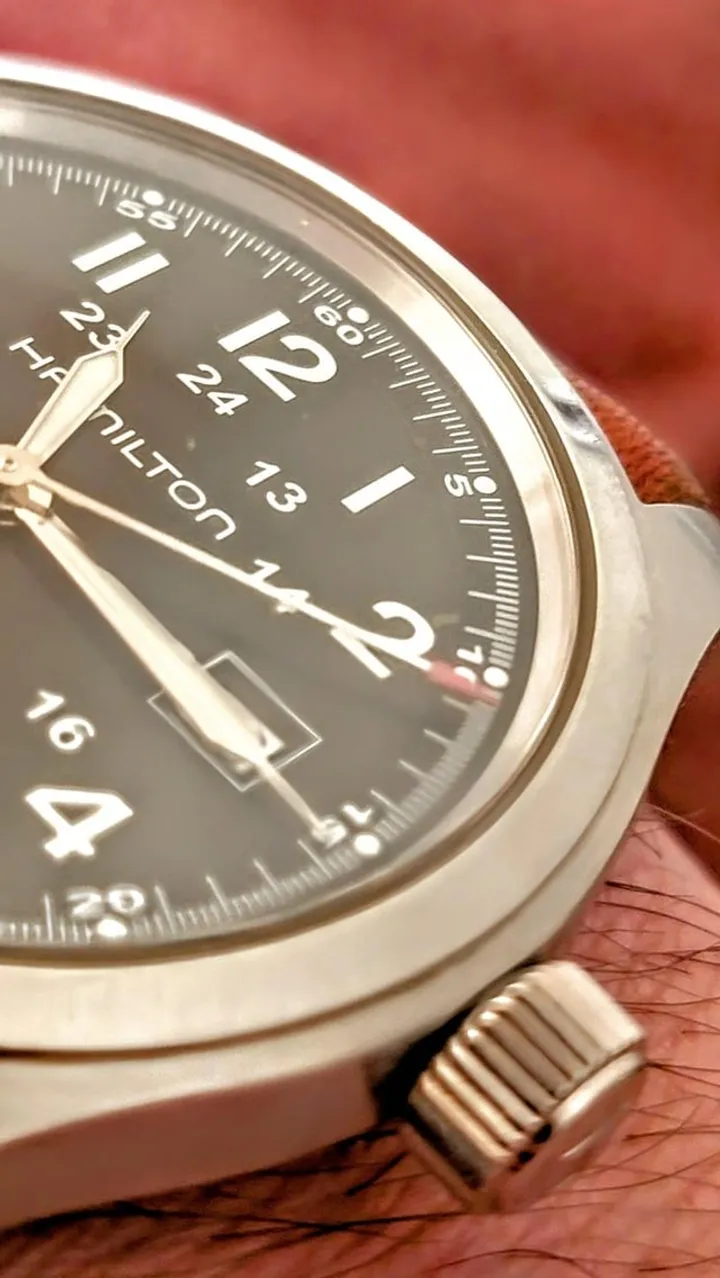
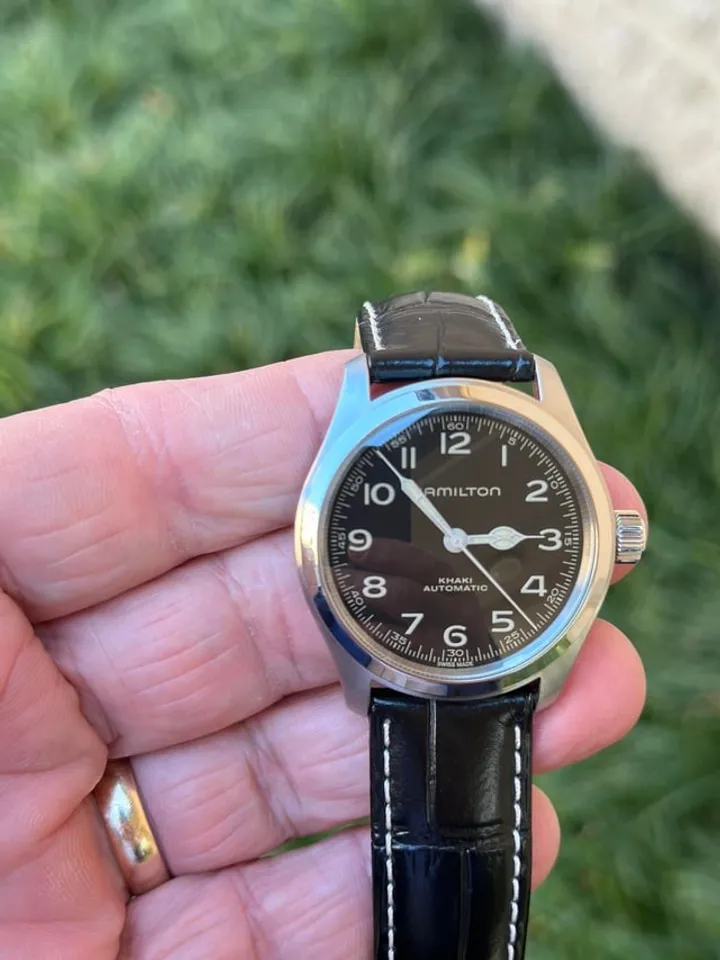
The third turning point is the one most first-time buyers already know. In 2014, a Hamilton Khaki Field appeared in Christopher Nolan’s Interstellar. The watch worn by the character Murph became the Hamilton Khaki Field Murph. Forum recommendations followed. YouTube reviews followed. The Khaki Field became the default answer to “what should my first Swiss automatic be?” That recommendation is well-earned, and it’s now so ubiquitous that some buyers feel they’re buying the Reddit consensus rather than a watch.
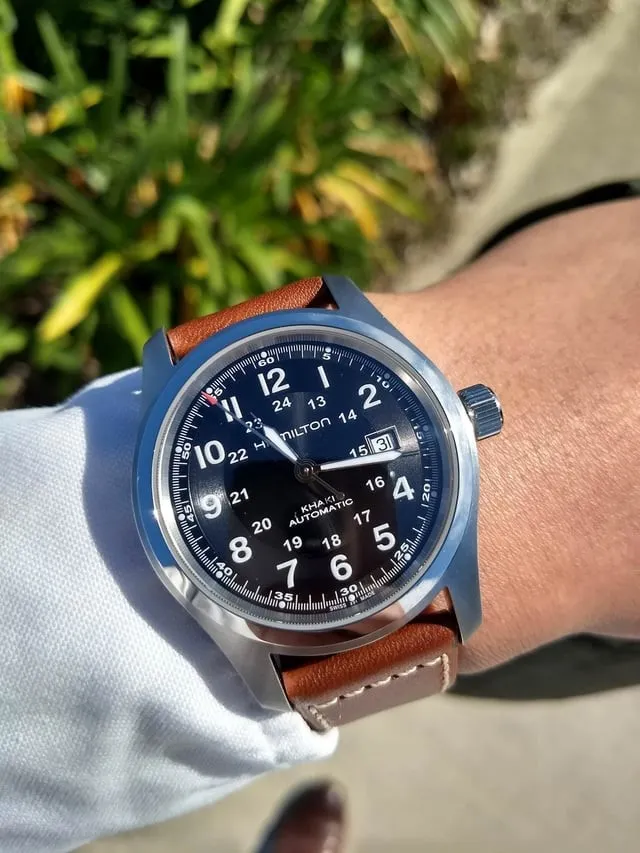 The Khaki Field earned its reputation honestly. Whether that reputation now precedes it too loudly is a fair question. Credit: u/berimbolo7
Those four moments, railroad precision, Elvis’s Ventura, Swatch Group manufacturing, and Interstellar, explain almost everything about what Hamilton is today: a Swiss-made brand with genuine American-heritage branding, strong cinematic credentials, and a price point that sits below Omega and Tudor without feeling like a compromise.
What buyers love about Hamilton
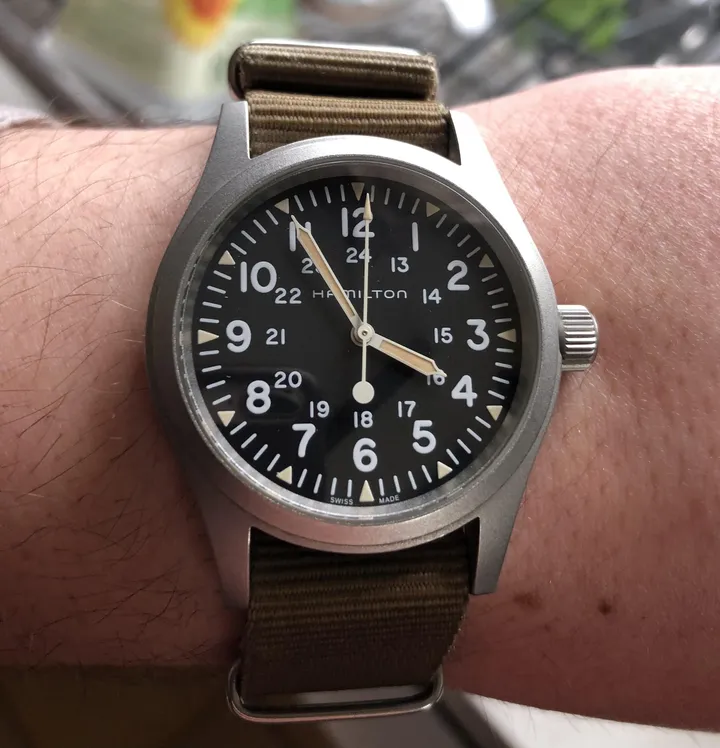
The most consistent thing owners say is that Hamilton delivers real Swiss automatic quality at a price that doesn’t require a milestone occasion to justify. The Khaki Field Mechanical starts at USD 495. For that, you get a Swiss-made hand-wound movement, a clean military dial, and a watch that multiple owners describe as the piece that kicked off their collecting journey. That’s a meaningful thing to offer a first-time buyer.
The cinematic and military heritage gives Hamilton watches emotional weight that competitors at this price point can’t match. Seiko makes excellent movements. Tissot makes reliable automatics. Neither has the Interstellar connection or the Elvis story. For buyers who want a watch with a backstory, Hamilton has one of the strongest catalogues in this price range.
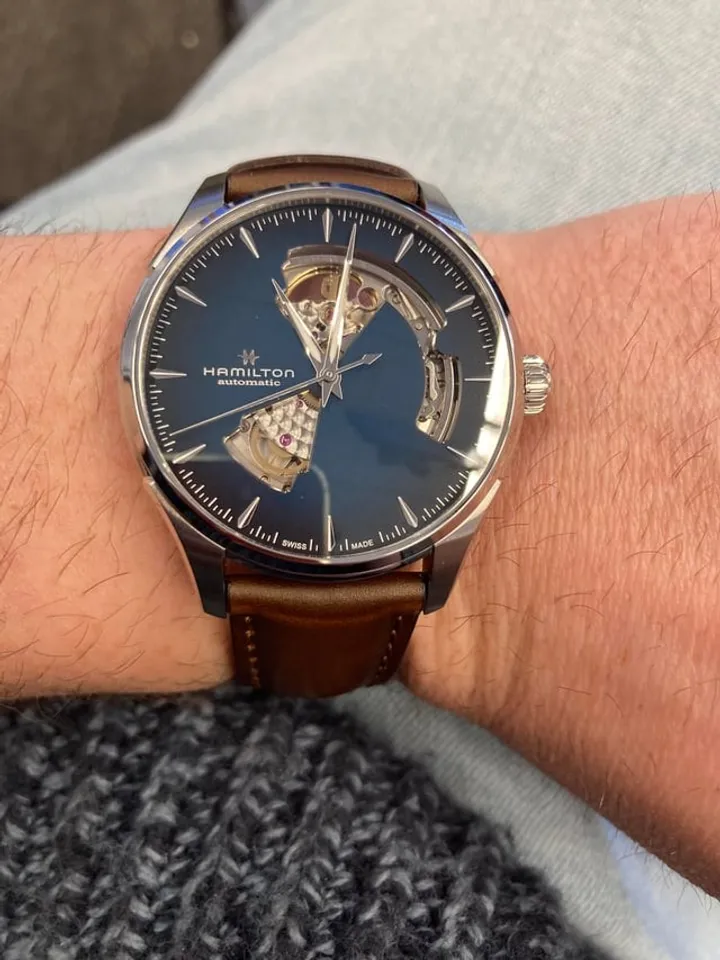
The community endorsement is real and sustained. One owner bought a Jazzmaster when they graduated law school and still counts it among their favourites 17 years later. That kind of long-term satisfaction is the most honest signal a brand can offer.
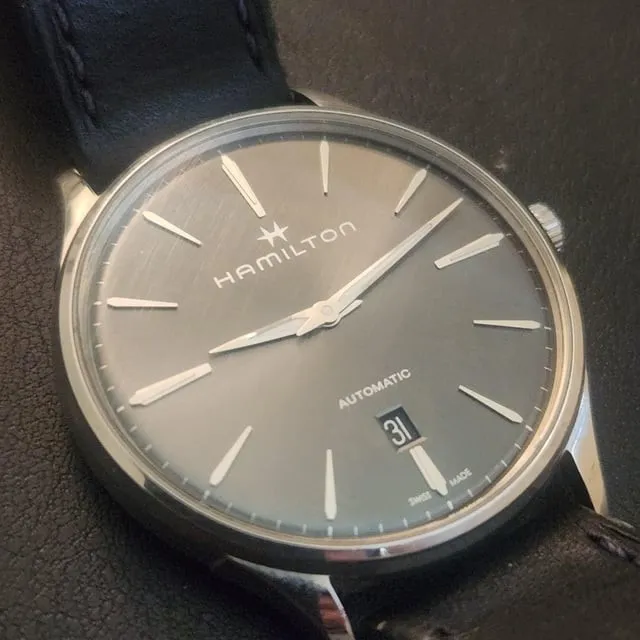 The Jazzmaster’s clean dial ages well. Seventeen years of daily wear and owners still reach for it. Credit: u/WorkHardAchieve
Strap versatility is a genuine strength. The Khaki Field family swaps easily between NATO, leather, and steel bracelet, and the watch changes character completely depending on what it’s sitting on. For a first buyer who isn’t sure yet whether they want a casual daily driver or something that works under a suit, that flexibility matters.
The designs cover more of the wardrobe spectrum than most brands at this price point. The Khaki Field works with jeans or chinos. The Jazzmaster works under a suit. The Ventura works at a black-tie event. None of them feel like they’re trying too hard.
What buyers criticise
The Khaki Field’s biggest weakness is its own success. It has been so thoroughly recommended, on Reddit, on YouTube, in every “best first watch” article, that it now feels generic to anyone who has spent more than a week researching watches. One Reddit thread put it plainly: “The Hamilton Khaki Field is a great watch. But it’s also one of the most overrated watches in the industry.” That’s not a reason to avoid it. But if you want a watch that feels like a personal discovery rather than a consensus pick, you should know what you’re walking into.
The AR coating issue is persistent and real. Multiple owners across the Khaki Field and Khaki Aviation lines report that the crystal has no anti-reflective coating, or that the coating is poor. In bright light or under office fluorescents, the dial can be hard to read. This is a documented complaint, not an edge case. If you’re comparing Hamilton to a Seiko Presage or a Tissot PRX at a similar price, both offer better crystal finishing.
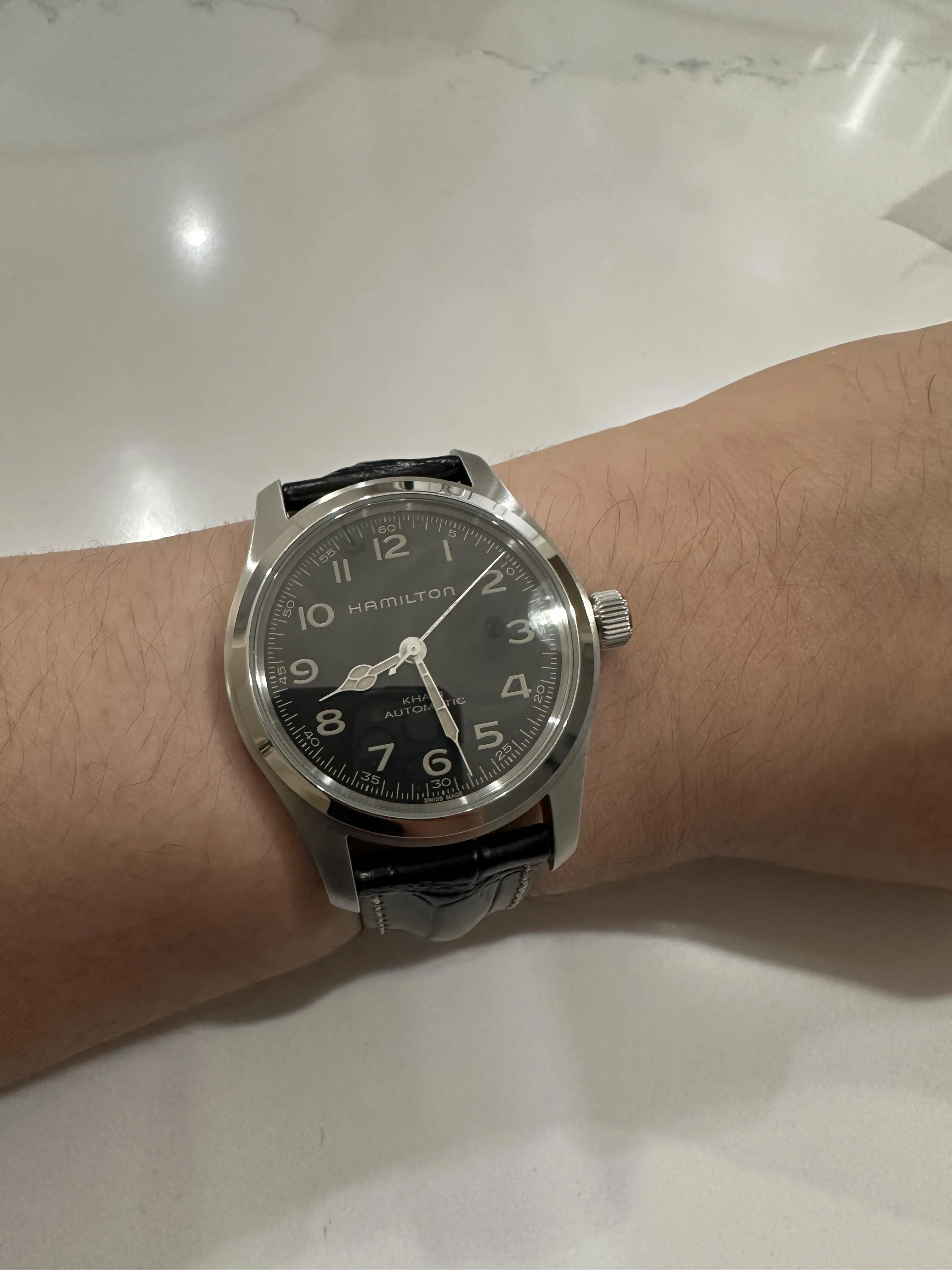 Under direct light the uncoated crystal is a real readability issue, a documented complaint across the Khaki Field and Aviation lines. Credit: u/chris-the-teen667
Service costs are the most serious financial concern. Hamilton is part of the Swatch Group, and Swatch Group service pricing is steep relative to the watches’ retail prices. One owner reported that replacing a scratched crystal required replacing the dial too, at a cost approaching half the price of a new watch. Independent watchmakers can service the movement for less, but parts availability is less predictable. Before you buy any Hamilton, factor in a service at five to seven years: roughly USD 300–600 at an independent watchmaker, and more through official channels.
The prestige ceiling is low. Hamilton is respected in watch communities. It is not a status symbol outside them. If you wear a Khaki Field to a business dinner, most people at the table won’t recognise it. That’s fine if you’re buying for yourself. It matters if part of your reason for buying a watch is external recognition.
Water resistance is a genuine limitation. The Khaki Field Mechanical is rated to 50m, which sounds adequate but isn’t enough for pool swimming. At least one owner had water ingress after pool use. If you swim regularly, Hamilton’s field watch line is not the right choice.
Who Hamilton suits, and who it doesn’t
Hamilton makes the most sense for a first-time buyer who wants a Swiss automatic with genuine heritage and daily wearability, and who isn’t yet ready to spend Omega or Tudor money. The sweet spot is someone drawn to military aesthetics, clean dials, or cinematic backstories, with a budget under USD 1,000 and a watch they can wear every day without anxiety.
The Khaki Field Mechanical at USD 495–595 is the most accessible Swiss-made mechanical watch in this category. If you want to understand what owning a mechanical watch actually feels like, the hand-winding ritual is part of that education. The Khaki Field Automatic at USD 695–795 removes that ritual entirely, you wear it, it winds itself, and you never have to think about it. Both are honest, well-made watches that have earned their reputations.
The Jazzmaster suits a different buyer: a professional who needs one watch that handles office and weekend without looking like a field watch. The Thinline automatic frequently sells well below its USD 1,095 MSRP, owners report finding it at 25–50% off, making it one of the better-value Swiss dress automatics available. If you want something elegant and versatile, the Jazzmaster is the Hamilton to consider.
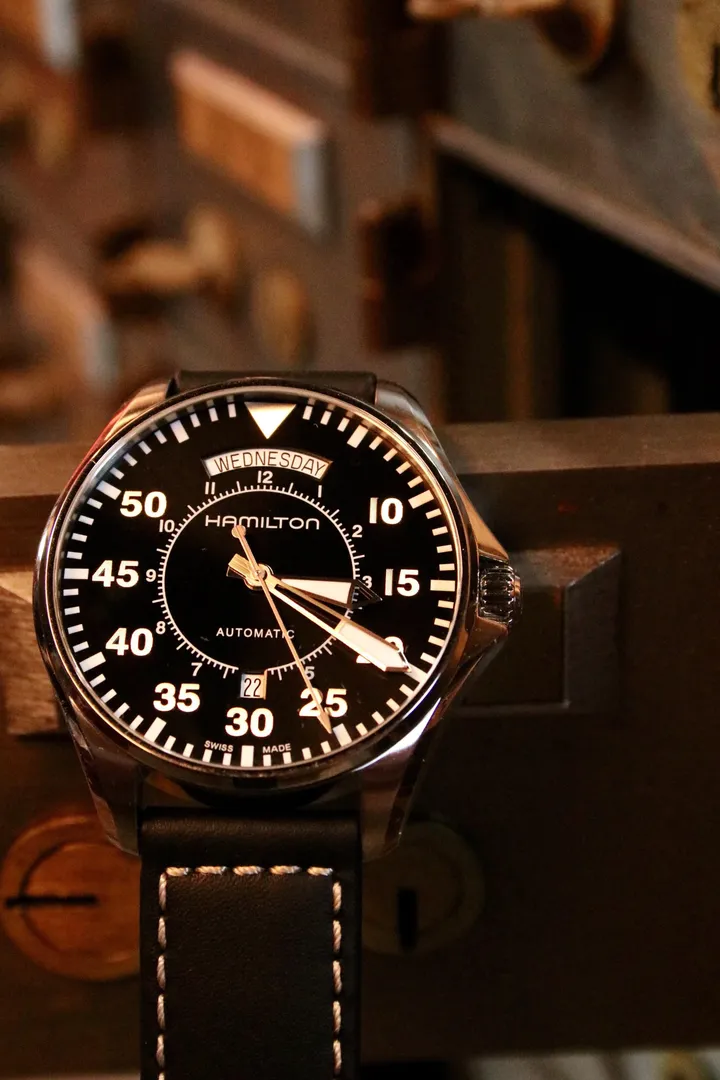
The Khaki Aviation is the right pick if you want a Hamilton that goes beyond the field watch template. The 80-hour power reserve on the H-10 movement is a genuine spec advantage: skip wearing it on Friday, pick it up Monday morning, and it’s still running. The pilot aesthetic is bolder and more tool-oriented than the Khaki Field. The “Coop” Day Date variant carries the original Interstellar connection, which predates the Murph. It’s also the only Hamilton in this family that offers a day-date complication.
The Ventura is a different conversation entirely. It is not a daily driver. It is not a versatile first watch. One owner’s honest account after two years says it plainly: unless you wear a black or gray suit semi-regularly, the asymmetric case simply doesn’t pair with casual clothes, jeans, or sportswear. Buy the Ventura as a second piece, not a first. Pre-owned examples appear regularly under USD 400 with box and papers, which makes it one of the most accessible Swiss design icons available, but only once you already have a daily watch sorted.
Hamilton doesn’t suit buyers who need a recognisable status symbol. It doesn’t suit buyers who plan to swim or dive regularly. It doesn’t suit buyers who need strong AR coating on the crystal. And it doesn’t suit buyers comparing it head-to-head with Tudor or Oris in a boutique and expecting equivalent finishing quality. At that point, the honest answer is to save another USD 500–800 and buy the Tudor Black Bay 36 or an Oris Pointer Date instead.
The Khaki Field Murph deserves a specific note for buyers drawn to the Interstellar story. The 42mm case is genuinely large. Multiple owners report fit regret after buying online without trying it on. If your wrist is under 18cm, try the 42mm in person before committing. The 38mm Murph exists if you love the dial but not the size. And if you’ve already seen the Murph on every watch forum and want something less ubiquitous: this is the most-posted Hamilton on Reddit, and that ubiquity is worth factoring into a purchase that’s meant to feel personal.
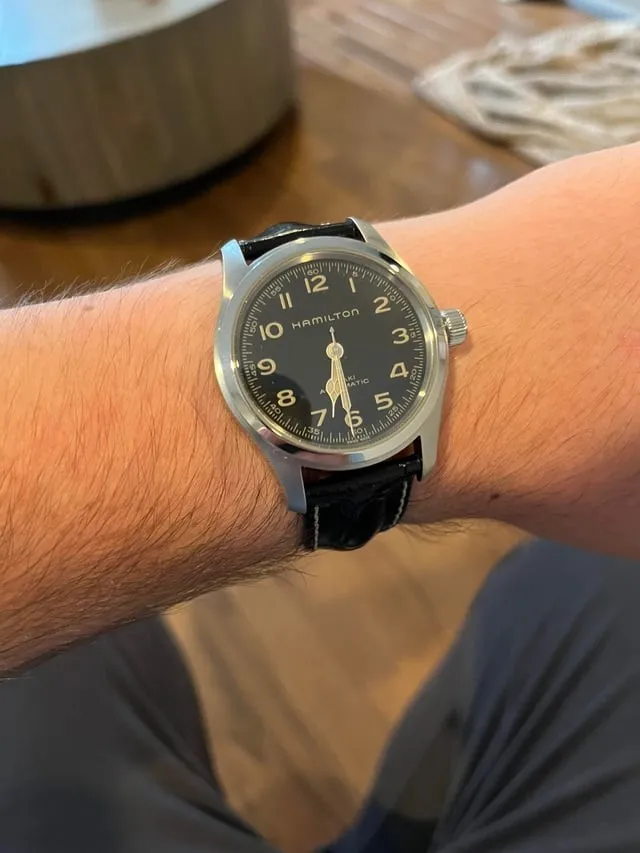 The Murph’s 42mm case is genuinely large. Try it on before buying if your wrist is under 18cm. Credit: u/PS-Connoiseur
Hamilton’s strengths are real: Swiss movements, clean dials, honest heritage, and a price point that doesn’t require you to stretch. Its weaknesses are equally real: an overexposed line, AR coating issues, Swatch Group service costs that bite later, and a prestige ceiling that stops well short of the brands it’s often compared to. If you’re optimising for daily wearability, military aesthetics, and Swiss quality under USD 1,000, Hamilton is a strong answer. If you’re optimising for status, finishing quality, or water resistance, look further up the price ladder.