Key takeaways
- Dial craft is the genuine differentiator: Grand Seiko’s hand-textured dials, snowfields, birch forests, mountain seasons, shift under light in ways no Swiss brand replicates at equivalent prices.
- The Spring Drive is a real engineering achievement: Accurate to within one to two seconds per day, it measurably outperforms COSC-certified Swiss automatics and produces a visibly gliding seconds hand.
- Brand recognition outside watch circles is effectively zero: If social visibility matters to your milestone purchase, Grand Seiko will not deliver it, a Rolex will.
- Bracelet quality and lug-to-lug fit are known weak points: Stock bracelets draw consistent criticism, and the 49 mm lug-to-lug on many references will overhang wrists under roughly 16.5 cm.
- Resale liquidity is weak compared to Rolex: Grand Seiko is not a store of value; buyers motivated by secondary-market strength should look elsewhere.
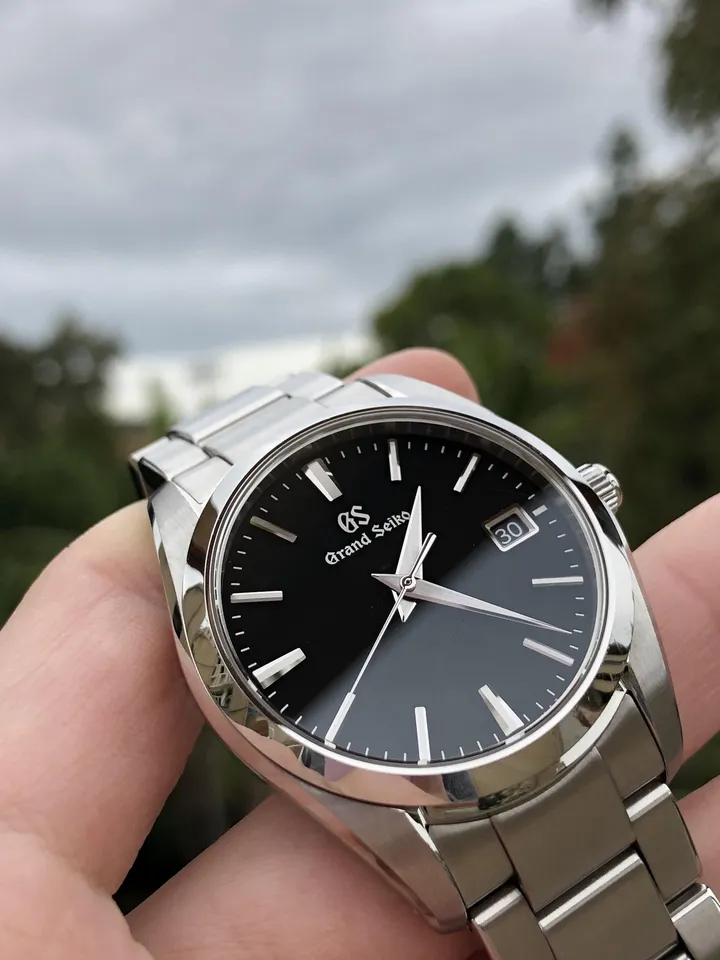
Grand Seiko is Japan’s answer to Swiss luxury. The brand is built around one obsession: making the most accurate, most beautifully finished watch possible. The dials change with the light. The cases are polished by hand using a technique called Zaratsu that produces mirror-flat surfaces no machine can replicate. The Spring Drive movement is a genuine engineering achievement, not a marketing claim. And almost nobody outside watch circles has heard of it.
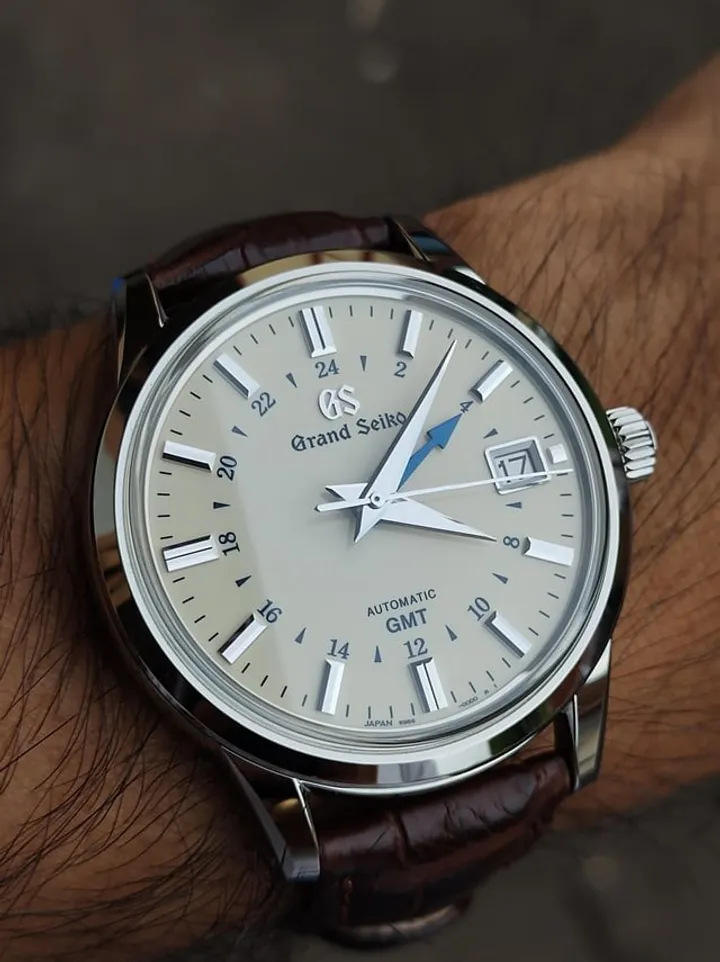
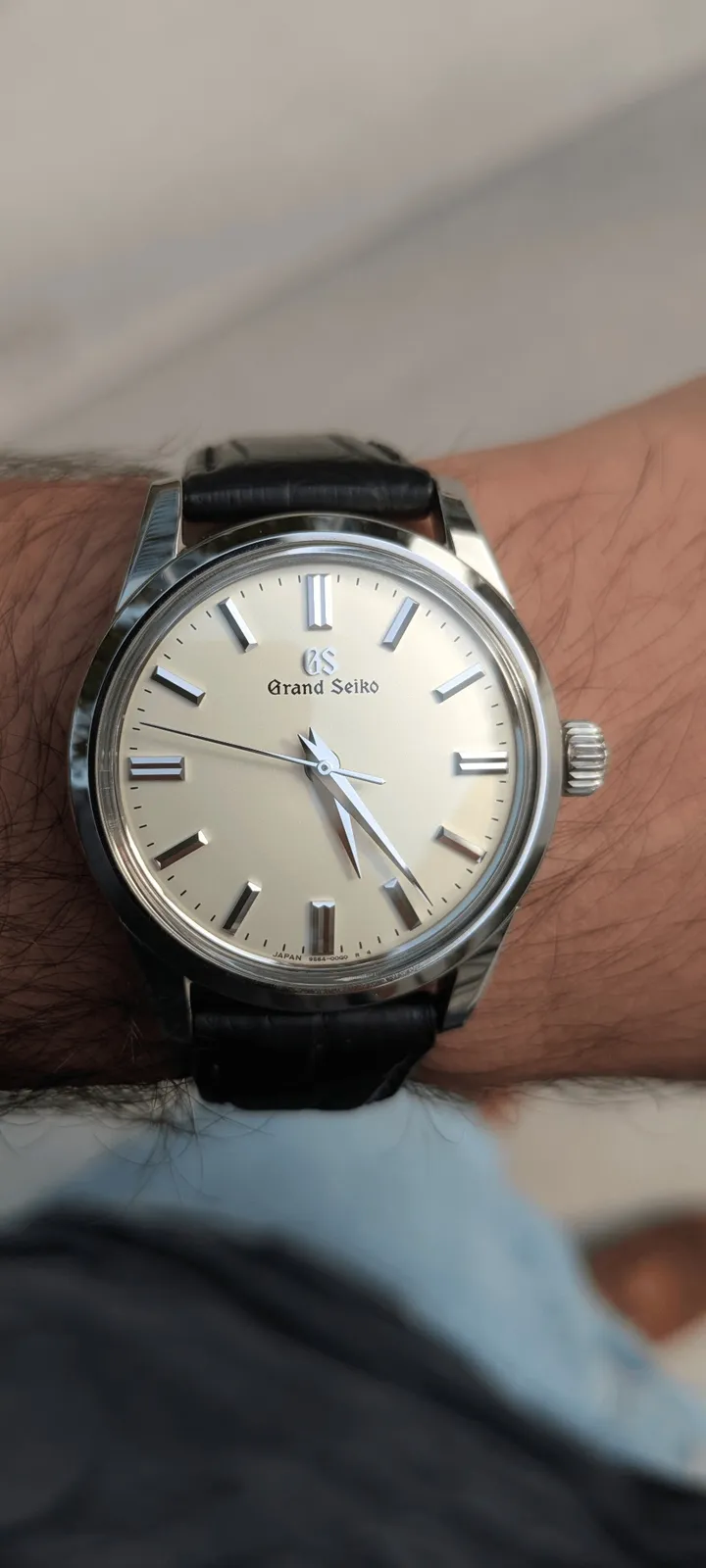
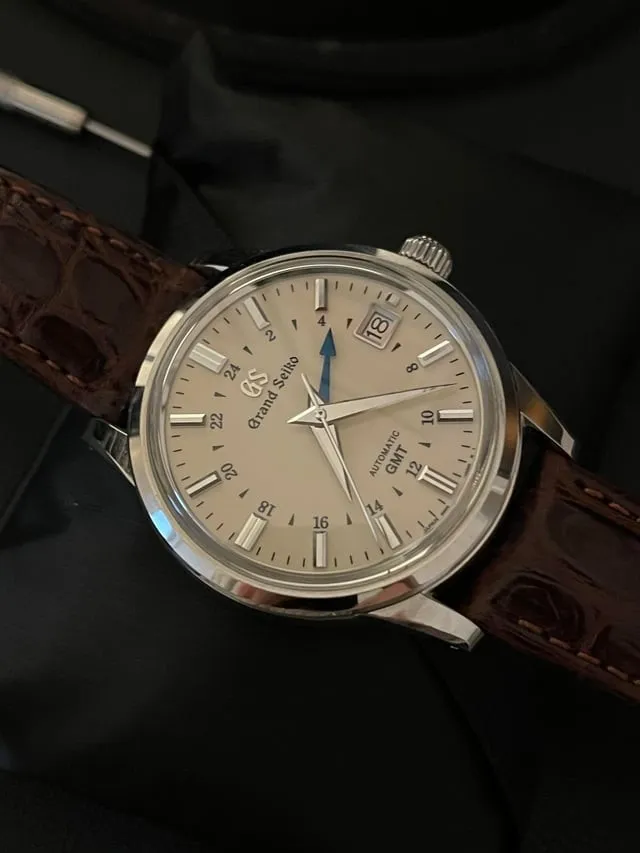 Zaratsu polishing produces mirror-flat facets with a clarity that photographs consistently fail to capture. The SBGM221’s case is among the most striking examples in the lineup. Credit: u/Sweepingdials
That last point is either the appeal or the dealbreaker, depending on why you’re buying.
If you want a watch that rewards close attention, holds its own against anything Swiss at the same price, and quietly signals that you did your homework, Grand Seiko makes a compelling case. If you need instant recognition from people who don’t follow watches, it will disappoint you every time.
A short history of Grand Seiko
Seiko founded Grand Seiko in 1960 as an internal challenge. The goal was simple to state and hard to execute: build the perfect watch. Not a competitive watch, not a commercially optimised watch. A watch that met Seiko’s own exacting standards for accuracy, finishing, and legibility, standards the brand wrote itself and held itself to publicly.
For decades, Grand Seiko was a Japan-domestic label. Collectors in Tokyo and Osaka knew it. The rest of the world did not. That changed in 1998, when Seiko relaunched Grand Seiko as a global brand, bringing its Zaratsu-polished cases and textured dials to international collectors for the first time. The relaunch was quiet by Swiss standards. No celebrity ambassador, no Formula 1 partnership. The watches were simply made available, and the people who found them tended to stay found.
The next landmark came in 1999. Seiko introduced the Spring Drive: a hybrid that uses a mechanical mainspring for power but a quartz oscillator for regulation. The result is a seconds hand that glides in a perfectly smooth arc, no tick, no stutter, accurate to within one second per day. That is tighter than COSC chronometer certification, which allows fifteen seconds per day. The Spring Drive is not a gimmick. It is a different solution to the same problem every watchmaker faces, and it works.
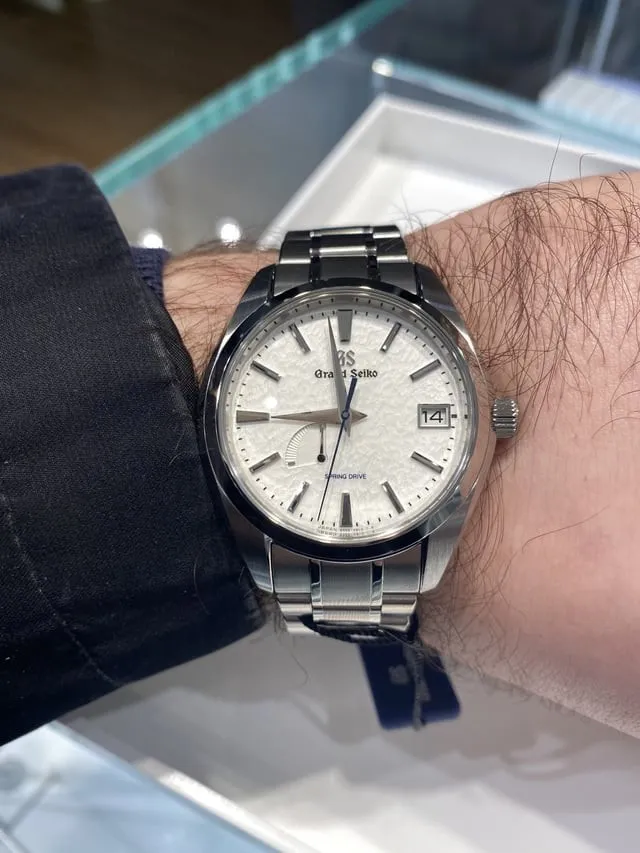 The Spring Drive’s seconds hand glides in a continuous arc with no tick or stutter. It is immediately noticeable to anyone who has worn a standard mechanical watch. Credit: u/aboumich
In 2020, Grand Seiko went further. The brand launched the 9SA5 dual-impulse escapement inside the White Birch SLGH005. The 9SA5 is Grand Seiko’s most significant in-house movement development in decades. It runs at 36,000 vibrations per hour, uses a new escapement geometry that reduces friction, and achieves 80 hours of power reserve. It is the clearest signal yet that Grand Seiko is not content to be a finishing house. It wants to be taken seriously as a movement manufacturer too.
The brand’s AD network outside Japan remains thin compared to Rolex or Omega. That is a real practical consideration, covered below.
What buyers love about Grand Seiko
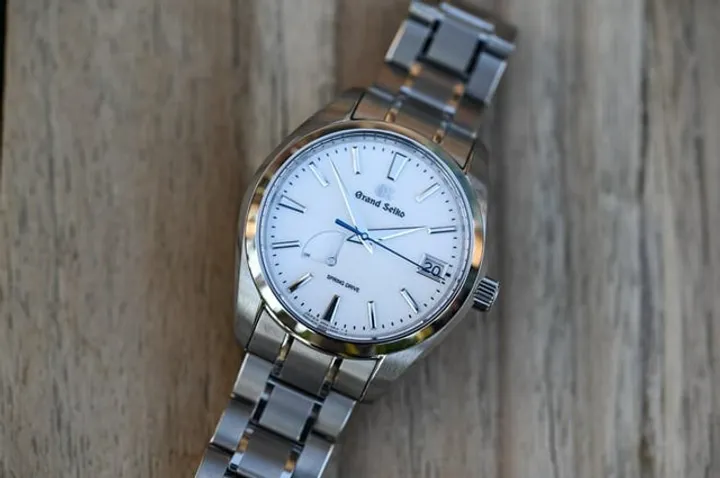
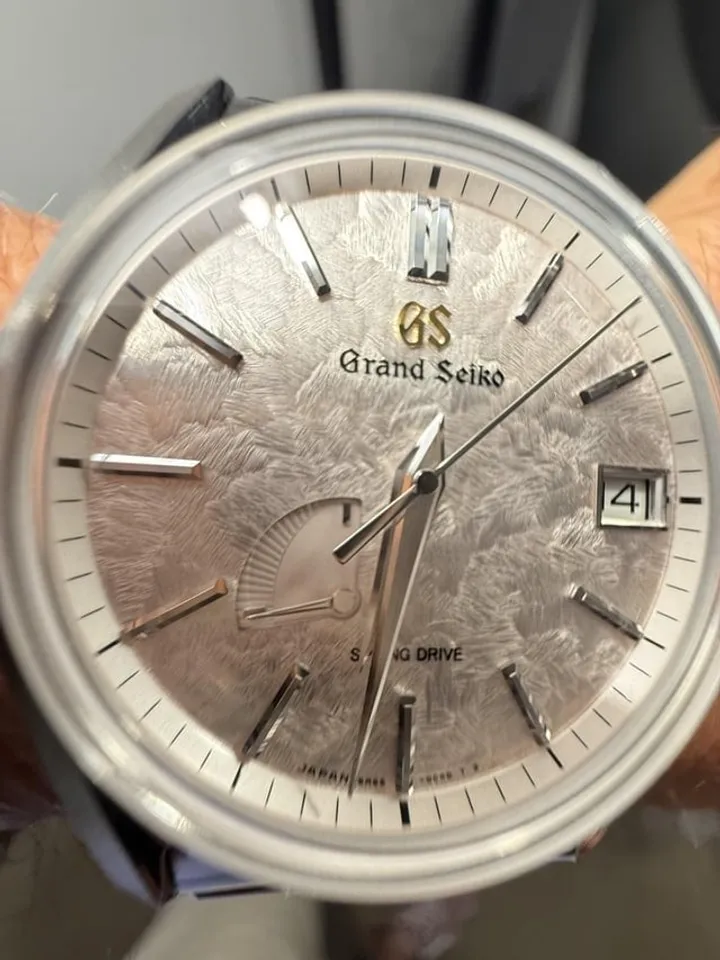
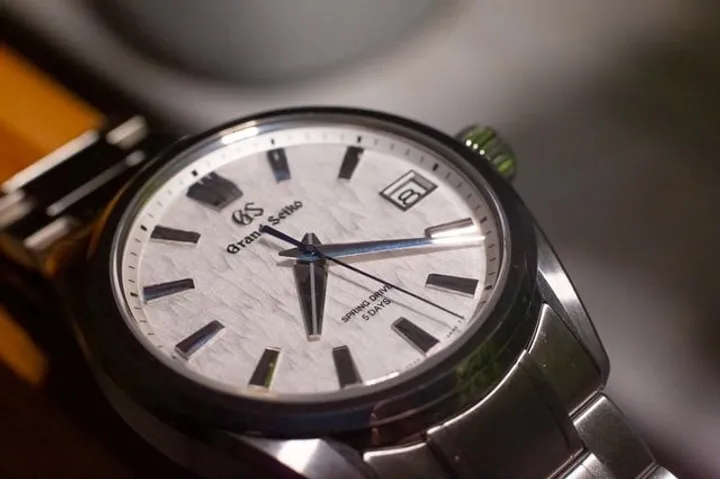
The dials are the first thing people mention, and they earn the attention. Grand Seiko’s dial artisans work from the landscapes of the Shinshu region in Japan, translating snowfields, birch forests, cherry blossoms, and mountain seasons into textured surfaces that shift under different light. The Snowflake dial on the SBGA211 looks flat in a photograph and three-dimensional in person. The White Birch on the SLGH005 has vertical striations that catch sunlight and throw it back differently depending on the angle. Owners consistently describe glancing at the dial and seeing something new. No Swiss brand at equivalent prices produces dial work like this. That is not a hot take. It is a craft comparison anyone who has held both watches can verify.
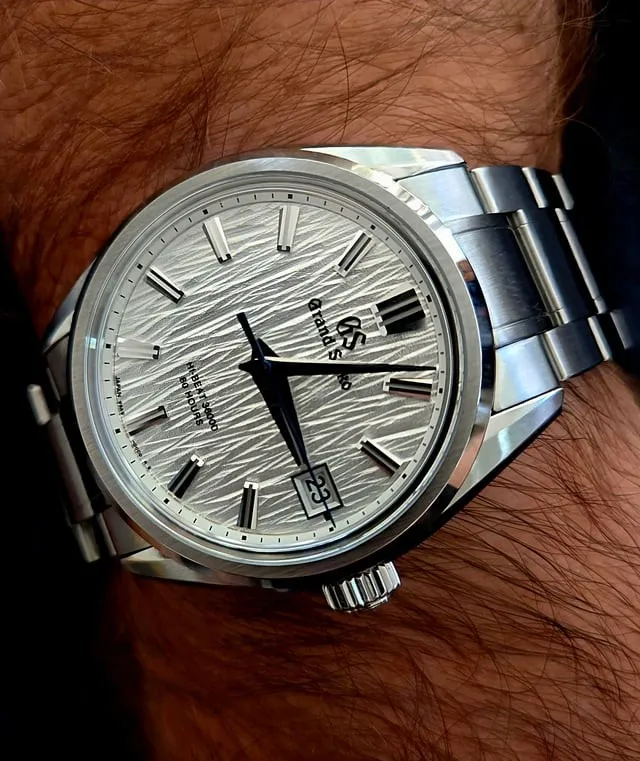 The White Birch dial’s vertical striations are a direct translation of Shinshu birch-forest bark into a watch surface. The effect only fully reveals itself under changing light. Credit: u/Prestigious_Pay_7146
The Spring Drive movement earns its own category of appreciation. The gliding seconds hand is immediately noticeable to anyone who has worn a standard mechanical watch. Owners describe the movement as smooth in a way that feels qualitatively different from a conventional escapement. Accuracy in daily wear typically runs within one to two seconds per day. A well-regulated Swiss automatic might run at plus or minus five seconds per day. The Spring Drive is measurably better, and the difference is visible on the wrist.
Grand Seiko also has a specific appeal for buyers who want something genuinely different from the Swiss mainstream. The “it’s just a Seiko” cover story is real. Owners joke about it openly: a partner sees the box, asks what it is, hears “Seiko,” and moves on. For buyers who want the satisfaction of knowing what they have without broadcasting it, that dynamic is a feature. Grand Seiko sits comfortably in serious two-watch collections alongside Rolex, covering the dial artistry and dress-watch territory that the Swiss tool-watch icon doesn’t touch.
Japan’s second-hand market deserves a specific mention. Buyers who visit Osaka or Tokyo report finding near-mint Grand Seiko full sets at prices that make the grey-market premium on Swiss watches look absurd. If you have any chance of buying in Japan, or from a reputable dealer sourcing from Japan, the value proposition improves significantly.
What buyers criticise
Brand recognition is near-zero outside watch circles. This is not a minor caveat. If any part of your motivation for this purchase is that people will notice the watch, Grand Seiko will not deliver. The name means nothing to most people. The dial artistry is invisible to anyone who isn’t already looking for it. A colleague who would immediately clock a Rolex Submariner will walk past a Grand Seiko Snowflake without a second glance. That is the honest reality, and it matters for a milestone purchase where the social dimension is part of the point.
Bracelet quality is a recurring complaint across the lineup. The stock bracelets on most Grand Seiko references draw criticism for construction that feels below the price. The pin-and-link system on the SBGA211 is specifically called out by owners as fiddly and underwhelming. Many buyers replace the bracelet with a leather or aftermarket strap within months. That is a reasonable solution, but it adds cost and introduces a separate problem: Grand Seiko’s lug geometry is awkward. Third-party straps often show a visible gap at the lug, even when the spring bars click in correctly. It is solvable, but it requires research and sometimes trial and error.
Lug-to-lug dimensions are a genuine fit concern. Many Grand Seiko references sit at 49 mm lug-to-lug. On a wrist under about 16.5 cm, that measurement means the watch overhangs on both sides. Buyers with smaller wrists have flagged this directly when researching the SBGA family. Measure your wrist before falling in love with a dial. The SBGR family’s 37 mm case is the exception, and worth knowing about if fit is a concern.
The model-number system is genuinely confusing for newcomers. SBGA, SBGR, SBGW, SBGM, SLGH: the prefixes encode movement type, case material, and production tier, but the logic is not explained anywhere obvious. Two watches sharing the same 9R65 Spring Drive movement can differ by $1,400 in retail price, and the reason is not immediately apparent. The price difference usually comes down to dial complexity, case material, or limited-edition status, but you have to do the work to find that out. For a first-time buyer building a shortlist, the opacity is a real friction point.
The AD network outside Japan is thin. Rolex has authorised dealers in most mid-sized cities. Grand Seiko does not. If you want to see a reference in person before buying, you may need to travel to a major city or a Grand Seiko boutique. Buying blind at this price is a risk, particularly for the White Birch, where the dial’s impact is entirely dependent on light conditions that photographs cannot capture.
Who Grand Seiko suits, and who it doesn’t
Grand Seiko makes the most sense for buyers who care about what the watch actually is, not what it signals to other people. If you understand what Zaratsu polishing involves, what the Spring Drive achieves mechanically, and why a textured dial made to evoke a Japanese snowfield is a different kind of object from a Swiss dress watch, Grand Seiko will reward that knowledge every day you wear it. It suits buyers who want something genuinely different from the Swiss mainstream and are comfortable letting the watch speak for itself, quietly, to the small number of people who will recognise it.
It also suits buyers building a two-watch collection. Grand Seiko pairs naturally with a Swiss sport or tool watch, covering different aesthetics, different movement philosophies, and different occasions without overlap. Experienced collectors who have landed on a two-watch answer often cite a Grand Seiko alongside a Rolex Explorer or similar as the configuration that keeps making sense.
The Spring Drive references suit buyers who want the most technically distinctive experience Grand Seiko offers. The automatic references, particularly the SBGR family, suit buyers who want the finishing and dial craft without the Spring Drive premium and who prefer a compact 37 mm case. The manual-wind SBGW suits buyers who want a pure dress watch and are drawn to the daily winding ritual as a way of staying connected to the movement.
Grand Seiko does not suit buyers who need instant brand recognition. If you are spending $5,000 to $9,000 and part of the value is that people at a dinner table or in a boardroom will notice the watch, Grand Seiko will not deliver that. A Rolex will. That is not a criticism of Grand Seiko. It is a description of what the brand is and is not.
It also does not suit buyers whose primary concern is resale value. Grand Seiko does not have the secondary-market liquidity of Rolex. The Submariner, the GMT-Master II, and the Daytona have demonstrated resale strength that Grand Seiko references do not match. If you are thinking about this purchase partly as a store of value, the data does not support Grand Seiko as the answer.
Two specific references deserve a direct word for first-time buyers. The White Birch SLGH005 generates the most excitement in Grand Seiko coverage, and it earns that attention. But at $7,000–$9,500, it is a significant commitment to a brand that earns zero recognition from anyone outside the hobby. Do not buy it without seeing it in person first. The dial’s impact is real, but it is entirely dependent on light, and photos do not capture it accurately. If you haven’t yet handled a Grand Seiko in person, start with the Snowflake. The SBGR automatic is similarly worth understanding before buying: it is a very good watch, but if you are drawn to Grand Seiko specifically because of the Spring Drive’s gliding seconds hand, the SBGR will feel like a compromise. Know what you are buying and why.
If you are buying your first serious watch and want the most honest answer to “what is Grand Seiko for?”, it is this: it is for the buyer who has done the research, understands what they are looking at, and wants the best-finished, most technically interesting object their budget can reach, without needing anyone else to validate the choice.