Key takeaways
- Cartier is a jeweller first, watchmaker second: That distinction shapes every buying decision, you are paying for design legacy and name recognition, not the most technically sophisticated movement at your price point.
- The quartz gap is real and expensive to bridge: The Tank Must starts at $2,800–$3,500 with a quartz movement; the only modern mechanical Tank in a wearable case starts at $9,000, with almost nothing in between.
- Sizing will surprise buyers from sport-watch backgrounds: “Large” Tank cases wear considerably smaller than a 38mm+ sport watch, try before you buy, without exception.
- Service costs are steep relative to resale value: A full service runs $400–$800, a meaningful percentage of a Tank Must’s retail price, and resale performance is solid but not exceptional.
- The right Cartier buyer is style-led, not spec-led: If design heritage and milestone permanence matter more than movement complexity, the Tank Must or Santos steel automatic is the logical starting point.
Cartier is not a watch brand that happens to make jewellery. It is a jeweller that happens to make some of the most recognisable watches in the world. That distinction matters if you are buying your first serious watch. When you buy a Cartier, you are buying 170 years of Parisian craft, a name that lands in any room, and a design language so distinctive that people who have never read a watch review know exactly what they are looking at. What you are not necessarily buying is the most technically sophisticated movement at your price point. Understanding that trade-off is the whole game with Cartier.
A short history of Cartier
Louis-François Cartier founded the house in Paris in 1847. For its first fifty years, Cartier was a jeweller to European royalty. Watches were part of the catalogue, but they were not the point.
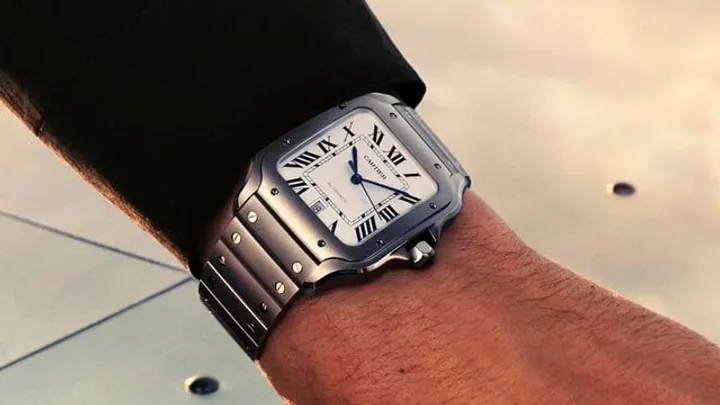
That changed in 1904. Aviator Alberto Santos-Dumont told his friend Louis Cartier that pocket watches were impossible to use while flying. Louis Cartier designed a flat, square-cased wristwatch with a leather strap and visible screws on the bezel. Santos-Dumont wore it publicly. The Santos is widely credited as one of the first purpose-built wristwatches, and it put Cartier at the origin of modern watchmaking before most Swiss manufacturers had taken the wrist seriously.
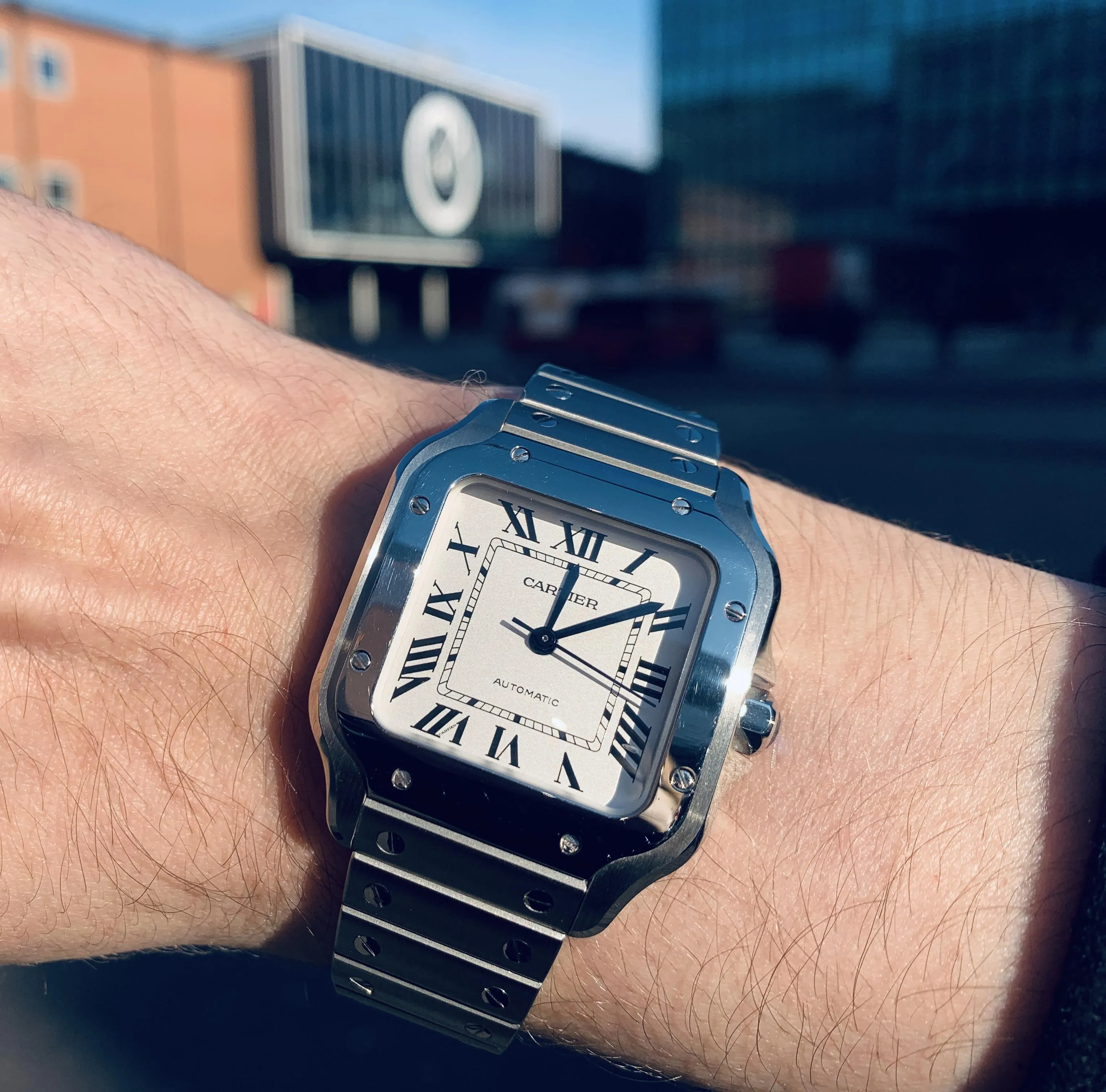 Santos-Dumont wore this case shape publicly in 1904. The exposed bezel screws, originally structural, became the design’s most recognisable signature. Credit: u/_echnaton
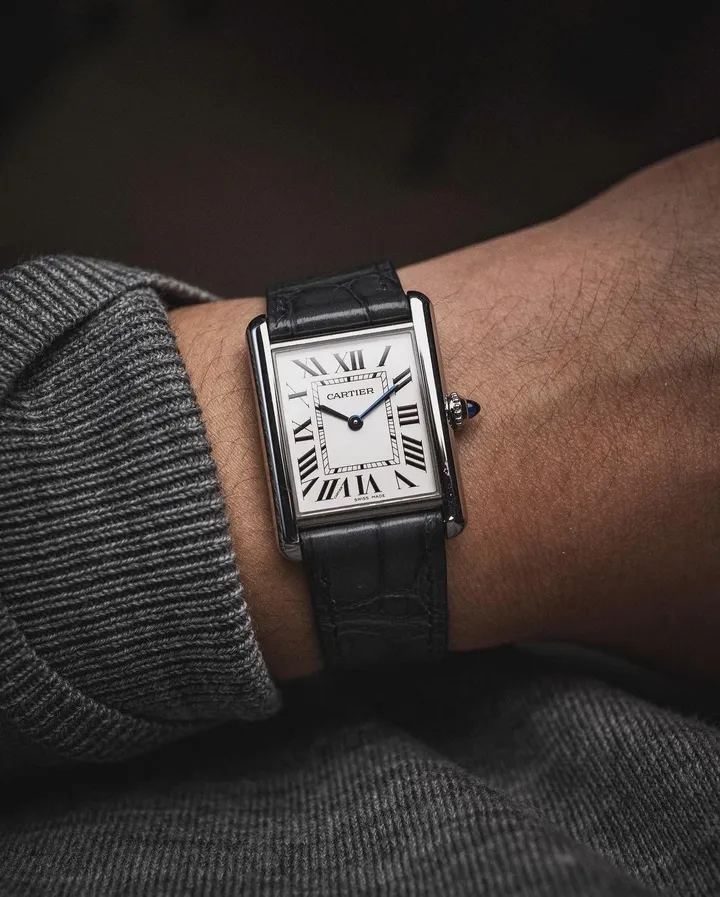
Thirteen years later, in 1917, Cartier introduced the Tank. The rectangular case was inspired by the overhead silhouette of WWI Renault tanks, the long side rails echoing the vehicle’s tracks. The design was so clean and so resolved that it became one of the most copied watch silhouettes in history. Andy Warhol wore one. Jackie Kennedy wore one. The Tank has been in continuous production, in various forms, for over a century.
By 1990, Cartier moved to broaden its audience. The Must de Cartier line brought the Tank to buyers who could not afford solid gold, offering stainless steel and vermeil versions at more accessible prices. Vintage Must Tanks from this era are still bought, serviced, and worn today, and they represent some of the best-value Cartier available on the secondary market.
In 2007, Cartier launched the Ballon Bleu: a softly rounded cushion case with a floating crown protected inside a curved guard. It was the brand’s first genuinely new case shape in decades. The Ballon Bleu became Cartier’s best-selling modern reference almost immediately. For many first-time buyers, it is the watch that makes Cartier feel contemporary rather than historical.
What buyers love about Cartier
The most consistent thing owners say is that the Cartier name does real work. Not in a status-anxious way, but in a practical one. A Cartier on your wrist is immediately legible to people who know nothing about watches. That matters if you are buying for a milestone, a wedding, a promotion, or a significant birthday. The watch communicates something without requiring the person looking at it to know the difference between a calibre 3235 and a calibre 1847 MC.
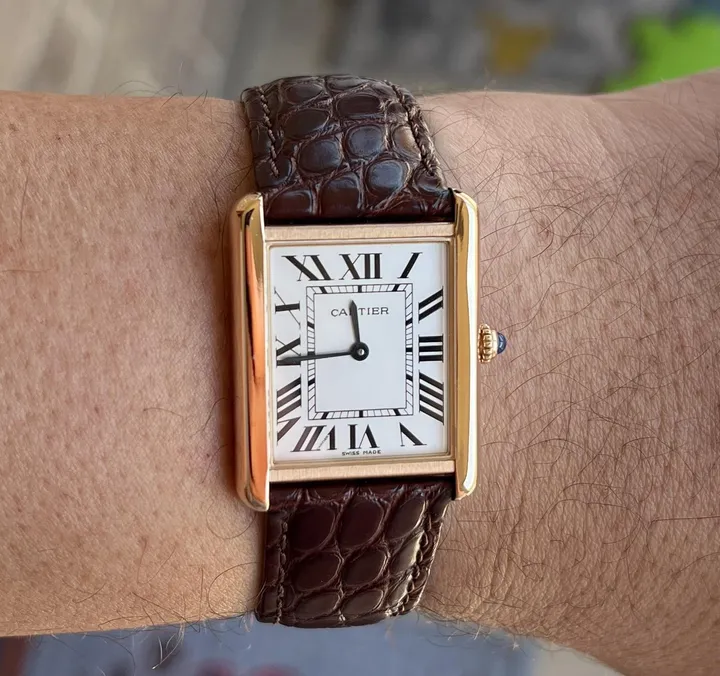
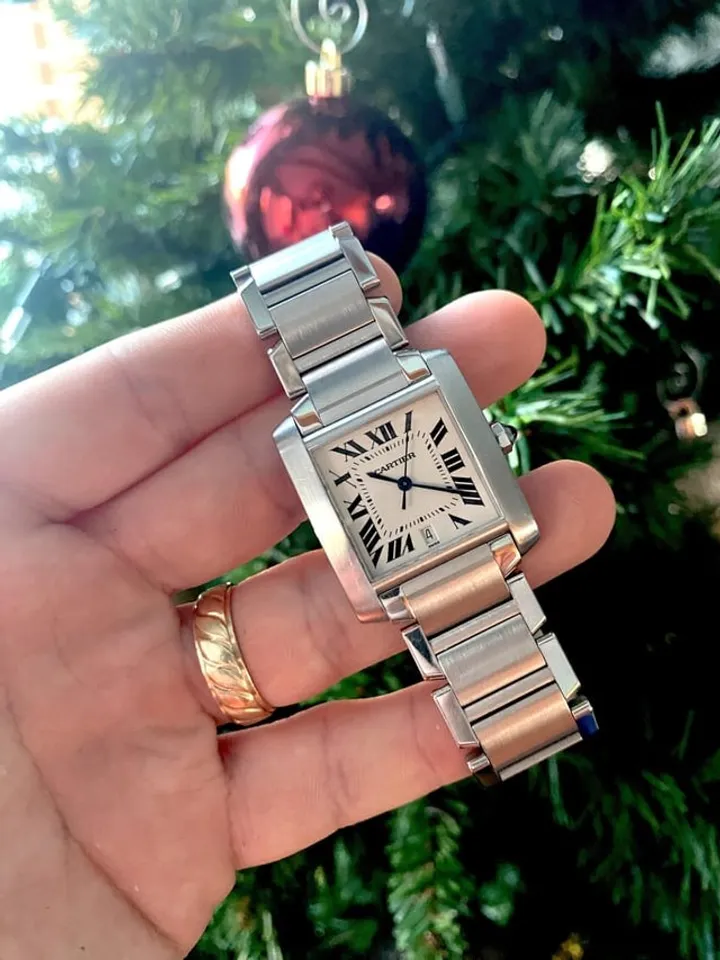
The design language is the other thing owners return to. The Tank’s rectangular case and Roman numeral dial, the Santos’s exposed screws and integrated bracelet, the Ballon Bleu’s floating crown: these are not trend-driven shapes. They are resolved designs worn by enough people across enough decades that their staying power is no longer a question. Owners describe reaching for their Cartier in the morning without thinking about whether it fits the occasion, because it almost always does.
Versatility is a genuine strength. The Santos works with a suit and with a t-shirt. The Tank Must sits as comfortably at a formal dinner as it does at a weekend lunch. A Rolex Submariner is a tool watch you can dress up; a Cartier Tank is a dress watch you can dress down. For buyers who want one watch that covers most situations, that flexibility has real value.
The emotional dimension is worth naming directly. Cartier is the go-to milestone watch for a reason. Owners describe pieces passed down from parents, bought to mark engagements, worn every day for decades. The sentimental weight is not manufactured by marketing. It is built into the brand’s history and reinforced by the fact that these watches genuinely last. A well-serviced Tank from the 1990s is still a beautiful, functional object today.
What buyers criticise
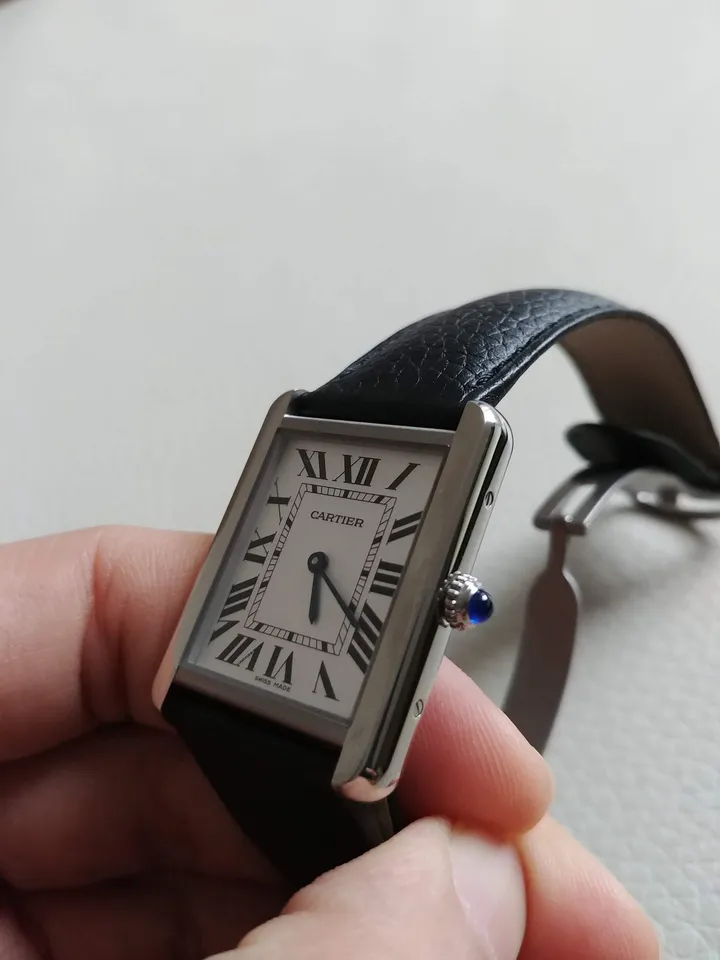
The most common frustration is the quartz situation. At the Tank’s most accessible price points, $2,800–$3,500 for the Tank Must, you are getting a quartz movement. That is accurate, low-maintenance, and entirely appropriate for a dress watch you wear a few times a week. But if a mechanical movement matters to you, it is a genuine compromise. The only modern Tank with a manual-wind mechanical movement in a wearable case size is the Tank Louis Cartier in rose gold, which starts at around $9,000. The gap between a quartz Tank and a mechanical Tank is enormous, with almost nothing in between.
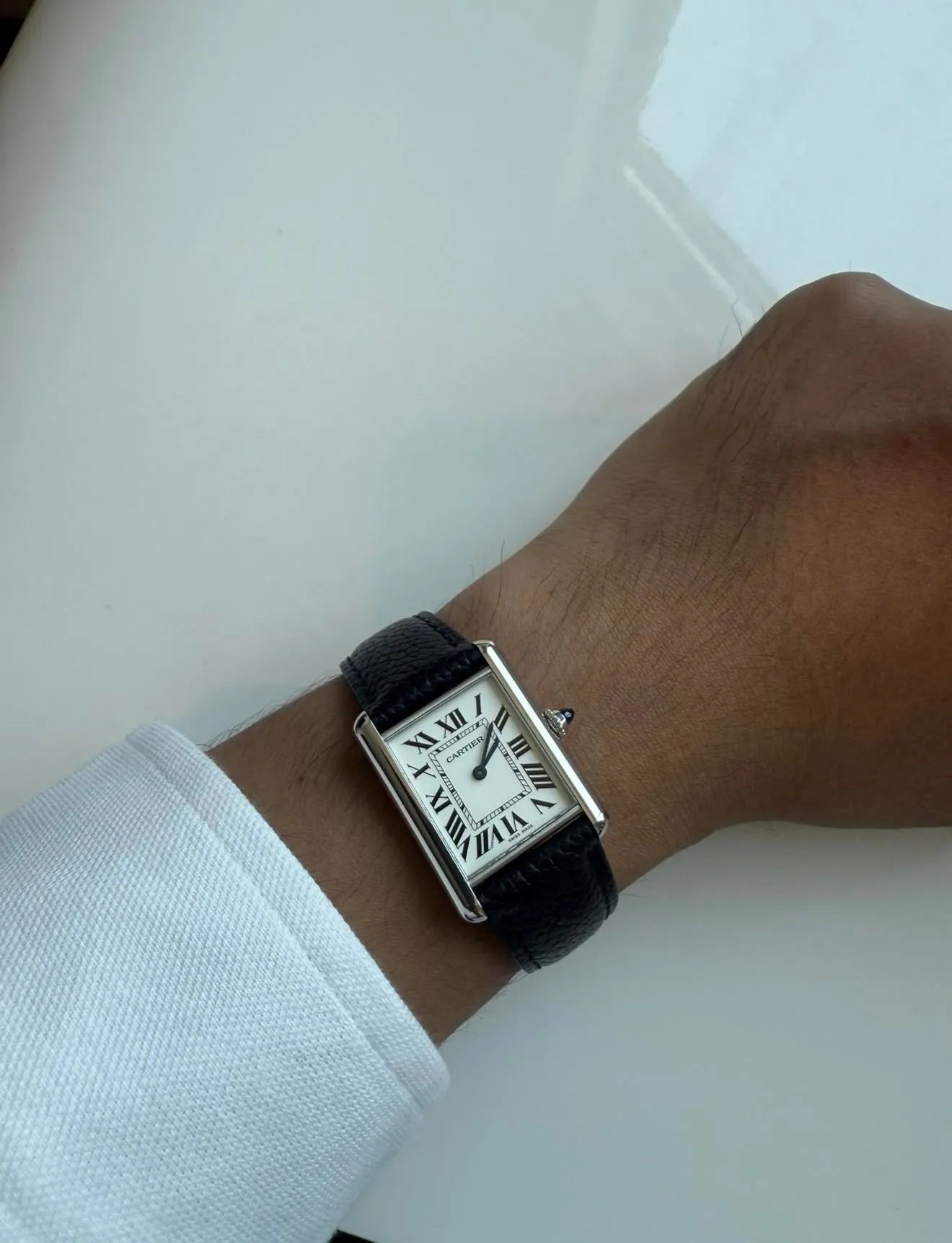 The Tank Must starts under $3,500 with a quartz movement. The next mechanical option in a wearable case size starts at $9,000. That gap is real and worth planning around. Credit: u/frugalfilam
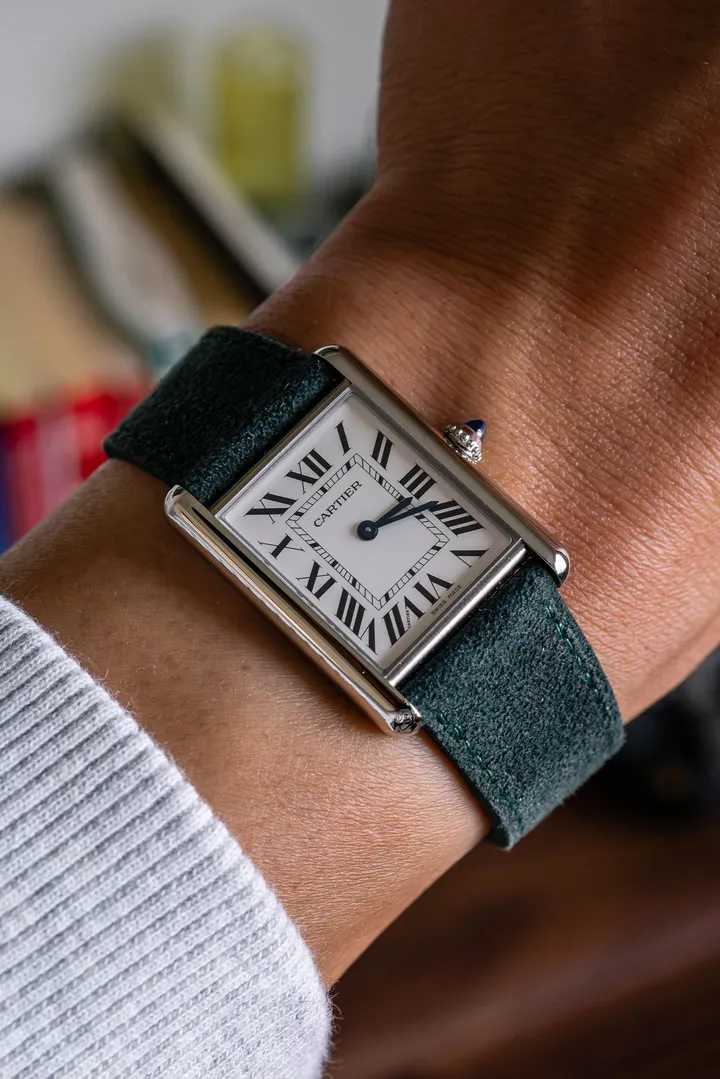
Sizing is the second consistent complaint, and it is more confusing than it should be. The Tank family uses “Small” and “Large” labels, but there is no true medium, and “Large” wears considerably smaller than buyers used to 38mm+ sport watches expect. First-time buyers regularly report being surprised by how small the watch feels. If you are coming from an Apple Watch or a 40mm diver, try the Tank in person before you buy. This is not a watch to purchase without wearing it first.
Service costs are steep relative to the watch’s market value. A full Cartier service runs $400–$800 at an independent watchmaker and higher at a Cartier service centre. For a Tank Must that retails at $2,800–$3,500, that is a meaningful percentage of the watch’s value every time it needs attention. One owner described servicing a 1990s Tank as emotionally worthwhile but financially hard to justify on market-value grounds alone. That is an honest summary of the situation.
The value-for-money question is real. At $3,000, a Longines or a Grand Seiko will give you a better movement, better case finishing, and more technical specification. You are not buying a Cartier because it wins on specs. You are buying it for the name, the design, and the heritage. That is a legitimate reason to buy a watch, but the spec sheet will not make the case for you.
Polished surfaces scratch. The Santos’s bezel shows marks within days of first wear. Multiple owners report significant scratches after two days of normal use. The titanium Santos sidesteps this, but the steel models do not. If a pristine bezel matters to you, factor that in before you buy.
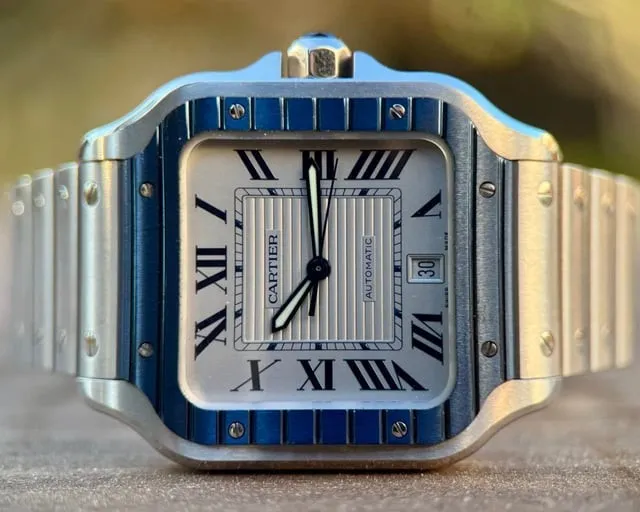 The Santos bezel is polished steel. Owners report visible scratches within days of first wear. The titanium variant uses a harder material that resists marks significantly better. Credit: u/FranklinWatch
Who Cartier suits, and who it doesn’t
Cartier makes the most sense for a specific kind of first-time buyer: someone who is style-led rather than specification-led, who wants a watch that signals taste and heritage rather than horological complexity, and who is marking a moment that deserves something permanent. If you are buying for a wedding, a significant promotion, or a milestone birthday, and you want a watch you will still reach for in thirty years, Cartier has a stronger argument than almost anything else at this price point.
The Tank family suits buyers with smaller wrists, a preference for formal or smart-casual dressing, and an appreciation for design history. If you already know you love the rectangular silhouette, the Tank Must at $2,800–$3,500 is the most sensible starting point. It delivers the full Cartier name and the complete Tank design at the family’s lowest price. The quartz movement is not a flaw for this use case; it is the right tool for a dress watch.
The Santos suits a different buyer: someone who wants Cartier prestige but needs a watch that works every day, including casual days. The Santos carries an automatic movement in its most popular steel configurations, the quick-swap strap system lets you tone it down when needed, and the titanium version removes the scratch anxiety entirely. At $7,000–$10,000, it is a serious purchase, but it is the most practical Cartier for daily wear.
The Ballon Bleu is Cartier’s most ubiquitous modern reference. That is both its strength and its limitation. If you want something that feels rare or under-the-radar, this is not it. But if you want one watch that works every day without overthinking it, the 40mm steel automatic is the version most owners reach for most often.
Two watches in the Cartier catalogue are worth knowing about but are not the right starting point for most first-time buyers. The Tank Louis Cartier in solid gold runs $9,000–$16,000. It is a beautiful, historically faithful object, and it makes most sense after you have already worn a Tank and know you love the silhouette. Buying it before you have lived with the rectangular case is a risk the price tag makes hard to recover from. The same logic applies to the vintage yellow gold Tank Louis: authentication and servicing risks are real, documented, and genuinely treacherous for newcomers.
Cartier is the wrong brand if you need a 40mm+ case, meaningful water resistance, or a mechanical movement at an accessible price. Sport-watch buyers used to a Submariner or a Seamaster will find the Tank too small and too dressy. Buyers who prioritise spec-sheet value over brand cachet will find better options at every price point. And if you want a watch that holds its value like a Rolex Submariner, Cartier will disappoint: resale performance is solid but not exceptional, and the Santos in particular lags behind Rolex’s strongest references on the secondary market.
The honest summary: Cartier is the right first watch for a buyer who has already decided that design and heritage matter more than movement complexity, who is buying for a specific moment in their life, and who wants a watch that will still feel right decades from now. If that is you, the Tank Must or the Santos steel automatic is where to start. If you are still deciding whether those priorities are yours, spend some time with the alternatives first. Cartier will still be there when you are ready.